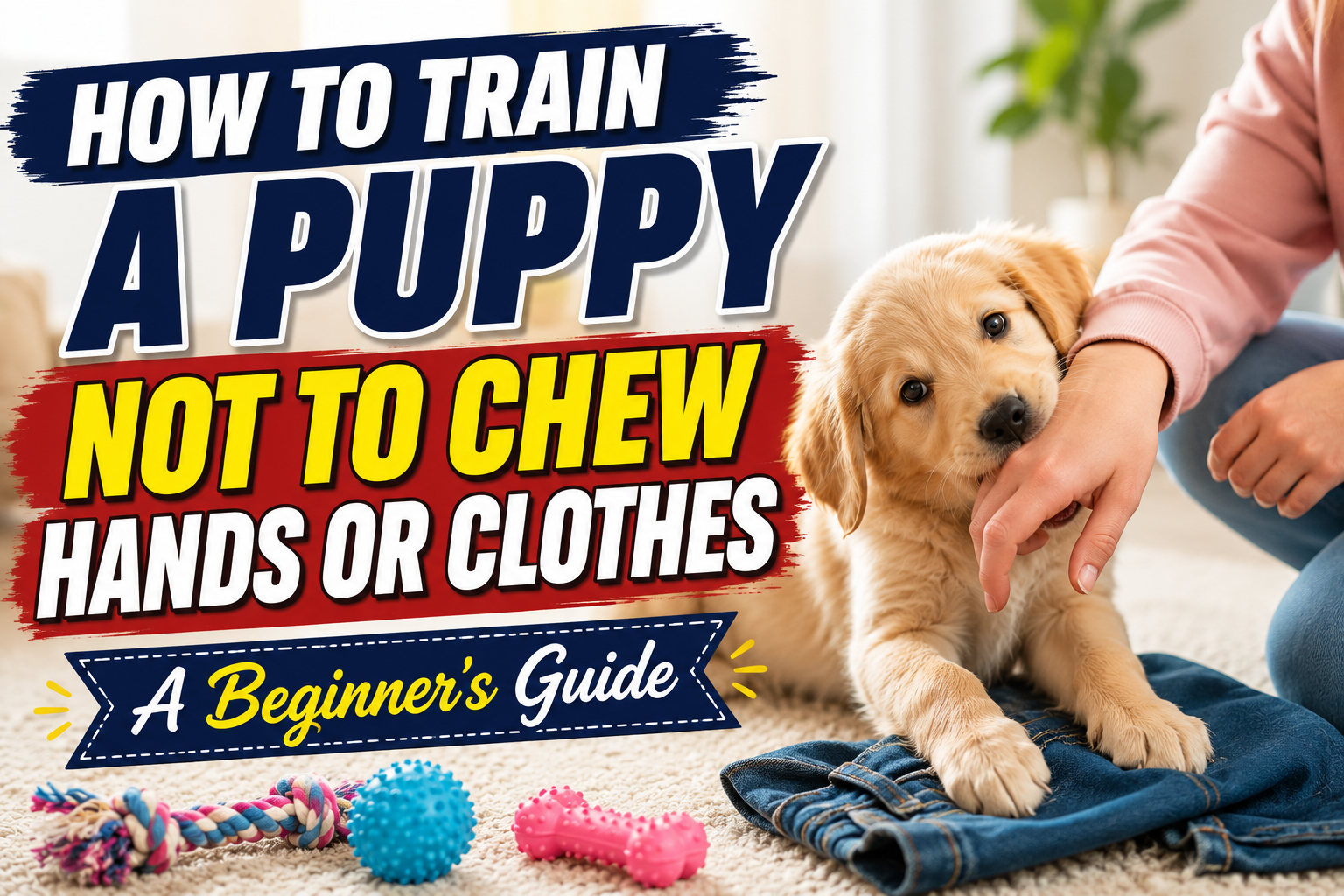
How to train a puppy not to chew hands or clothes starts with understanding that the behavior is natural. A puppy’s mouth serves as a means of exploration and playing, especially during teething. In essence, what appears to be bad behavior from the puppy actually calls for your involvement as opposed to punishment. The main thing is teaching the puppy that toys are for chewing, while humans and clothing are not.
Why Puppies Chew Hands & Clothes
Puppy chewing doesn’t always have the same reason. If a dog is nipping when playing, it will probably differ from a situation where the puppy is biting after a day full of activities. It is important to Identify the trigger helps you choose the right solution instead of correcting every bite the same way.
| Reason | Best action |
|---|---|
| Teething | Provide safe chew toys |
| Excitement | Take breaks from the activity and allow the puppy to calm |
| Curiosity | Redirect to a suitable toy |
| Boredom | Increase stimulation and short training |
| Overtiredness | Give puppy some rest |
| Attention seeking | Reward calm behaviour instead |
One trigger that many pet owners fail to consider is mental exhaustion. Puppies may get over-stimulated after being with guests, taking walks, or being around a stimulating environment. Rather than relaxing, they start tugging on sleeves or biting hands since they have not learned yet how to calm themselves down. A short rest is often more effective than continuing to play.
Understanding Your Puppy’s Biting Timeline
Knowing your puppy’s age helps you choose the right fix for their biting. Mouthing changes as your puppy grows, moving from normal play, to painful teething, and finally to routine habits.
3 to 8 Weeks Old: Learning Soft Bites from Littermates
- What’s happening: Baby teeth start coming in.
- Biting behavior: Puppies bite their brothers, sisters, and mother during play. They learn how hard is too hard when their playmates yelp or stop playing.
8 to 12 Weeks Old: Exploring the World with Their Mouth
- What’s happening: Puppies move into their new homes with 28 razor-sharp baby teeth.
- Biting behavior: Puppies use their mouths like hands to touch new things, explore, and start play with you. Nipping gets worse when they get overly excited or tired.
3 to 6 Months Old: The Peak Teething Phase
- What’s happening: Baby teeth fall out and 42 adult teeth push through sore, inflamed gums.
- Biting behavior: Chewing is at its absolute worst. Puppies bite hands, ankles, clothes, and furniture to relieve painful gum pressure.
6 Months and Older: Adult Teeth and Habit Building
- What’s happening: All adult teeth are in, and their jaw strength increases.
- Biting behavior: Gum pain stops. Any biting at this stage is usually a leftover habit, a call for attention, or a sign they need more exercise and structured training.
How To Train A Puppy Not To Chew Hands or Clothes
This behavior change is much easier when you stop your dog from performing the wrong action even before it does so. Instead of letting it bite, set up circumstances under which choosing the right thing to do will be easy and rewarding.
Redirect Your Puppy Before They Bite
Puppies display certain signs before biting, like getting excited, chasing feet, and constantly searching for things to chew on. With this knowledge, you can redirect your puppy at the earliest stage. Have a chew toy within reach of your puppy and give it to them whenever you notice any of these signs. As soon as your puppy bites the toy, reward them. This teaches that chewing the right item always leads to a positive outcome.
Be Consistent in Rewarding Calm Behavior
Dogs learn through repetition and will repeat actions that get results. If biting always draws attention while calm actions go ignored, they will keep trying different things to see what works. Some of the ways to reinforce good behaviors include:
- Choosing their own chew toy.
- Sitting before playing.
- Approaching people without jumping and biting.
- Relaxing after playing.
In due time, such rewards will teach your puppy that being still is more rewarding than biting hands or clothes.
Make A Routine That Prevents Unwanted Chewing
Good habits take less effort to develop compared to breaking bad habits. Predictable routines throughout the day will provide mental stimulation for your puppy as well as physical satisfaction, which will prevent him from resorting to improper chewing.
Focus on these important factors:
- Give proper chew toys daily.
- Also, keep training sessions short and not long.
- Have proper nap times, especially after an eventful period.
- Use toys to play rather than hands.
- All members of the family must follow the training consistently.
Consistency is key to making these easy tips effective. Puppies will not stop mouthing overnight; however, with consistent training every day, they will gradually learn better ways to explore, play, and interact with people.
Common Mistakes That Slow Training
Even when you mean well, some things might make your puppy’s biting problem persist. These mistakes will not necessarily cause the problem but will surely hinder your puppy from getting your message across.
- Using your hands in play: Your hands should control and praise your puppy, not become chew toys.
- Responding too late: Provide a chew toy immediately once your puppy gets excited, before they chew on your clothing or fingers.
- Using the same toy every day: You should change toys often to maintain their appeal and satisfy teething needs.
- Playing till your puppy is out of control: End games while your puppy is still calm instead of waiting for biting to begin.
- Being inconsistent: The same approach should be used by all family members.
What If Puppy Keeps Biting Even After Redirection?
In case your puppy puts down the chew toy but comes back to your hands instead, there may be no problem with the chewing at all. This is a behavior that many puppies show when they are over-stimulated or overtired. Instead of offering toy after toy:
- Stop the activity for 15 to 20 seconds.
- Start the play activity calmly using the same chewing toy.
- If your puppy is still biting, you must stop the play activity.
- Your puppy needs some time to rest to play again
This teaches your puppy that good behavior will make the play activity continue, while bad behavior will always stop the fun game.
When To Seek Professional Help?
As puppies develop proper bite inhibition, they will become less playful through mouthing, but some behaviors require the evaluation of a professional. Contact your veterinarian or an accredited dog trainer if your puppy:
- Leads to repeated deep puncture injuries.
- Uses bite to guard food and playthings.
- Cannot be diverted from biting.
- Shows stiff body postures prior to biting.
- Bites seriously beyond the teething phase.
Proper training can ensure that undesired behavior does not become a lifelong habit.
Better Habits Start With Regular Training
Training your puppy to refrain from chewing on your hands and clothing is not about preventing them from chewing. It is about teaching them what they can chew and when it is appropriate for them to do so.
Each time you guide them toward the right toys or reward them with good behavior or stop the game after rough biting, you are teaching your puppy sound decision-making skills. This is how those small, steady occurrences cultivate bite inhibition, self-control, and manners that endure well past the teething period.
FAQ’s
How do I get my puppy to stop biting me on my hands when playing?
Stop playing as soon as the biting occurs, give some time before offering a chew toy as an alternative. Your dog will learn that biting ends the fun time.
Is it usual that my puppy will be chewing on clothes?
Yes, puppies usually tend to chew on sleeves, pants, or shoelaces when they are teething, playing, or are just excited.
What is the reason my puppy ignores the chew toys and bites me?
Sometimes the puppy is looking for some interaction rather than anything to chew. If redirection fails, stop playing and try again when your puppy is more calm.
How long until my puppy stops biting people?
Most puppies become very gentle between 5 and 7 months old because teething stops and the puppy learns bite inhibition through training.
Sources
Disclaimer: The content on this page is for informational use only. For personalized advice regarding your pet’s health, always seek guidance from a certified veterinarian.

- 9 Best Dog Life Vests of 2026: Reviews & Buyer’s Guide - September 15, 2026
- Silky Terrier: Complete Breed Guide, Personality, Care & Training - September 10, 2026
- Miniature Poodle: Complete Breed Guide, Personality, Care & Training - September 10, 2026