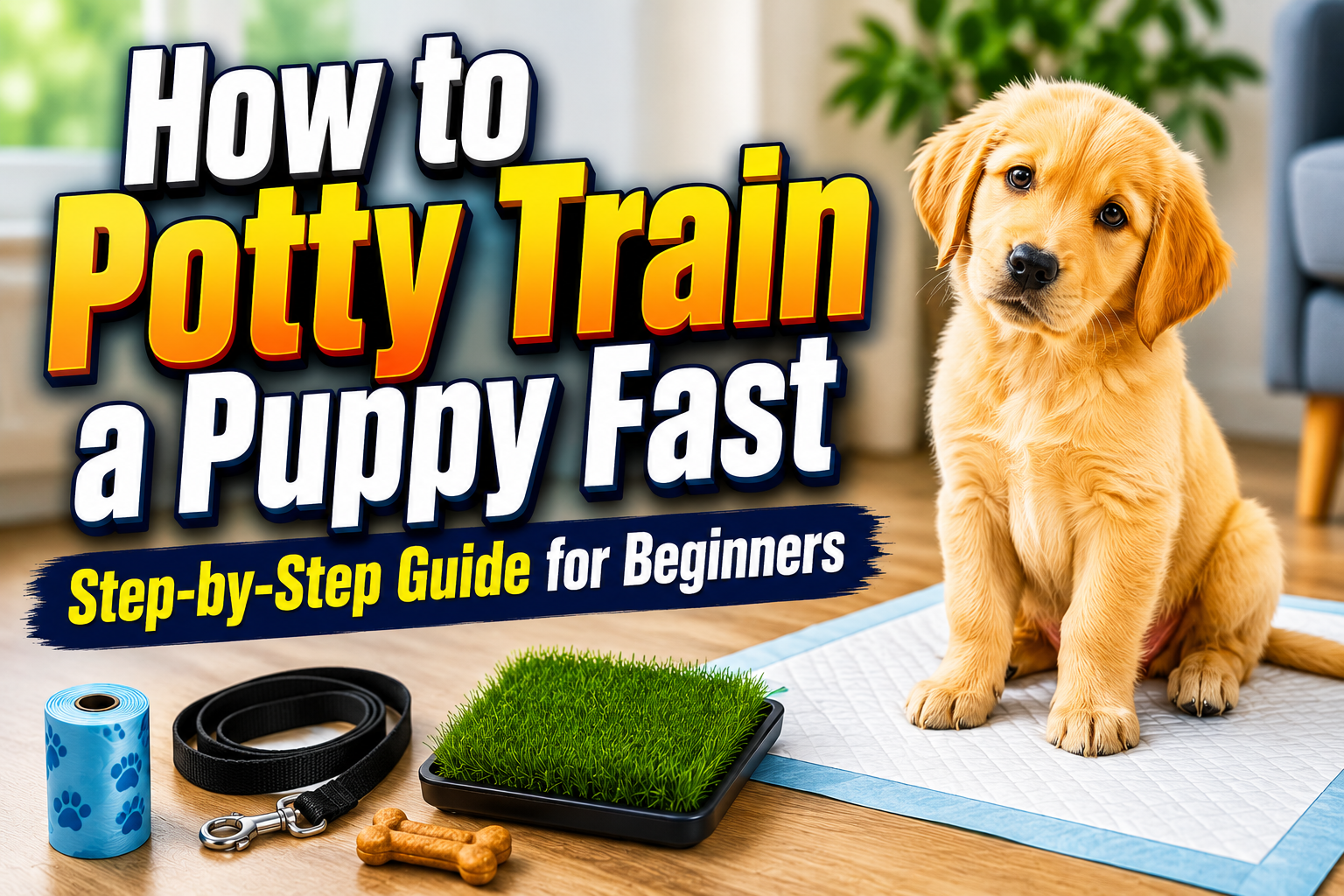
How to Potty Train a Puppy Fast requires creating a proper routine rather than trying to find a shortcut. Puppies are trained using repetition, expectations, and immediate rewards; hence, even minor everyday activities may have a significant impact. No matter whether you got a puppy at the age of 8 weeks or adopted a slightly older dog, it is important to create a simple routine that both you and your puppy will be able to follow.
Moreover, it is necessary to accept that there will be some messes during the process of training. However, they should not be regarded as a setback, but as an indication that something is wrong with the routine that you created. Consistency and patience always lead to better outcomes than punishment or frequent changes of training techniques.
Create A Schedule According To Puppy’s age
A good potty training process starts with proper expectations. It is because small puppies have very little bladder control, and for this reason, they require frequent trips outdoors. Creating your schedule according to the age of your puppy ensures no unnecessary mistakes happen.
The following table can serve as an example, but feel free to change it according to your puppy’s activities and meals.
| Puppy Age | Average Bladder Control | Recommended Potty Break |
|---|---|---|
| 8 to 10 weeks | 1 to 2 hours | Every 60 to 90 minutes |
| 10 to 12 weeks | Around 2 hours | Every 2 hours |
| 3 to 4 months | 3 to 4 hours | Every 3 hours |
| 5 to 6 months | 5 to 6 hours | Every 4 to 6 hours |
Don’t keep your eyes on the clock; instead, observe how your puppy behaves. Most puppies usually need to relieve themselves immediately after they wake up, eat, drink too much water, or finish playing very energetically.
Build A Suitable Environment Before Training Starts
A puppy learns much quicker in an environment that fosters good behavior. Creating an easy routine before training your puppy helps lessen confusion and allows your puppy to have more chances at success.
Pick One Outdoor Potty Area
You should take your puppy to the same place each time outside to relieve themselves. As puppies are very dependent on smell, it is important for them to recognize this place as their bathroom place. After the completion of the action, you should reward your puppy before bringing it inside so that he recognizes this place in a positive manner.
Maintain Consistency In Meals And Potty Schedule
A puppy usually goes potty after a meal, so maintaining regularity in meal times can help your puppy to have a routine potty schedule. This is why the schedule of all family members should be maintained in order to train the puppy effectively.
Keep Rewards Ready Before Every Trip
Time is another crucial element that plays an important part in effective toilet training. Always have some treats available in your pockets or near the door just before taking your puppy out so that he/she is rewarded promptly after doing his/her business. This will make your puppy understand what behavior is desired.
Learn 2 Habits To Speed Up Potty Training
There are many cases where the training problems have nothing to do with being stubborn dogs but rather because the owner failed to observe the times where it would be natural for a dog to want to urinate outside. Building just two basic habits can yield better results than looking for new ways to train.
1. Use Daily Events Instead of Guessing
Instead of taking your puppy out for potty during random times, plan for your puppy’s potty breaks on events that are naturally expected to stimulate his/her urge to defecate. This generally includes times like just after the puppy wakes up from sleep, 10 to 20 minutes after having food, playtime, nap time and bedtime. Planning around these moments dramatically reduces the chances of indoor accidents.
2. Watch Your Puppy Before They Hit The Floor
Puppies give subtle signs before they make a mistake. Being observant is essential since you can tell that your puppy needs to go out through their behavior. Floor sniffing, going in circles, stopping a play activity all of a sudden, going into another room, and walking away from others indicate that your puppy needs to go out.
How to Potty Train a Puppy Fast
Now that your puppy follows a schedule, it is time to train them to follow it successfully. Each time they are able to relieve themselves outdoors is a step forward, whereas indoor accidents may hinder their training process. To make life easier for yourself and your puppy, stick to a simple daily schedule.
| Time | Activities |
|---|---|
| Wake up | Take your puppy outside immediately |
| 10 to 20 minutes after meals | Potty break |
| After naps | Potty break |
| After active play | Potty break |
| Before bedtime | Final potty break |
With age, your puppy will gain more control over their bladder and will be able to hold themselves for longer periods of time. Try not to change things suddenly, as gradual changes are always better.
Mistakes That Delay Potty Training Without knowing
With a good schedule in place, some common mistakes that can hinder the progress are likely to occur. It’s important to be aware of these mistakes to save you from extra frustrations.
Waiting For Your Puppy To Ask
Puppies are generally inexperienced about telling you when they need to go out. This makes taking action way better than waiting for signs like scratching or barking.
Using Regular Household Cleaning Products On Accidents
While regular household cleaning solutions can help remove visible marks, they will not eliminate the scent that your puppy can easily smell. An enzyme-based cleaner removes odours that might encourage repeat accidents.
Giving Too Much Freedom
The puppy, despite having gone two days without accidents, is not yet fully house trained. Only give access to other areas gradually as you see your puppy’s success.
Step-by-Step Guide for Beginners
Now that your puppy has learned the routine, follow these simple steps for establishing consistent house training practices on a daily basis.
Step 1. Take Your Puppy To The Same Potty Place
A sense of consistency is created by the location. Going to the same place outside will allow your puppy to learn where to go to the bathroom and make potty times more successful and easier.
Step 2. Reward Each Successful Visit Right
Giving your puppy a small reward and praising him right after going potty helps create a strong connection between the desired action and the positive response.
Step 3. Monitor Inside Rather Than Correcting Later
Make sure you keep your puppy close by so that you can identify early warning signs like circling, sniffing repeatedly, or walking away from you. Preventing accidents is far more effective than reacting after they happen.
Step 4. Always Remain Calm in Case of An Accident
If you catch your dog in the process, stop them and take them out. If you find out about an accident later on, just clean it up without punishing your doggy. Patience is important for making your puppy more self-confident.
Step 5. Gradually Give More Freedom
Once you puppy does not have any accidents in that particular area, you can let him have more access to another area of the house. This is because gradual increase in freedom instills good habits.
Turning Daily Practice Into A Lifelong Habit
Learning potty training is one of the most important exercises when it comes to building your puppy’s confidence and habits. In the beginning, there will be some mistakes here and there but maintaining patience and adhering to a certain routine will make all the difference later on.
Remember to celebrate every accomplishment, from going out when requested to being able to stay dry overnight or throughout the whole day without any mistakes. This way, your puppy will become more responsible and confident.
Don’t hurry your pet or compare it to other dogs, everybody learns differently and at his own pace. As you keep practicing and reinforcing, your puppy will eventually learn how to use the right place for going to the bathroom.
FAQ’s
Is an 8-week old puppy ready for potty training?
Yes, start training from day one you have taken your puppy home. Potty breaks and reinforcement training are key, rather than focusing on bladder training.
How much time does potty training take?
A lot of puppies show significant improvements within several weeks, but full house training requires four to six months of training.
Do I need to use pads for potty training if I would like my puppy to go outside?
If your ultimate goal is to teach your puppy to go outside, training him to visit one specific spot will be easier than alternating pads with going outside.
When should I talk to a veterinarian?
Contact your veterinarian if your puppy has frequent accidents, seems uncomfortable during urination, or suffers from urinary incontinence after successful potty training.
How should I handle middle-of-the-night potty breaks?
Keep trips quiet, dim, and business-only. Take them outside on a leash without playing or talking, reward them silently when they go, and put them straight back to bed.
Official Sources
Disclaimer: This information is purely educational and cannot be taken as professional veterinary advice. In case of any medical issues or house training problems, please consult a professional veterinarian.

- Puppy Harness Guide: How to Choose the Right Dog Harness for Training - September 20, 2026
- Best Chow Chow Mix Breeds: Traits, Size & Temperament Guide - September 10, 2026
- Entlebucher Mountain Dog: Complete Breed Guide, Care & Training - September 10, 2026