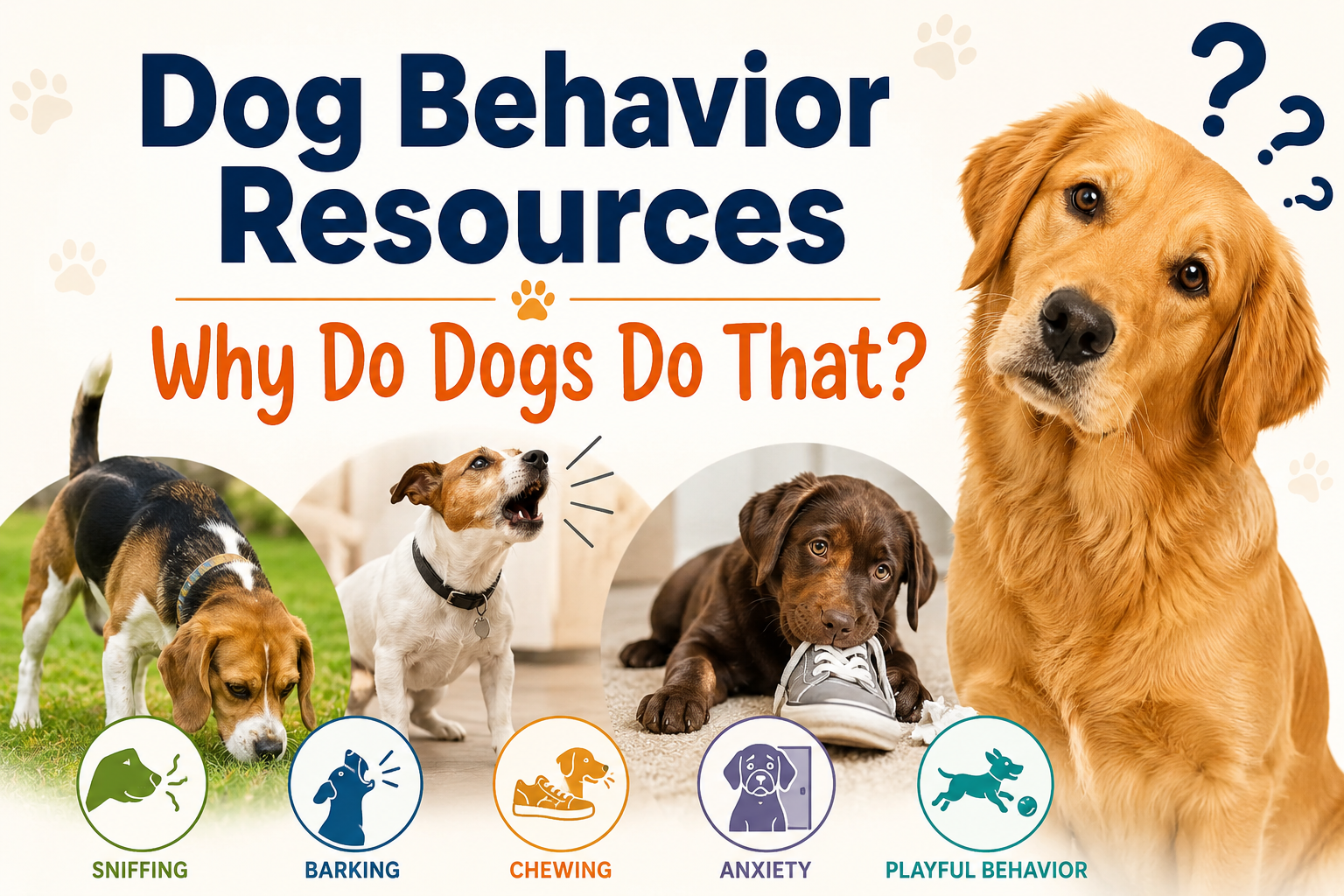
Dog behavior resources can help answer one of the most common questions dog owners ask: Why do dogs do that? Be it barking at the window, digging holes in your garden, following you around the rooms, or running wildly through the house, all of the mentioned dog behaviors typically come from somewhere. Getting to know the reasons for it will help to train your pet in an efficient manner.
The dog is not misbehaving just for being mean to you. The dog’s behavior is influenced by its instincts, communication, feelings, learned experiences, and even physical condition. Once you learn what your dog is trying to say, it will become much easier for you to react.
Why Understanding A Dog Behavior Is Important
There is always a reason for your dog’s behavior from its perspective. The causes of some behaviors are genetic traits carried from its wild forefathers, whereas the causes of other behaviors are acquired due to daily interaction with people and the environment.
Suppose your dog is barking in the evening by the front window each time. It doesn’t mean that it is stubborn but rather that something unusual is going on in front of your house. Passers-by, delivery men, animals, or another dog can trigger your pet’s attention, which will help you to change the behavior.
Learn what your dog means with Growling Dogs Explained.

The same idea applies to many other behaviors. A puppy chewing furniture is probably just exploring its environment or dealing with teething problems, not being naughty. Taking into account the circumstances will help to make the right training decisions.
Behavioral specialists in veterinary science state that canine communication includes the use of body language, facial expression, smell, and vocalization. Watching these signals together provides a much clearer picture than focusing on a single behavior.
Dog Behavior Resources At A Glance
| Behavior | Most common reason |
|---|---|
| Barking | Communication |
| Growling | Warning |
| Licking | Affection |
| Tail wagging | Emotion |
| Digging | Instinct |
| Zoomies | Energy release |
| Chewing | Exploration |
| Howling | Social communication |
What Influences Your Dog’s Behavior?
There are four factors that affect the behavior of dogs.
Instincts
Dogs possess instinctual traits of their ancestors even today. These include digging, smelling, running after moving things, guarding their valued possessions, and investigating novel smells. Some breeds have these instincts in greater measure while others have them to some extent.
Commuting and Experience
Dogs learn what behavior leads to a positive outcome very quickly. When getting attention for sitting properly, chances are high the dog will keep doing it. Also, when jumping up leads to getting attention, this kind of behavior may persist due to unintentional reinforcement.
Emotions
Excitement, curiosity, fear, confidence, and stress can influence a dog’s behavior. Depending on the environment, experiences, and emotions of the dog, it can behave differently.
Discover the reasons behind Why Do Dogs Scratch Doors?
Learn To Understand Your Dog’s Body Language
One of the most important things any dog owner should be aware of is how to interpret their dog’s body language. Normally, there are always some signs from a dog before it starts to bark, growl, hide, or get too excited.
Look for:
- Ear position
- Tail movement
- Eye contact
- Facial expression
- Body posture
- The surrounding environment
- Speed of movement
For example, the tail movement does not always mean that the dog is happy. In case the body and tail are loose and wagged, the dog will look friendly, but when the dog is tense and its tail is high, it may show excitement or uncertainty.
Common Dog Behaviors You Must Know
Why Dogs Bark
Barking is one of the major forms of communication among dogs. Dogs might bark to alert their owners, welcome guests, express excitement, get attention, or react to noises from outside. It is important to find out the reason before trying to control the barking. The solution to dealing with a dog that barks whenever there is a delivery truck on the street is different from solving the problem of a dog that barks due to boredom or seeking attention.
Why Dogs Lick Humans
Dogs usually lick humans to show their affection, welcome them, be curious about something, or simply get attention. Some dogs also like to lick the salty human skin. Licking is completely natural behavior in dogs. However, sudden changes in dogs’ licking habits are often an indication of some health problems or stress in the animal.
Why Dogs Wag Their Tails
Wagging the tail is a means of communication rather than merely an expression of joy. The speed, height, and direction of the wag, together with the general stance of the dog, can help determine what emotion the dog is experiencing. When the dog wags its tail loosely, it shows that it is in a good mood. Stiff posture with a raised tail may express enthusiasm and caution at the same time.
Why Dogs Get Zoomies
Zoomies, also referred to as frenetic random activity periods (FRAPs), are a sudden onset of bursts of energy whereby the dog runs around in an unexpected manner. This usually happens after bathing, sleeping, or playing with the dog. Zoomies are quite common among healthy dogs as a means of releasing excess energy. It is important for you to provide enough space to your dog during zoomies.
More Common Dog Behaviors Explained
Some dog behaviors might appear unusual, but in fact, there is always a very rational reason behind them.
Why Dogs Dig
Dogs often dig because it comes naturally to them. Digging is used for hiding toys, looking for prey, cooling down on hot days, and simply having fun. In case you have any issues with your dog’s digging, just provide him with more daily physical activity, as well as other tasks like puzzles and scents.
Why Dogs Eat Grass
Although some of the dogs that are in good health eat grass from time to time, the actual reason for this behavior is unknown but it could be due to curiosity, the flavor or just normal foraging behavior. Eating grass occasionally does not do any harm to dogs. Eating grass along with vomiting, diarrhea, and loss of appetite, however, needs the attention of the vet.
Find out Why Dogs Move Their Eyebrows.
Why Dogs Follow You Everywhere
Dogs are social creatures who will naturally bond closely with their family members. The fact that they follow you around might simply mean that they like spending time with you or that there is some kind of reward associated with being near you. In case they get anxious whenever you try to leave, then it might be due to separation anxiety.
Why Dogs Stare At Humans
It is normal for dogs to stare since most of the time, they may be staring to get a signal from you, looking for food, or simply trying to understand what you are doing. A soft stare is usually okay; however, an intense stare together with a stiff body and growls indicates discomfort.
Why Dogs Howl
Howling is one of the means of communication that dogs use. Most of the time, some dogs will howl when they hear sirens, music, or even other dogs. There are also times when dogs howl due to being alone for a long period of time.
Why Dogs Engage in Smelly Rolling Behavior
This smelly activity may not be very pleasant for humans, but it is one of those natural instincts that dogs possess. Scientists think that it can be related to odor communication that is passed from wild relatives. It will be easier to prevent a dog from reaching smelly spots than preventing its rolling activity.
Why Unwanted Behaviors Arise
Most unwanted behaviors do not result from being stubborn or dominant; rather, they are the manifestation of a critical need that is not being fulfilled.
Some of the common causes include:
- Boredom
- Lack of exercise
- Stress
- Anxiety
- Fears
- Consistency issues while training
- Pain or illness
- Changes in schedule
For example, a dog left alone for many hours may engage in barking, furniture chewing, and digging merely due to the lack of physical exercise and stimulation.
Discover if Dogs Can See Their Reflection in a Mirror.
Dog Behavior May Indicate A Health Problem Too
Most dog behaviors are perfectly healthy. What matters most is whether there is a change in the dog’s usual behavior.
If you have observed any of the following, please contact your veterinarian:
- Aggressive behavior
- Fear and hiding
- Licking or chewing
- Pacing around constantly
- Lack of appetite
- Excessive tiredness
Changes in behavior can sometimes indicate pain and illness, so do not ignore them.
Creating Better Habits For Your Dog
It’s not enough to know how they think. Consistency and repetition make all the difference.
- Reward good behavior right away.
- Give daily exercise and playtime.
- Give them puzzle toys to stimulate their mind.
- Keep training short and positive.
- Stick to a consistent schedule.
- Don’t use training methods based on punishment.
Positive reinforcement makes learning easier and builds confidence.
Better Understanding Leads To Better Care
Every day, your dog communicates through its behaviors and body language. The more understanding you have about why your dog engages in such behaviors, the easier it will be to react calmly and confidently.
Rather than asking yourself “How can I get rid of that behavior?” try asking “Why does my dog behave like this?” That simple shift in thinking often leads to better training, fewer misunderstandings, and a happier life for both you and your dog.
Learn Why Dogs Love Squeaky Toys so much.
FAQ’s
What causes my dog to act strangely all of a sudden?
Some reasons include sickness, discomfort, stress, aging, or changes in the environment. If the behavior continues or seems unusual, arrange a veterinary examination.
Does it mean something negative when the dog growls?
Not necessarily. The growl serves as a warning and lets people and other animals know that the dog feels threatened. It is more useful to understand why the dog growled than to try and suppress it.
Should I worry about my dog having “zoomies”?
Not really. This is how some dogs usually let out extra energy and excitement.
Can all unwanted behaviors be trained away?
Most behavioral issues can be fixed via training, exercise, and enrichment. Behaviors caused by pain, sickness, or serious anxiety may require veterinary treatment or assistance from a professional behaviorist.
How can I tell if my dog is fearful versus aggressive?
A fearful dog tries to look smaller (cowering, tucked tail, avoiding eye contact), while an aggressive dog tries to look larger (stiff posture, raised hackles, hard stare, exposed teeth). Because fear often drives defensive aggression, give the dog space immediately in both scenarios.
Sources
Disclaimer: The purpose of this article is educational and not to be used as a substitute for professional advice from a veterinarian. If your dog shows sudden, drastic, and lasting changes in its behavior, please seek help from a licensed veterinarian.

- 9 Best Dog Life Vests of 2026: Reviews & Buyer’s Guide - September 15, 2026
- Silky Terrier: Complete Breed Guide, Personality, Care & Training - September 10, 2026
- Miniature Poodle: Complete Breed Guide, Personality, Care & Training - September 10, 2026