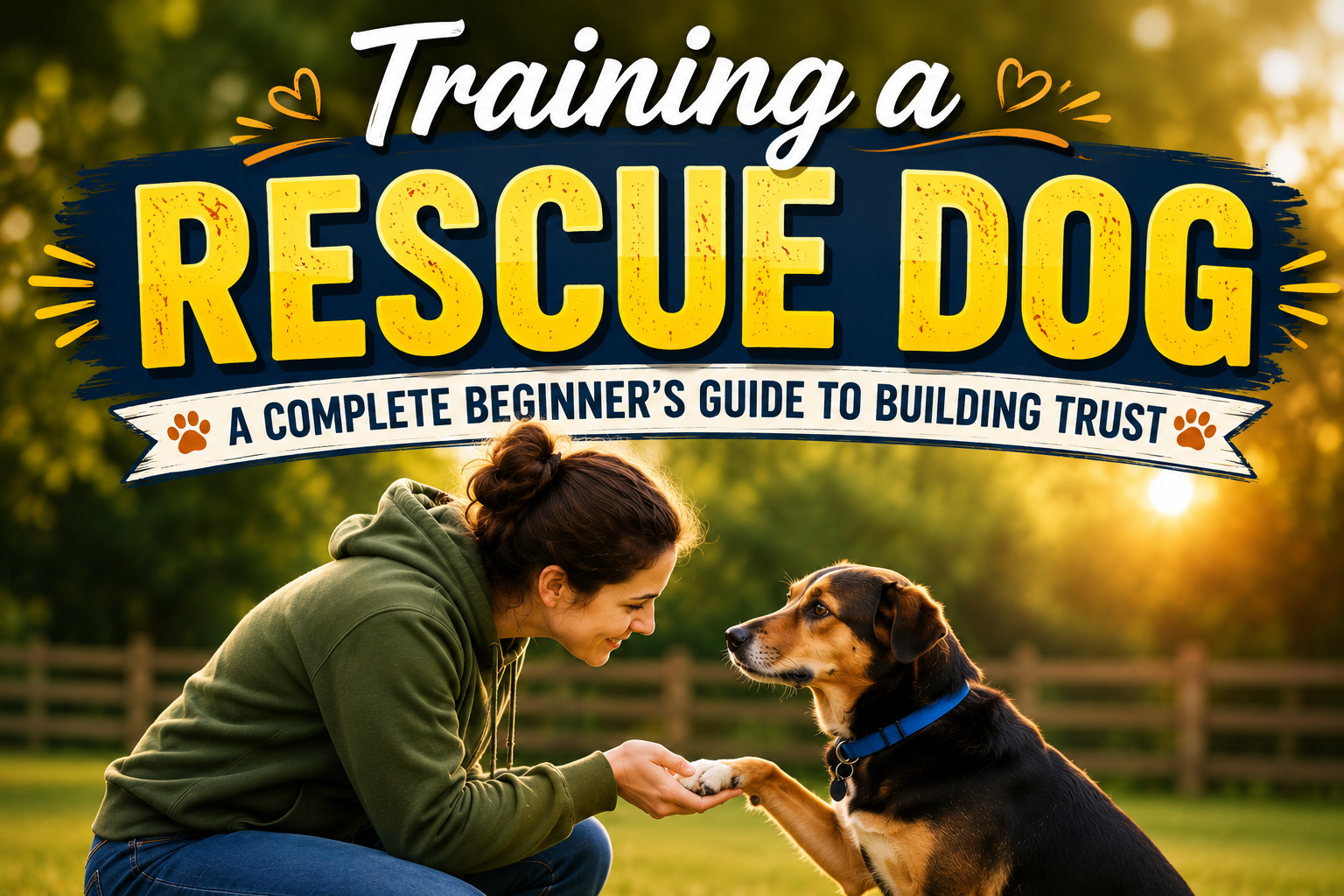
Training a Rescue Dog starts with gaining the trust of your dog rather than training him with commands. Irrespective of whether you have adopted your new pet from a rescue centre, a shelter or some other place, he would need to adjust to a completely new environment and it takes time.
The presence of strangers, change in schedules and new surroundings could confuse the friendliest dog as well and giving it some time to get settled down would make the process easier.
Each rescue dog comes with their own set of experiences. While some dogs might have been well taken care of but had to be given up by the family due to certain reasons, some dogs might have gone through neglect or inconsistent care.
In most situations, you would never know the complete history of your rescued pet and it is fine too. Rather than dwelling on past experiences, make sure to create a better future.
Why Rescue Dogs Need Time to Adjust
Transitioning from one house to another is one of the biggest changes a dog has to go through. In the first few days after adopting a dog, it is expected that it will be quiet and careful in its surroundings since it is just getting used to everything. Some might even appear active in the beginning but stressed once they start to adapt. None of the two should be considered disobedient behavior.
Avoid common mistakes with our Puppy Harness Guide.
Dogs learn better when they are calm and comfortable. When a dog is stressed, it tends to focus more on its surroundings than following commands. It is for this reason that professional trainers always recommend creating trust first before proceeding with obedience training.
A lot of animal shelters mention the 3-3-3 adaptation rule to describe how rescued dogs typically adjust to their new homes. Although the process is individual for each dog, this rule can help you understand what to expect as an owner.
| Adjustment Period | What You May Notice |
|---|---|
| First 3 days | Nervousness, quietness, or overexcitement |
| First 3 weeks | More self-confidence, better awareness of the routine |
| Around 3 months | More attachment to the family and emotional comfort |
Building a Safe Space
Having prepared your home for your rescue dog will ensure that the process of acclimating is easier. You should create a space where your pet dog can have a bed, fresh water, food bowl, and some chewable toys. The purpose of having the area is to provide your dog with the space where it can relax without disturbance whenever necessary.
You will need some extra time to get rid of things that may hurt your dog, such as electrical wires, cleaning supplies, medications, and other small items. In case you have a garden, make sure there are no gaps in the fencing since scared dogs can run away trying to get used to new surroundings. A safe environment allows your dog to explore with confidence instead of encountering unnecessary risks.
Understanding Your Dog’s Body Language
One of the most useful things that a new owner should learn is how to interpret the behavior of their dog. The rescue dogs may give a number of signs that they are uncomfortable before they actually bark and growl. Recognising these signals allows you to respond calmly and prevent situations from becoming overwhelming.
The comfortable dog is relaxed, with loose muscles and the natural posture. On the contrary, the signs that can tell that your dog is under pressure include licking lips, yawning when not sleepy, trembling, having ears back, not looking into the eyes and refusing food. You should ease the tension rather than force the dog to go on. Respecting your dog’s communication builds trust much faster than expecting it to face every situation immediately.
Trust Is Earned Through Daily Interactions
Earning trust does not take any fancy training tricks; rather, it is accomplished through daily practices that help the dog realize it can depend on you. Offering regular feedings, being a reward for calm behavior, talking softly, and letting the dog come to you at his own pace will go a long way towards strengthening the bond you have developed with him. This kind of interaction will give him confidence and security that will make future training efforts much easier.
For example, if your dog is afraid of wearing a lead, do not try to force it. Instead, let your dog examine the lead, give it a treat for calm and curious behavior, and gradually get used to it during several short sessions. Small, positive experiences like this teach your dog that new situations are safe, helping confidence grow naturally over time.
Positive Reinforcement Facilitates Training
After your rescued dog feels comfortable in your household, you may be able to incorporate some basic training. Positive reinforcement is commonly advised by today’s dog trainers since it teaches the dogs to repeat those actions that produce good results. Rather than punish the undesirable actions with negative consequences, you should use something to reward the desirable behaviors.
Avoid common mistakes with our Puppy Harness Guide.
Training sessions should be short and regular, as well as pleasant for both the trainer and the dog. Usually, five to ten minutes is sufficient for beginner dogs within the first few weeks after being adopted. Simple actions like sit, come, stay, and leave it are the most suitable to begin with.
It is best to practice these commands in a calm environment before exposing your dog to more distractions. Every successful training session builds your dog’s confidence while strengthening the bond between you.
Socialization Must Never Be Hasty
Most dog owners think that socializing their rescue dog involves meeting as many different dogs and people as possible. However, socialization really means allowing your dog to experience a series of pleasant moments at a rate he can cope with. An anxious dog that is made to join crowds will get even more scared and make future training hard for you.
Start with slow walks, trips to a quiet park, or brief encounters with nice people. Observe your dog’s body language and give rewards for relaxed behavior. Whenever your dog seems uncomfortable, you can simply move further away from what scares him and try again another time.
Common Myths About Rescue Dogs
Rescue dogs have been widely misunderstood due to many misconceptions which are not backed up by recent studies on canine behavior.
| Myth | Reality |
|---|---|
| Rescue dogs cannot be trained. | All dogs can be trained regardless of age via consistent, reward-based training. |
| All rescue dogs shows behavioral issues. | Many dogs from rescue shelters become wonderful family pets.. |
| Older dogs cannot learn new commands. | Adult and senior dogs can easily pick up new behaviours. |
| An anxious dog requires discipline. | Anxiety is lessened through through patience, routine, and positive reinforcement, not punishment. |
By knowing the truth about these misconceptions, owners will have more realistic expectations when training their dog.
Common Mistakes New Owners Must Avoid
Despite good intentions, even newly adopted dogs can make mistakes that affect their progress. But this can be easily avoided once you realize how rescued dogs acquire skills.
- Expecting immediate obedience in the first few days.
- Exposing your dog to too many people or places at once.
- Punishing your dog for being afraid rather than finding out why he behaves that way.
- Having different rules within your family..
- Comparing your dog to another adopted dog.
- Skipping daily exercise and mental activities.
Always remember that training your dog is not a competition. Some dogs become confident in themselves quickly whereas some take months to feel secure enough.
When To Ask For Professional Help
While most rescue dogs respond well to patient training, there are those who might require extra help. If your dog shows persistent aggression or serious fear, it is best to talk to a professional dog trainer and have an evaluation conducted by a veterinarian behavior specialist. Doing so will help avoid any potential problems before they escalate, and provide you with a training program designed for your dog.
Creating a Lifetime of Trust
Training a Rescue Dog is a process that is based on developing trust and patience. You should provide your pet with a comfortable routine, learn its body language, reward it for good behavior, and slowly introduce it to new situations. Each adopted dog takes time to learn new things, but through training and realistic expectations, you will be able to create a relationship of trust instead of fear.
Discover what actually works in our How to Stop Your Puppy Barking guide.
FAQ’s- Training A Rescue Dog
What is the duration for a rescue dog to form trust?
Not all dogs require the same period to gain trust in their new owners. It takes some dogs a few days, while others require weeks or even months.
When should I begin to train my rescue dog?
Training can start from the very first day you have the dog, with basics and reward-based training; just keep sessions short and give your dog some time to adjust.
Can an adult or senior dog be trained?
Older dogs can easily be trained as well; however, this requires patience as it will take them some time to understand everything.
What should I do if my dog is afraid?
Do not force interaction and do not punish a scared rescue dog. Just give your dog more space and try to maintain the same routine and reward good behavior.
Official Sources
Disclaimer: The content on this page is for informational use only. For personalized advice regarding your pet’s health, always seek guidance from a certified veterinarian.

- 9 Best Dog Life Vests of 2026: Reviews & Buyer’s Guide - September 15, 2026
- Silky Terrier: Complete Breed Guide, Personality, Care & Training - September 10, 2026
- Miniature Poodle: Complete Breed Guide, Personality, Care & Training - September 10, 2026