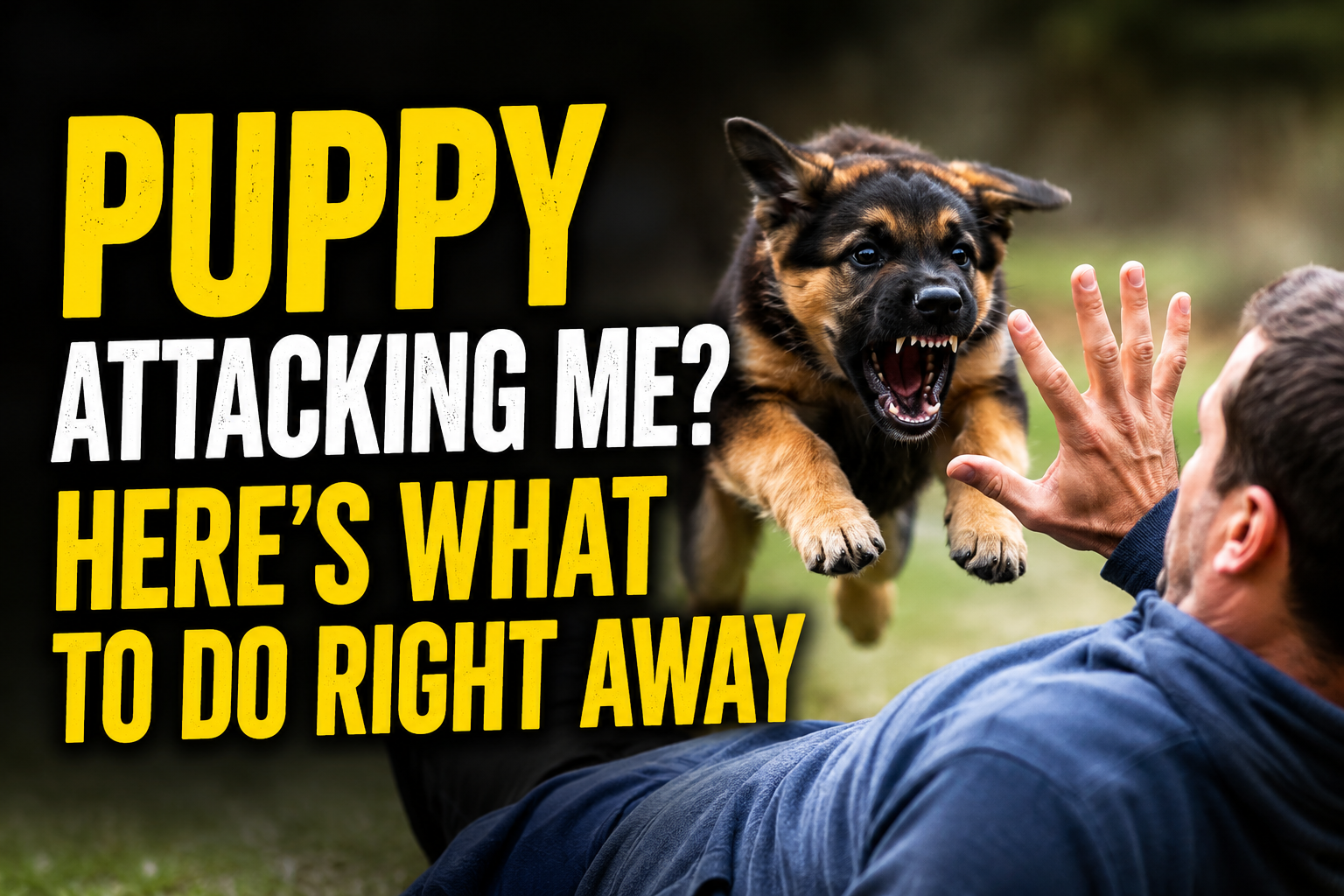
Puppy attacking me is something many new dog owners search after being bitten, attacked, or chased by their puppy in the house. It may be scary at the moment, but usually, there is no intention for a puppy to cause harm. More often, the puppy bites due to teething, playfulness, being too excited, or tiredness. Acting calmly from the beginning will help the puppy develop good behavior.
In this article, you will find out why puppies behave this way and what you should do immediately to stop the biting safely and effectively.
Puppy Attacking Me: Quick Summary

Avoid common mistakes with our Puppy Harness Guide.
| Cause | Action |
|---|---|
| Teething | Chew toy |
| Play | Stop play |
| Overtired | Nap |
| Excitement | Calm break |
| Fear | Give space |
| Pain | Vet check |
Why Does My Puppy Attack Me?
While owners may be concerned that their puppies are “attacking” them, it actually refers to the fact that the puppy bites, grabs at clothing, chases feet or jumps and barks. While such actions can be harmful, it is not aggression but just puppy behavior. However, this does not mean that you should just turn a blind eye to these actions since puppies pick up things very quickly.
Common Reasons Puppies Bite
Teething
Teeth are the next big reason why puppies bite. The process of replacement of milk teeth with the permanent ones needs some comfort, and chewing is one of the most common ways to ease teething discomfort. It is not unusual for puppies to bite anything around them since it is close by.
It is recommended to keep enough of puppy toys for biting and redirect the puppy to them each time it shows signs of biting.
Play Excitement
Puppies have to bite and playfully wrestle each other while playing. Having been adopted into a family, they will tend to bite people too because they did not learn that it should not be done differently. For example, a playful 10 weeks old puppy will probably run behind people’s feet in order to play, but every time biting happens, it should be stopped in order to teach that biting interrupts the fun.
Overtiredness
There is also the issue of overtiredness. Puppies need about 16 to 20 hours of sleep per day, and without proper naps they might become overexcited and uncontrollable. It is worth considering whether biting gets worse after playing, and give the puppy some rest instead of play.
Fright or Uneasiness
The puppy may have fear or unease that causes it to bite. This could be due to noise, strangers, forceful handling, or pain. In case your puppy begins to bite for no apparent reason at all, especially when being touched, take him to the veterinarian for a checkup.
Is It Play Biting or Real Aggression?
Most puppy bites are play-biting and not actually aggressive. Body language will often be key to telling the difference.
| Play biting | Possible aggression |
|---|---|
| Loose body | Stiff body |
| Tail wag | Tail rigid |
| Play bow | Hard stare |
| Stops easily | Keeps biting |
| Relaxes quickly | Stays tense |
Repeated snapping, growling, or biting that doesn’t stop after being interrupted calmly may need a veterinarian’s evaluation.
What To Do Right Away
There are few tips you may follow. Here we have listed them:
Remain Calm
Do not raise your voice at the puppy and do not move away from him as these actions will only add more excitement and fear and will lead to the worsening of the situation. You should stay still and talk calmly.
Stop Playing
When your puppy bites you while playing, stop all interactions with him for 20-30 seconds. Stand up and put your hands in pockets and wait until your puppy gets relaxed.
Give Puppy A Chewing Toy
Always use a chewing toy when your puppy starts biting you or your clothes. When he will grab a toy, give some calm encouragement or reward him. Rewarding good behavior is one of the quickest ways to deal with biting.
Understand It With Instance
Your 12-week-old puppy always pulls at your sleeves at night after playing. Rather than shouting at the puppy, you simply stop playing, wait for your puppy to calm down, and give him/her a chewing bone. Over time, the puppy will start selecting the bone as it gets attention from doing that and not by biting people.
Build trust faster with our Training a Rescue Dog guide.
Surviving the Puppy Witching Hour
Almost every new dog owner experiences a sudden spike in wild behavior just as evening approaches. Dog trainers often call this specific time the witching hour. Your normally sweet puppy might suddenly start sprinting across the room, barking randomly, and snapping at your ankles with surprising intensity.
This frantic energy usually stems from a mix of mental fatigue and a final burst of pent up physical energy before nighttime. Families frequently mistake this wild behavior for aggression or a complete failure in training. Instead of getting frustrated, you can manage this daily chaos with a few specific adjustments.
- Change the Environment: Move the puppy outside to a safe enclosed space where they can burn off the adrenaline safely without human feet or living room furniture getting in the way.
- Try Scatter Feeding: Toss a handful of puppy kibble into the grass or onto an indoor snuffle mat. Forcing a dog to sniff out their food requires intense mental focus, which naturally lowers their heart rate and calms their nervous system.
- Enforce a Quiet Routine: Treat your puppy like a human toddler getting ready for bed. Dim the lights and lower the television volume. Hand the puppy a frozen chew toy on their bed to smoothly transition them from frantic play mode into sleep mode.
- Avoid Physical Corrections: Pushing the puppy away or grabbing their collar during a zoomie session will only make them bite harder. They will view your hands as part of a rough wrestling match. Simply step out of the room for a minute if the biting becomes completely unmanageable.
Mistakes That Can Make Puppy Biting Worse
There are many actions owners unintentionally take that may cause their puppies to bite even more. By avoiding making these common errors, your puppy will be able to learn quicker.
| Mistake | Better choice |
|---|---|
| Shouting | Remain calm |
| Rough play | Gentle games |
| Playing with hands | Use chew toys |
| Inconsistent rules | Be consistent |
| Physical punishment | Reward good behavior |
For example, one family member allowing the puppy to bite when playing whereas another does not sends the puppy a conflicting message. The entire family needs to have the same reaction towards biting.
Teach Bite Inhibition
Bite inhibition is your puppy’s ability to control the force of its bite. It is normal for puppies to learn bite inhibition when playing with their litter mates. However, puppies learn bite inhibition even when they move out and join a new family. When your puppy bites you lightly, just remain calm. If it hurts when your puppy bites you, quietly stop the activity and offer your puppy a chew toy. Inhibiting a puppy’s bite can take time, and many puppies will take several weeks to improve.
Daily Behaviors That Reduce Biting
Good daily habits often stop undesirable behavior before it starts.
- Give your puppy adequate rest every day.
- Offer multiple chew toys that are safe to use.
- Plan training sessions regularly.
- Reward the puppy for good behavior by praising him.
- Use mental exercise toys to keep the puppy engaged.
- Keep playing sessions short and positive.
Providing physical and mental stimulation will help avoid rough biting.
When Do You Need To Be Concerned?
Not all instances of puppy biting are a cause for concern; however, there are circumstances where you may want to consider getting some help from a professional.
If you have a puppy that:
- Bites without provocation.
- Shows signs of pain on touch.
- Growls, snarls, or lunges often.
- Becomes unusually fearful or shy.
- Is not responding to your training efforts.
Consultation with a veterinarian will help ensure that there is no underlying physical condition before behavior training begins. In case there is no underlying illness, your vet might advise you to consult a dog trainer
Common Misconceptions On Puppy Biting
Many myths can make training more difficult. Knowing the truth will help you act accordingly.
| Myth | Fact |
|---|---|
| My puppy is trying to dominate me. | Puppies bite for play, teething, and excitement. |
| Punishment works faster on biting behavior. | Training works better with consistency and positivity. |
| Biting will naturally fade out as puppies grow. | Good habits need to be taught. |
| Growling indicates aggression. | Growling may indicate fearfulness, anxiety, and stress. |
Discover what actually works in our How to Stop Your Puppy Barking guide.
Train Your Puppy To Be A Well-Mannered Dog
It is natural for puppies to go through a biting stage, but this should not be a lifelong one. Each time your puppy is taught to behave in the right manner by being diverted to a chew toy and getting a reward, you are building good socialization skills in your puppy.
If done with consistency, most puppies will grow out of the biting phase and will become good-behaved adults. The effort you put into training now lays the foundation for a confident, well-behaved adult dog.
Frequently Asked Questions
At what age do dogs stop biting?
Puppies bite less as they develop their permanent teeth, which typically happens around six to seven months of age. However, training is an important factor.
Should I yelp when I get bitten by my puppy?
Some puppies stop, while others will become more excited. Stopping play calmly is a better strategy.
Should I expect my puppy to bite me daily?
Yes. This is normal during teething and learning stages. With training, it will lessen over time.
Can a puppy’s biting eventually turn into aggression?
It can if the behavior is ignored or reinforced. However, proper training can ensure that your puppy won’t grow up to be aggressive.
Sources
Disclaimers: This article is written purely for educational purposes and should in no way be regarded as a substitute for veterinary advice. In case your puppy shows any aggressive behavior, seek veterinary help.

- Puppy Harness Guide: How to Choose the Right Dog Harness for Training - September 20, 2026
- Best Chow Chow Mix Breeds: Traits, Size & Temperament Guide - September 10, 2026
- Entlebucher Mountain Dog: Complete Breed Guide, Care & Training - September 10, 2026