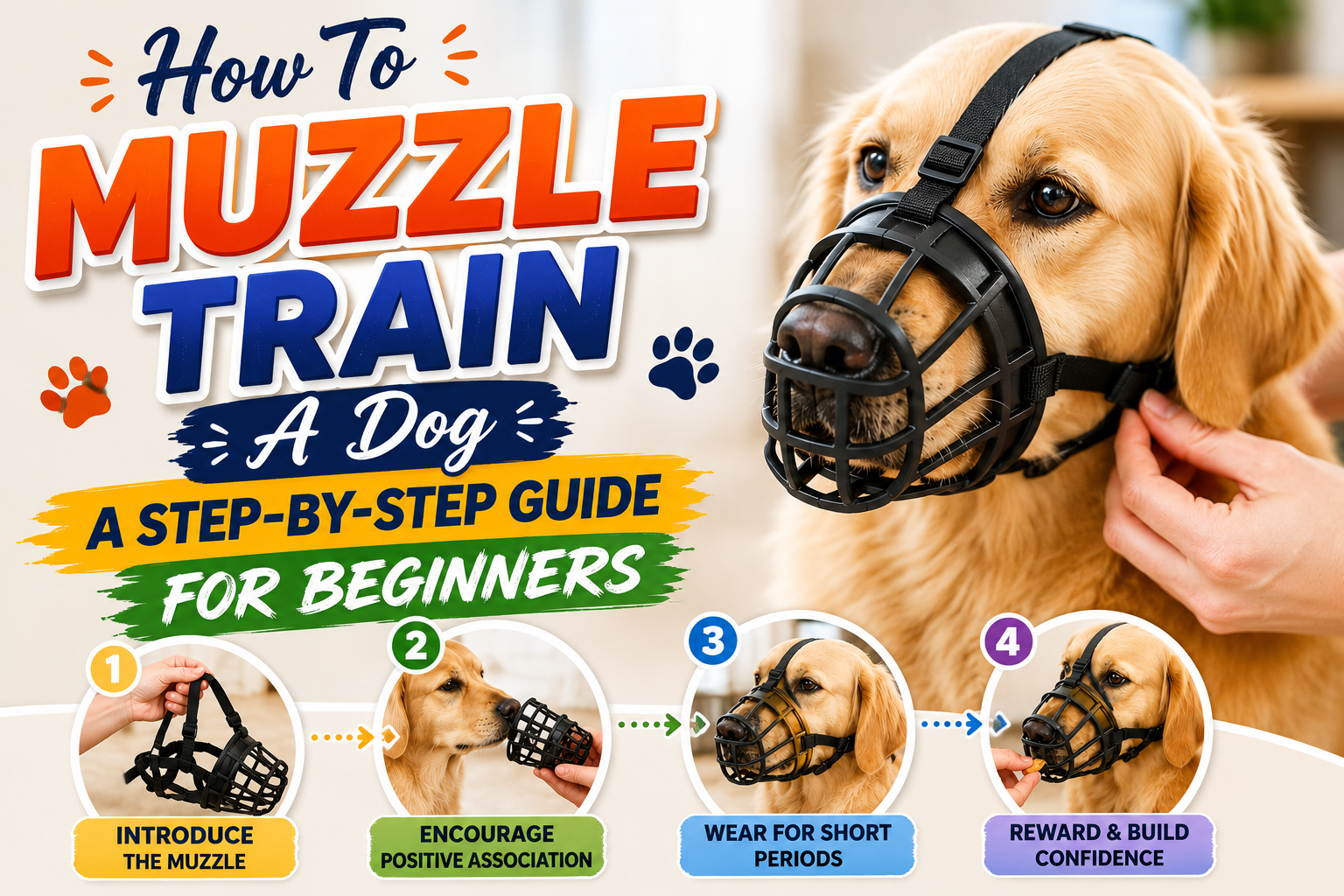
How to muzzle train a dog should be seen as a gradual process rather than something that is rushed, to put a piece of equipment on a pet’s face. Instead, it makes sense to encourage them to approach it, put their nose inside it, accept the fastening and be comfortable wearing it.
The usefulness of a muzzle lies in the fact that it may come in handy in cases of veterinary procedures, transportation, preventing scavenging or when one needs to prevent a bite. Even a well-bred and friendly dog may become aggressive when threatened, sick or injured; therefore, it is wise to muzzle a dog prior to emergencies. It is Cornell University’s present recommendation that all dogs learn to wear a basket muzzle with ease and comfort.
Choose A Muzzle That Allows Normal Behavior
In most cases, a basket muzzle is the right choice for training purposes. If the basket muzzle is fitted properly, the dog is able to pant and drink water or eat. Closed muzzles are not recommended for long periods of time because they make it difficult for dogs to pant.
Check whether the fit is correct before beginning the training process since one size of the muzzle may not be right for all dogs of the same breed and weight. The basket must not irritate the eyes and nose, while the fastening should be firm without applying any pressure.
A suitable muzzle should allow the dog to:
- Pant easily
- Have access to water
- Accept small treats
- Open mouth easily
- Move head easily
- Wear without rubbing
According to Cornell University, it is important to check the strap so that the muzzle doesn’t slide over the head but allows some room under it.
Introduce The Muzzle Without Putting It On
- Start when the dog is relaxed and the environment is quiet. Show the muzzle to the dog where it can see it and reward the dog for investigating calmly. Investigation with the eyes, moving towards the equipment or sniffing it are appropriate first reactions.
- At this point, do not bring the muzzle towards the dog’s face. Allow the dog to set the distance. When the dog shows interest in the muzzle, put your dog’s favorite treat at the nose end of the basket.
- In case the dog shows some reluctance, start with something simpler by rewarding eye contact with the muzzle and licking food off the outside of it rather than demanding that the dog put its nose inside the basket immediately.
- Shorter training sessions are better than long ones. Cornell currently advises keeping individual training sessions short, where nose placement sessions end in a minute or two.
Teach Your Dog To Put Its Nose Inside
When the dog is comfortable approaching the muzzle, move the treat further in the basket. The dog should reach in and take the treat, allowing you to move its nose in gently. When the dog has all of its nose inside, reward it and let it out. Repeat this process until it becomes second nature.
A practical progression would be:
- Look at the muzzle
- Approach the muzzle
- Touch the opening
- Insert a portion of the nose
- Insert the entire nose
- Stay in place for a short time
- Accept the strap
- Move on the muzzle normally while wearing it.
Avoid forcing the muzzle onto the dog or holding the dog’s head in place. AVSAB recommends rewards-based training and gradual desensitization, rather than forceful methods.
Increase Wearing Time Gradually
Once the dog offers its nose voluntarily, begin rewarding it for staying in place. Feed several small rewards through the basket and let the dog take out its nose.
Do this until it becomes effortless for the dog to stay in place. You do not have to move directly from a few seconds to several minutes at once. According to Blue Cross, the training process should be gradual, rewarding and regressing back to previous steps if necessary.
Pay attention to the dog’s reaction rather than just watching the clock. If the dog pulls back, refuses food or looks tense, the training step may be too advanced for it. The desired effect is active involvement, not resistance.
Introduce The Strap & Fastening
The basket itself may become familiar before the dog is comfortable with the strap sliding back over the top of the head. This means that it is best to introduce this step separately so that the dog does not become overwhelmed by more than one new sensation at a time.
Allow the dog to hear you work the buckle or fastening mechanism, and reward the animal as soon as the sound has finished. Slide the strap up and over the back of the head but do not fasten it, and reward calm behavior.
When the dog is comfortable, fasten the muzzle, allow the pet to explore inside the basket, and reward. Repeat this process several times over subsequent days, gradually increasing the length of time the muzzle is worn. Cornell and Blue Cross advise only proceeding to the fastening step when the dog has become confident about exploring the basket with its nose.
After fastening, check that the muzzle is not causing the dog any unecessary discomfort. The animal should be able to move its head freely without the strap interfering.
How Long Does Muzzle Training Take?
There is no set timeline. An un-handled dog may learn quickly, whereas an adult dog that has been restrained with a muzzle in the past will require much more time.
Cornell University suggests sessions of about 5-10 minutes when training the dog in general, while certain sessions in the training process will take only a couple of minutes. The key is to make the process a series of small experiences instead of doing everything in one go.
Use the dog’s behavior to decide when to progress.
| Ready to progress | Slow down |
|---|---|
| Takes treats | Refuses food |
| Approaches muzzle | Avoids it |
| Keeps nose inside | Pulls away |
| Relaxed movement | Freezing |
| Accepts fastening | Repeated pawing |
If the dog becomes uncomfortable, return to the last stage that went well. Progress should be based on confidence, not the number of training days.
Practice Walking With A Muzzle
A dog that can wear a muzzle standing still might perceive the muzzle differently when it begins moving. Start indoors with some steps and reward normal movement. Move around the house, change directions, and use familiar cues. When that is mastered, try a quiet garden or another familiar outdoor environment before adding any more distractions.
The following sequence may prove to be helpful:
- Moving around one room
- Moving around the house
- Staying in the garden
- Going for a quiet familiar walk
- Adding mild distractions
- Training in busier environments
Blue Cross suggests changing locations and adding lead walking later on in the process when the dog gets used to the muzzle. Avoid having the first outing in a busy and difficult environment. The dog needs to get accustomed to its movements with unfamiliar gear along with everything else going on around it.
Recognize Signs That Your Dog Is Uncomfortable
A dog that is comfortable wearing its muzzle can still have some normal interaction. Eating, moving, and reacting to communication are good indications that the training process is going quite well.
Look out for:
- Pawing
- Head shaking
- Freezing
- Escaping
- Muzzle avoidance
- Refusal of normally valuable food
- Body stiffening
A very calm dog is not always a comfortable one. Freezing is a sign of stress too; so observe the dog’s whole body and how willing it is to continue participating. If there is any sign of discomfort, then go back to an easier step. The Cornell guidelines for handling state that dogs must be allowed to opt out of training if they become uncomfortable with the process.
Avoid Mistakes That Can Create Fear
Muzzle training can go backwards quickly if the person tries to do everything in just one session. The act of chasing the dog with the muzzle, restraining its head or force-fitting it on the dog will form an association that will take much longer time to undo.
Avoid these common mistakes:
- Force-fitting it on the face
- Restraint of the dog’s head
- Fastening it while resisting
- Scolding attempts to remove it
- Not taking heed of repeated distress
- Making initial training sessions too long
- Introducing the muzzle only during stressful circumstances
- Fitting a muzzle that prevents panting
- Allowing the dog to wear a muzzle unsupervised
Cornell warns against keeping the dog unsupervised wearing a muzzle because it could possibly hurt the dog since the muzzle is prone to getting damaged or removed from the dog. Reward-based methods are recommended by AVSAB for dog training and behavior modification, while aversive methods are not recommended.
Know When Professional Help Is Needed
Some dogs need to be managed on an individual basis, particularly those with a history of bites, severe handling sensitivity or defensive reactions when approached to the face. Never attempt to muzzle a dog that is about to bite. It may be best to seek the help of a professional dog trainer for these dogs when:
- The dog has bitten someone
- The dog snaps or lunges at the face during handling
- The dog is panicked about the muzzle
- Veterinary treatment must be done in spite of the dog’s negative associations with the muzzle
- The dog has had particularly bad experiences with muzzles
- The dog is showing serious aggressive or anxious tendencies
Cornell advises to seek help from a qualified positive reinforcement trainer or board-certified veterinary behaviorist for dogs with handling sensitivity or who have a history of biting. A muzzle can help prevent a dog from biting when properly worn. However, it will not address any issues that led to that behavior, so other measures must be taken.
FAQ’s
Can treats be given via muzzle?
Yes. The right basket muzzle must allow passing small treats through the mouth while training is taking place.
Should the dog be muzzled throughout the day?
No. Muzzling should have a reason, the correct fit, the ability to pant and drink and good supervision.
Why does my dog persistently try to take the muzzle off?
Consider the size and fit of the muzzle and go back to the easy steps. This may suggest that the dog feels discomfort or the training process moves too fast.
Can a muzzle keep my dog from biting?
A properly fitted muzzle can prevent a bite while worn, but it does not resolve the behavior causing aggression.
References
Disclaimer: The content on this page is for informational use only. For personalized advice regarding your pet’s health, always seek guidance from a certified veterinarian.

- Puppy Harness Guide: How to Choose the Right Dog Harness for Training - September 20, 2026
- Best Chow Chow Mix Breeds: Traits, Size & Temperament Guide - September 10, 2026
- Entlebucher Mountain Dog: Complete Breed Guide, Care & Training - September 10, 2026