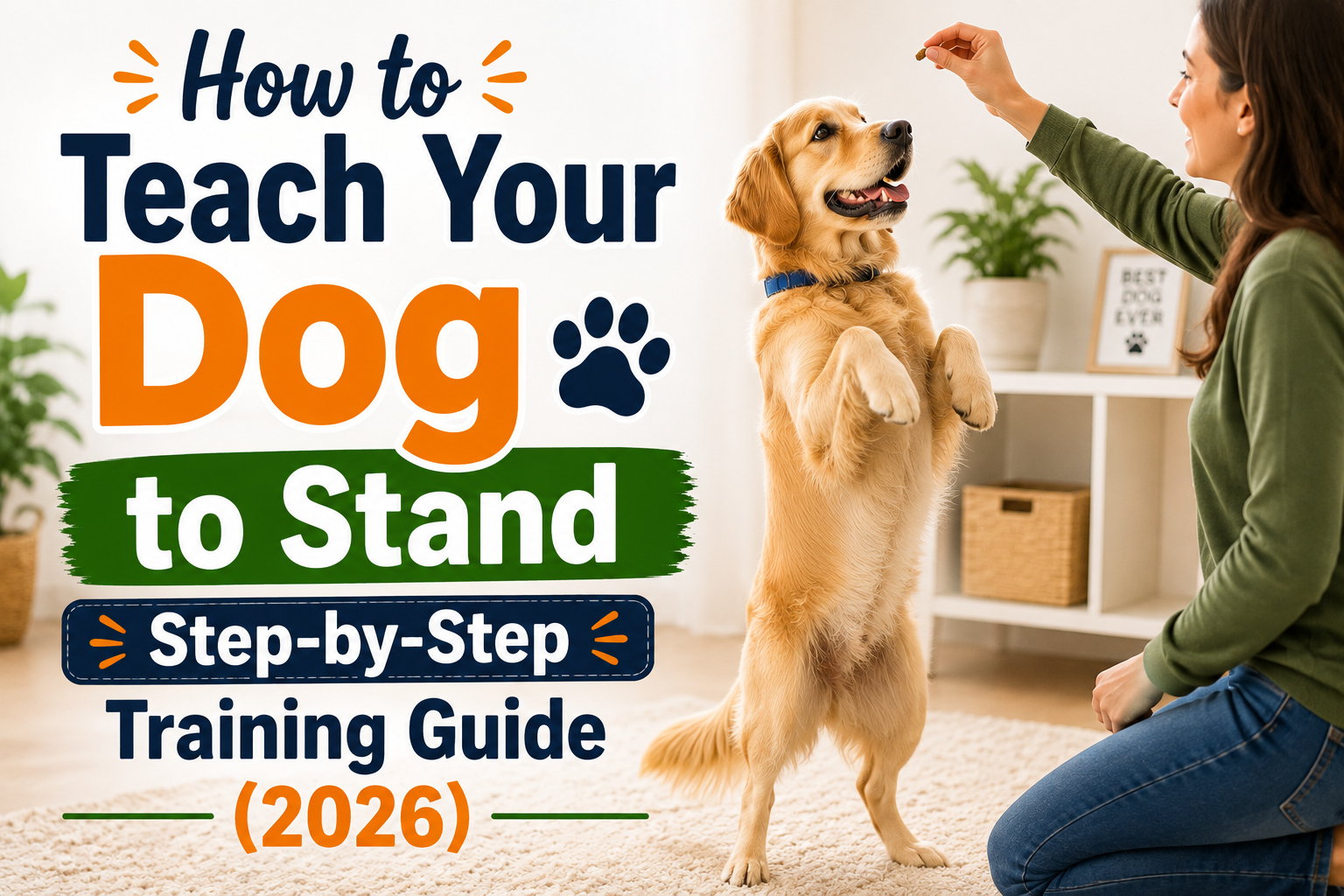
How to Teach Your Dog to Stand is rarely a priority for new dog owners, but it is often a valuable skill to have. From nail trimming to vet visits, a dog that knows how to stand can make life a lot easier for both the pet and the owner. The simple act of standing up is not only essential, but it is part of a valuable foundation which can help dogs learn to be cooperative animals.
In 2026, reward-based training and cooperative care is still promoting the importance of teaching dogs skills which will make otherwise unpleasant or scary tasks easier to get through. Learning how to stand can help dogs develop confidence and body control which can carry through to other areas of training.
How To Teach Your Dog To Stand
A good way to start a lesson is before the start. Find a spot that is isolated and not too slippery for your dog to work on the task you want them to achieve. You should give a soft carpet or a training mat to make the dog feel secure while they are learning and shifting their weight in the new way.
Remember to have some treats for your pup and try not to let the training sessions be longer than five or ten minutes. Experience has shown that shorter classes are more effective because your dog will be able to concentrate better during this short time. The experienced trainers say that five good repetitions are better than twenty-five poor ones, so you should not rush and spoil everything with mistakes.
Step-by-Step Training Guide
Learning the ‘stand’ command is most effective when each step leads to the next, building on the skill acquired previously. Do not try to move on to the next step before your dog becomes confident with the current one.
1. Start From A Relaxed Sitting Position
Begin your training with your dog sitting down in front of you while holding a small treat close to their nose. Move the treat forward in a straight line maintaining the level of your hand. Avoid moving it upwards as it may prompt your dog to stretch.
As your dog moves forward to follow the treat, its body will start to rise. As soon as it reaches a standing position, click the clicker or say “Yes!” and give your dog the treat.
When beginning the first stage of the training, avoid making the dog stand for too long before giving it a treat. At this point, it is essential to make the dog accustomed to the new behaviour so rewards are critical.
2. Introduce The Verbal Cue
After your dog becomes comfortable with the first stage, begin adding the verbal cue “Stand” right before you move the treat in front of it. Say it clearly and consistently with a calm voice. Avoid repeating the verbal cue numerous times if the dog does not immediately react. In most cases, dogs learn the new command better when the pet owner uses the verbal cue only once.
If the dog hesitates, do not give it a treat. You will know the dog has learned the new command when it begins to stand before your hand moves in front of it.
3. Gradually Remove The Lure
At this point, it is essential to begin removing the lure by reducing its visibility. It will help the dog learn to obey the verbal cue instead of looking for food. Some dogs learn faster, so try removing the lure after several repetitions if your dog manages to stand every time you say the verbal cue. However, avoid rushing the training as the confidence of the dog is far more important.
4. Build Duration Slowly
Standing is not the same as standing for a period of time. At first, reward the dog with a treat immediately after it stands. Then, make it stand for longer before giving it a reward. This will enable the dog to master the new behaviour.
If the dog sits down immediately after standing, reduce the amount of time it needs to stand before rewarding it. Dogs learn better with positive reinforcement rather than punishment. Moreover, you can see that slower training leads to faster learning.
5. Practice Beyond Training Sessions
A dog will forget what it learned if it does not have to perform the new behaviour repeatedly. Most pet owners report their dogs forget the command if they try to use it outside the house. However, dogs naturally associate new behaviours with the environment where they were taught.
Practice obeying the new command in different parts of your home before venturing outside. Try using it before brushing its fur or cleaning its paws from dirt. The command should be part of the dog’s daily routine rather than a special task.
Taking It A Step Further: Standing From A ‘Down’
Once your dog knows how to stand from a sit, it is time to try it from a lying down position. Many dogs will naturally try to sit first, so you have to guide them straight up onto all four paws.
- Use the treat right: Ask your dog to lie down. Hold a treat right in front of their nose, then slowly pull your hand forward and a little bit up.
- Stop the sit: If you move your hand too high, your dog will just sit up. Pull the treat away from their chest, keeping it low so they have to lift their whole body to follow it.
- Reward quickly: The exact second your dog is off their belly and standing on all four legs, say “Yes!” and give them the treat.
- Add the command: When they get the hang of it, say “Stand” just before you move the treat. Slowly use your hand less and less until they stand up just by hearing the word.
Reading Your Dog’s Body Language
Dogs cannot use words to tell us they are confused, so we have to watch their body language. A confident dog that understands the lesson will stand calmly and happily take their treat. If your dog starts sniffing the ground, wandering off, sitting back down repeatedly, or losing interest quickly, they are likely feeling unsure or overwhelmed.
Do not mistake these actions for stubbornness. Your dog is just giving you feedback. It usually means you need to make the current step a little easier, find a quieter room with fewer distractions, or just take a break. Paying attention to these subtle clues will keep training stress-free and help your dog learn with confidence.
When Your Dog Is Not Responding As Per Expectation
Most problems can usually be fixed by making a small change instead of finding a new approach completely.
| Problem | Quick fix |
|---|---|
| Sits again | Move the lure forward |
| Walks ahead | Shorten the lure |
| Slips | Use a carpet or mat |
| Loses focus | End the session early |
| Works only indoors | Practise in new places |
It’s not about being perfect in a day or two, it’s about building a solid foundation of communication and positive reinforcement to teach your dog one particular behaviour. This will make your life easier in the long run by making things such as grooming and vetting much more straight forward
Making Practice A Lifelong Habit
Teaching your dog to stand is one thing. It becomes a valuable skill when that behavior becomes a lasting part of your dog’s daily life rather than just something he does for you during training.
That’s why many owners are surprised to discover that the commands they thought were only for training are showing up elsewhere in their dog’s daily life. One day you ask your dog to stand to give him a treat, and before you know it, you’re using the same command before wiping muddy paws, before giving a bath, or even to inspect a tiny injury after a walk.
The most successful trainers are often those who make a behavior a part of their dog’s daily life. What makes one trainer more successful than another rarely has to do with how many tricks their dogs know. It has more to do with the behaviors that have become seamlessly integrated into the dog’s daily life.
Going Beyond The Living Room With Taking The Stand Command
Dogs don’t always generalise well, meaning that a behaviour they’ve learned in one context doesn’t always apply elsewhere. A dog who stands beautifully in the house could easily forget how to do it when the odd walk out or vet examination comes around. So rather than getting frustrated, I think you should look upon this as the next stage of learning
You need to take the stand command somewhere else, maybe a different room or even a quieter part of the garden. You might just need to get some practice in before you take a walk, or have a go at standing for longer. It’s important you build up the challenge gradually, adding in distractions where you feel comfortable doing so. It’s not about testing your dog, it’s about giving them the opportunity to learn that the stand always means the stand, wherever you are.
Habits That Should Be Continued
Success often depends on some basic habits which should be performed on a regular basis.
- Finish each training session following a successful repetition.
- Always use the same cue and release word every time.
- Never give more than one challenge during a session.
- Reward excellent responses occasionally, even when your dog understands the command.
By developing these habits, you make training more predictable for the dog, and that’s what dogs want most.
Everyday Moments When The Stand Command Comes Into Play
Most dog owners train their dogs to stand and then find themselves using this command all the time in daily life. You will love the command whenever you need to:
- Groom or clip your dog’s fur.
- Inspect your dog’s paws after muddy walks or hikes.
- Clean grass seeds, burrs, or small dirt particles trapped between your dog’s toes.
- Put a harness, coat, or body jacket on your dog.
- Conduct a health checkup at home.
- Measure the height of your dog.
- Ensure that your dog remains calm while grooming or being taken to the vet.
Stand is one of those few commands that your dog is likely to use more in daily life than in obedience training. That is precisely what makes it so useful.
A Command You Will Love Months Down The Line
Many commands are impressive because they seem smart. Stand, on the other hand, is remarkable for its own reason. It simply enhances those routine situations that every dog owner encounters but does not plan.
A few months down the line, you are unlikely to remember the session where your dog learned to stand when asked to. You will recall the vet appointment that did not require any fuss or fight, the mud-filled walk when checking his paw took only seconds rather than minutes, or the grooming session that went smooth all the way through.
That’s the real value of this handy behaviour, it makes life easier for both of you, in the everyday moments that never seem to be convenient for training. A solid foundation of good manners and polite obedience will always serve you well in the long run.
FAQ’s
How much time does it take to train a dog to stand?
Usually, it takes some time for a dog to learn the basic commands during several brief training sessions. Consistent training during several weeks will make the stand reliable
Why does my dog move forward instead of standing up?
It is due to moving the lure too far forward. Try keeping the movements of your hand short and rewarding your pet immediately after it assumes a standing position with all four paws.
Can I train “stand” without using a clicker?
No. The clicker is not necessary. A verbal signal like “Yes!” can work perfectly fine if you know when to use it.
Which should I teach my dog first – “stand” or “stay”?
It does not matter which one you teach first, but many people choose to teach “sit” and “stay” before teaching “stand.”
Sources
Disclaimer: This article is for educational purposes only. If your dog is experiencing health, mobility, or behavioral issues, please consult with your veterinarian or a qualified positive reinforcement trainer before beginning any training program.

- Puppy Harness Guide: How to Choose the Right Dog Harness for Training - September 20, 2026
- Best Chow Chow Mix Breeds: Traits, Size & Temperament Guide - September 10, 2026
- Entlebucher Mountain Dog: Complete Breed Guide, Care & Training - September 10, 2026