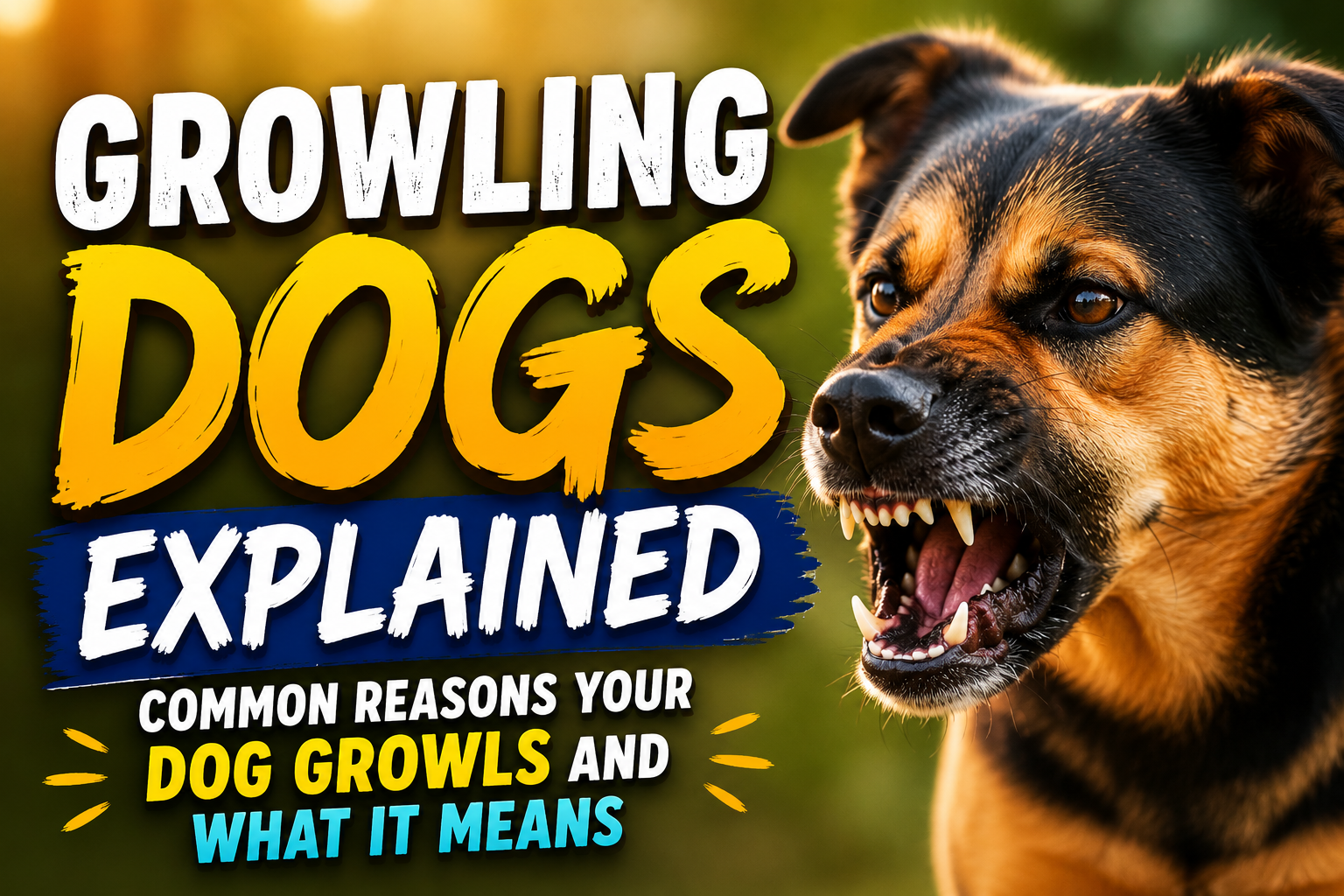
Growling Dogs Explained: Many pet owners wonder why dogs growl when they hear an alarming noise from their seemingly gentle pet. Growling may be perceived as a scary signal for humans; however, this noise is one of the primary ways for dogs to convey information.
In many situations, growling is not a demonstration of aggression, but rather, it is an alarm about the feeling of fear, discomfort, anxiety, protection, excitement or even physical pain. This will help you avoid misunderstanding between people and pets and react accordingly.
Every dog is unique. A small puppy may growl during play, an adult dog may growl when a stranger comes into a house, and an old dog may growl due to arthritis. The sound itself is only one part of the message. Environmental context, body language and previous experience give additional cues for understanding the meaning behind this sound.
Why Dogs Growl: Understanding Canine Communication
Dogs use body language and vocalizations to communicate their emotions. Growling is a signal that is used as an early warning by dogs to avoid confrontation. Rather than consider growling as negative behavior, it would be more useful to think of it as information about the way the dog feels.
Understand your pup better with our Dog Behavior Resources.

In different situations, a growl could mean any of the following:
- “Give me some room.”
- “I feel threatened in this situation.”
- “I am not willing to let go of my food/toy.”
- “That hurts.”
- “I am excited to play this game.”
The same dog might growl for a variety of reasons at various times. It is much more useful to consider the whole picture rather than simply the sound.
Common Reasons Dogs Growl
The following is an example of some of the most common situations that may trigger growling:
| Situation | Possible Reason |
|---|---|
| Someone approaches while eating | Guarding resources |
| Stranger coming into the house | Alert or uncertainty |
| Playful behavior with individuals or other dogs | Excitement |
| Touching a painful area | Physical pain |
| Feeling trapped | Fear or anxiety |
| Another dog gets too close | Defensive warning |
| Woken suddenly | Startled reaction |
This will enable one to recognize certain patterns rather than thinking of all cases of growls as being the same.
Fear and Uncertainty
One of the most common causes of dog growling is fear. The presence of an unknown visitor, a thunderstorm, a crowded environment at a veterinary clinic, or sudden handling can all be stressful experiences for a dog. Growling can give the dog a chance to request some space before it has to defend itself.
Fearful dogs tend to show other types of body language, such as flattened ears, tucked tail, tongue flicks, yawning in non-exhausted state, or avoidance behavior towards what the dog finds stressful. Taking the cues into consideration can help you manage the situation more efficiently than trying to force anything.
For example, if your dog growls when an unknown person tries to pet it, giving the dog some time to approach the visitor may be less dangerous than forcing a meeting.
Discover the reasons behind Why Do Dogs Scratch Doors?
Valuable Resource Protection
Dogs tend to be protective over those resources that they regard as highly valued by nature. These resources can be food dishes, treats, toys, sleeping places, or even favorite resting places for dogs.
For example, your dog may be calmly enjoying his bone in the garden. As soon as another person moves towards the bone, your dog may stop chewing, become alert and start growling. The act of growling does not have to mean that the dog wishes to assert his dominance over someone. In many cases, it simply means that he wants to be left alone with his valuable possession.
Resource guarding differs from one dog to another. Positive reinforcement training will yield much better outcomes compared to punishment and repeated confrontations with the dog.
Pain Can Change A Dog’s Behavior
The pain may cause a dog to growl since it seeks to prevent itself from being subjected to more painful experiences. The painful condition may come about due to joint disease, oral disorders, ear disorders, muscle injuries, among other medical problems.
For example, an aging dog suffering from hip arthritis may growl whenever it is lifted in a car since the process may be painful and not because of aggression.
In case your dog begins to growl when being handled or petted without any known behavior issue, ensure you see a veterinarian. Identifying an underlying medical condition early can improve both your dog’s health and its behavior.
Feeling Trapped or Overwhelmed
Feeling Trapped or Overwhelmed
It is normal for dogs to distance themselves from situations that feel threatening. In cases where it is not possible for the dog to get out of such situations, he may express his feelings through growling. This is likely to occur in the following scenarios:
- When a child holds the dog too tightly.
- If someone corners the dog against the furniture.
- If grooming feels threatening.
- After the dog attempts to escape but visitors keep petting him.
- If the dog is suddenly restrained.
It is important to allow your dog to escape uncomfortable situations when you can.
Find out Why Dogs Move Their Eyebrows.
Every Growl Doesn’t Signal Trouble
There are cases when growling takes place during normal social interactions. Dogs often growl while playing tug-of-war, chasing each other, or fighting playfully with their mates. These types of growls normally accompany relaxed body language, wagging tails, and repeated invitations for more play.
A stiff body, prolonged hard gaze, lifted lips, and repeated effort to dominate another dog indicate that the interaction needs to be stopped before it gets worse.
Look For The Whole dog, Not Just The Growl
To get an accurate idea about growling, the complete body language of your dog is what you need to pay attention to.
| Body Language | Possible Meaning |
| Loose body and play bow | Friendly play |
| Tail tucked with ears back | Fear or anxiety |
| Stiff posture with direct stare | Serious warning |
| Lip lifted and body frozen | Defensive behavior |
| Turning away while growling | Wants more space |
Recognizing these signals helps explain why dogs growl and enables owners to respond calmly instead of reacting to the sound alone.
What Should You Do When Your Dog Growls ?
First of all, do not get excited and scared. Yelling, pulling the leash or scaring off the dog from growling would lead to fear escalation and worsen the situation even more. Instead of that, stop the process and try to think about what could be the reason for such behavior.
Think of the following questions: is someone approaching your dog with his food? Is your dog scared? Is he being hurt during some physical manipulations? Identifying the trigger will help you to resolve the problem at its source. In case when the dog calms down after the situation changed, allow it to settle before interacting again. Sometimes it is better to give a dog some time rather than immediate correction.
What Can Make Growling Even Worse?
There are situations where well-intentioned owners actually contribute to increased anxiety levels of their dogs through their actions, unaware that they are causing harm.
Discover if Dogs Can See Their Reflection in a Mirror.
| Do Not Do This | Better Approach |
|---|---|
| Yelling or punishment | Stay relaxed and identify the trigger |
| Taking away valued items | Manage the environment and train positively |
| Forcing unwanted contact | Let the dog choose whether to approach |
| Ignoring repeated growling | Identify patterns and solve the problem |
| Assuming every growl is aggression | Take account of the body language and surroundings |
Punishing a dog for growling will not teach him anything but will rather suppress this reaction. The scared or anxious dog is going to feel the same emotions and react sooner or later.
Can Growling Be Avoided?
It is not possible for all types of growls to be avoided but there are certain things which may be kept in check with good management and experience. A few helpful tips are:
- Exposure of puppies to different people, surroundings, and noises.
- Instructing children not to bother dogs when eating or sleeping.
- Giving the dog a peaceful place to rest without any disturbance.
- Using reward training to develop confidence.
- Ensuring that the dog gets enough exercise and activity.
- Regular visits to the veterinarian for early detection of any disease.
A dog which feels safe and comfortable knows how to react to new surroundings.
Common Myths About Dog Growling Dog Growling
There are many myths concerning dog growls that are based on outdated concepts, but new research gives us another view.
| Myth | Fact |
| Every growling dog is aggressive. | Many dogs who growl are actually afraid, nervous, or guarding what is valuable to them. A dog should be punished for growling. |
| You should punish a dog for growling. | Punishing a dog won’t solve the root cause of the problem. |
| Any dog who growls will bite. | Growling is usually a preventive warning. Dogs who growl are badly trained. |
| Dogs who growl are badly trained. | Dogs of any breed or training level may growl in certain situations. |
Understanding these facts, one can approach the situation with more patience.
When Professional Assistance Is Required
There may be several occasions when professional advice is needed. Please consult your vet in case you notice growling in your dog, especially if accompanied by pain, stiffness, loss of appetite or reduced activity on its part. Diseases are one of the most common causes of such behavioral changes. A qualified dog behavior professional may be necessary in case your dog tends to guard its food and toys, displays aggression towards strangers or growls regardless of all the precautions taken.
Learn Why Dogs Love Squeaky Toys so much.
Understanding Your Dog Better
Understanding why dogs growl is probably one of the best things you can learn as a dog owner. In most cases, dog growling is not an aggressive behavior but a form of communication. Learning about this can help you know how to respond and avoid potential problems in the future. There will always be a reason behind the growling of your dog. Learning about the reason is what builds trust, keeps your dog healthy, and makes your family life much safer.
Frequently Asked Questions
Is it normal for dogs to growl when playing?
Yes. A lot of dogs growl during playtime like tug-of-war or roughhousing. Play growls tend to occur alongside playful body language.
Should I punish my dog for growling?
No. Growling is actually a useful warning sign. Instead, you should look into why your dog growls.
Can illness be the reason for growling in dogs?
Yes. Painful conditions, injuries, or other health problems can make a dog growl when touched or handled. Any unexpected change in behavior needs to be addressed by a veterinarian.
When do I need professional help?
You should consult a veterinarian or dog behavior professional if your dog is growling frequently, snapping, or biting and has suddenly developed unexpected behavioral issues.
Why does my dog growl at “nothing”?
They usually hear or smell things you can’t, like distant noises or pests in walls. In older dogs, it can also signal vision loss or cognitive decline.
Sources
Disclaimer: The above article is purely for educational purposes only. It is not meant to substitute the advice of a licensed veterinarian or dog behaviorist. In case your dog shows persistent aggression or bites a human or another animal, you should consider getting professional help immediately.

- 9 Best Dog Life Vests of 2026: Reviews & Buyer’s Guide - September 15, 2026
- Silky Terrier: Complete Breed Guide, Personality, Care & Training - September 10, 2026
- Miniature Poodle: Complete Breed Guide, Personality, Care & Training - September 10, 2026