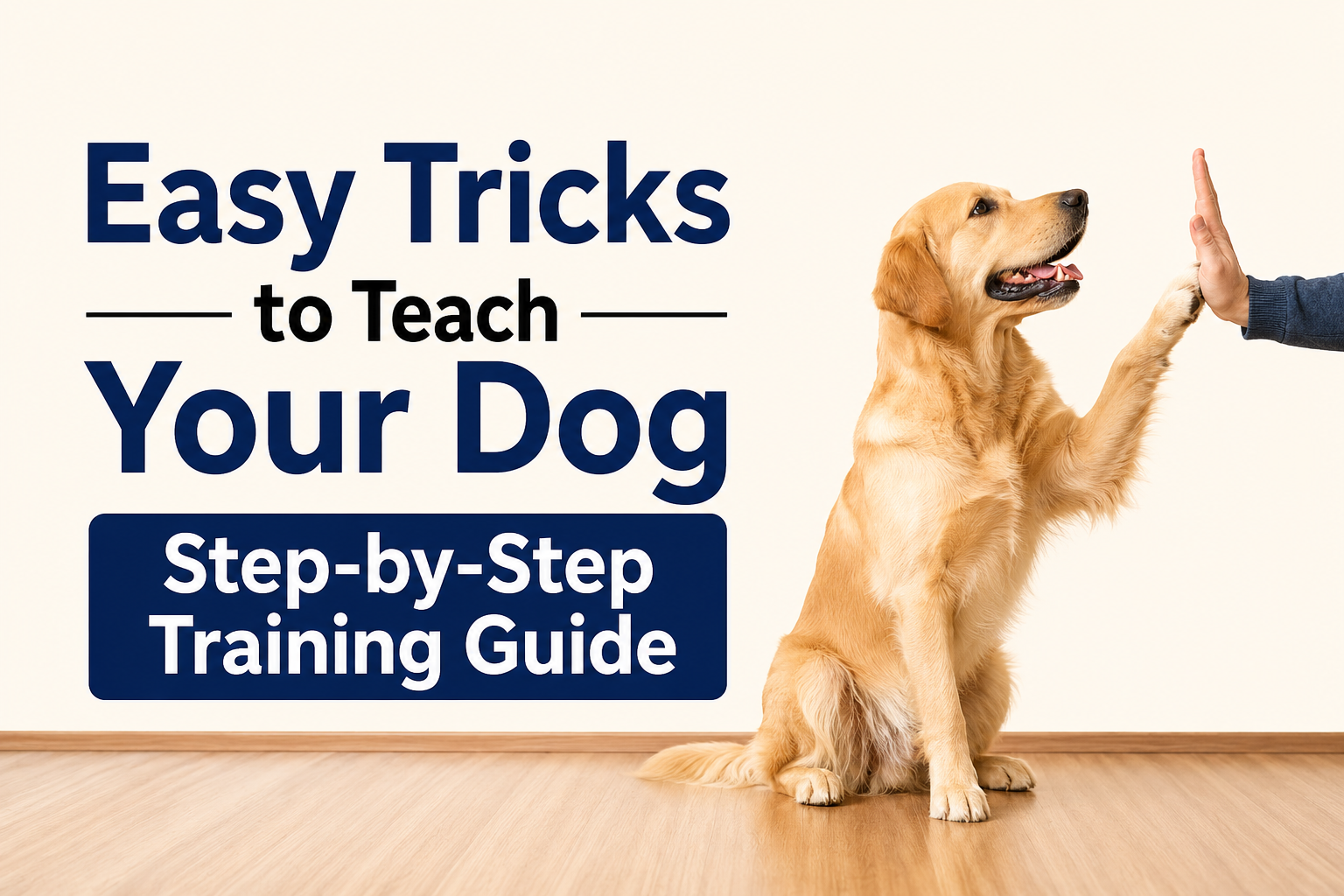
Easy Tricks to Teach Your Dog are a great way for training and developing obedience skills in your pet in a fun and easy way. With each new trick your dog will learn how to pay attention, stay focused, and be more responsive to your commands. No matter whether your dog is a puppy or an adult animal, even the simplest tricks can be taught to it.
All you need for this kind of activity is some time, willingness, and patience. There is no need in special equipment or any previous experience of training animals. By teaching one trick at a time, you’ll create a solid foundation for more advanced training in the future.
Why Simple Dog Tricks Matter More Than You Think
While many pet owners assume that trick training is something enjoyable but meaningless, it does actually bring practical everyday benefits. Every new trick not only adds to your communication with your dog but also simplifies interaction both inside and outside your house.

Furthermore, learning tricks brings mental benefits for your dog. By learning new tricks regularly, he is unlikely to get bored, which can prevent destructive habits like chewing on household items or digging in the garden. The biggest benefit is definitely the strengthened relationship between you and your dog, as the learning process becomes more enjoyable and easier.
Train smarter with the Best Dog Training Tools for faster results.
| Benefit | Why it matters |
|---|---|
| Better obedience | Encourages good everyday manners |
| Mental exercise | Helps reduce boredom |
| Stronger bond | Builds trust and communication |
| Better confidence | Makes learning easier |
| Improved focus | Increases attention during training |
What You Require Before Training Starts
For effective training, you will need a right environment. Find a place that is quiet and where the dog will not get distracted by other animals, people, or any traffic. After the dog learns how to perform all the tricks, then it will be okay to train in busy environments.
Rewards will be necessary for effective training. It is good to use small soft treats which your dog can quickly finish without getting distracted. Gradually after the dog gets used to training, it is possible to give praises, petting, or even toys as a reward. Do not make training sessions long and boring. Usually 5 to 10 minutes is enough to keep your dog interested while preventing frustration or fatigue.
| Item | Purpose |
|---|---|
| Small treats | Reward correct behavior |
| Favorite toy | Extra motivation |
| Quiet area | Reduces distractions |
| Collar or harness | Comfortable control |
Dogs learn by repetition. You should not try to train your dog on several commands at once but concentrate on one command until the dog learns it well. The shorter and more frequent training sessions usually bring better results than long but occasional long sessions.
These basic tips should be followed in each training period:
- Training should last 5-10 minutes.
- The same command should always be used.
- Reward your dog right after the success.
- Be patient even if there are some mistakes.
- Each training should end positively.
For example, if your dog starts lowering its body when learning the Down command, you should first reward such an achievement of your dog. As soon as it knows how to make the desired movement, reward it after it is done completely.
Easy Tricks That Your Dog Should Learn First
These are very important since all other tricks that your dog will learn start from basic tricks. Tricks like sit, down, stay and come will make your dog behave well and make your life easy when teaching your dog advanced tricks. Start by teaching one trick and practicing it until your dog masters it. Teaching many tricks at a go will confuse your dog and may result in slow progress.
Build trust faster with our Training a Rescue Dog guide.
| Trick | Difficulty | Typical learning time |
|---|---|---|
| Sit | Easy | 1–3 days |
| Shake Hands | Easy | 3–5 days |
| Down | Easy | 3–5 days |
| Stay | Easy to Medium | 10-15 days |
| Come | Easy | Ongoing practice |
Simple Tricks to Teach Your Dog- A Detailed Guide
How to Teach Sit command
It is common that the sit command is the first command your dog should learn as it is easy to teach and practical. It makes your dog control itself and is very useful for various other commands. Take a treat and place it in front of your dog’s nose and then move it up and backwards. With the movement of treat, the rear part of your dog will automatically touch the ground.
While doing this you have to give your dog a command “sit” along with the treat and praise your dog. After repeating the same procedure many times, your dog will understand the command rather than treat. Gradually minimize the use of treats while training your dog as it gains confidence. Train in various rooms and eventually train outdoors in safe areas.
How to Train Your Dog To Shake Hands
Once your dog is able to understand the “Sit” command, teaching it how to shake hands becomes pretty easy. In addition, this entertaining trick enhances the coordination skills of your dog and helps it focus on training.
Simply ask your dog to sit in front of you in a comfortable position. Now place some food in your closed fist and let it stay there. Your dog will try to get the food by raising its paw.
As soon as the dog puts its paw in your hand, say “Shake,” hold the paw for a moment, and then reward it instantly. Don’t raise the dog’s paw yourself as offering the behavior naturally helps dogs learn faster.
How to Teach Down Command To Your Dog
The Down command ensures that your dog is calm and relaxed. This command can also be used as a foundation trick in advanced tricks like Roll Over and Play Dead.
First, let the dog sit down. Show the dog the treat by bringing it close to its nose. Slowly lower the treat and bring it towards the ground. The dog will follow the treat with its nose and will end up in the lying position.
Once the dog lies down with its elbows on the ground, say the word “Down” followed by a reward and praise. If your dog struggles at first, reward small improvements and continue practicing in short sessions until the movement becomes natural.
How To Teach Stay Command
Teach your dog how to be patient and in control with the help of the Stay command. The Stay command is extremely helpful since it will allow you to keep your dog from any danger that can appear on roads, strangers, etc.
Ask your dog to sit or lie down. Make a gesture of stopping in front of your dog using your palm as a sign and say “Stay”. Step back only by one pace and wait for a couple of seconds.
If your dog keeps being in place, then quickly go to him/her, give a reward and show your approval. Slowly increase both the distance and the time your dog should spend while staying.
If your dog moves away, then calmly go back to the beginning and repeat the exercise. Try not to say “stay” more than once.
How To Teach Your Dog To Come When Called
The ability to recall your dog is considered one of the essential things for any dog to know. Not only will this make walks more controllable for you but can actually save your dog’s life when some unexpected events occur.
Pick up a happy voice and say the word “Come!” while backing off or bending down a little bit. This will make the dog want to go towards the owner.
The moment your dog gets to you, be generous with rewards – food, praising or a toy your dog likes. The dog must associate being recalled with pleasant feelings.
Work on this skill in a fenced-in yard or other enclosed place first and then try to use other places with more distractions. As your dog’s confidence grows, gradually increase the level of difficulty.
Fun Tricks To Try After Your Dog Learnt Basics
After your dog has learned all the basics, you can start trying some fun tricks for additional mental stimulation. They will also help to enhance coordination and make training sessions more enjoyable
| Trick | How to teach it | Difficulty |
|---|---|---|
| Spin | Put a treat near the nose of your dog and rotate it in a circle. While rotating, say “Spin” and reward. Then gradually start using the verbal command only instead of the treat. | Easy |
| Roll Over | Lay down your dog and guide the treat to one shoulder of your dog. Your dog will roll over and you should praise him for that. | Medium |
| High Five | Have your dog perform Shake, and while holding out your hand, give the command “High Five.” Reward your dog the minute its paw makes contact with your hand. | Easy |
| Speak | Say “Speak” when your dog naturally barks, then reward immediately. Repeat until your dog responds to the command. | Medium |
| Quiet | Following the Speak training, wait until your dog is silent after barking, then give the command “Quiet” and reward your dog’s silence. Gradually increase the quiet time before rewarding. | Medium |
| Play Dead | Get your dog into the position “lie down” and place it on one side while using a treat. Give the command “Play dead” and reward when your dog stays still for a few seconds. | Medium |
Compare Clicker Training vs Treats to find the best method.
Common Mistakes That Can Hamper Your Dog Progress
Even an easy trick might seem hard when the dog isn’t trained consistently. Keeping clear of the below mentioned mistakes can help your dog get better at the training.
- Training too long without any pause.
- Repeating the command several times.
- Rewarding the dog after a long time.
- Resorting to punishment rather than rewarding.
- Practicing only in one location
- Expecting every dog to learn at the same speed.
For example, if your Border Collie learns Sit on the first day but takes one week to understand Roll Over, that is perfectly fine. Each breed and each individual dog learns differently.
How to Stop Bribing Your Dog with Treats
A lot of pet parents get stuck with a dog who only listens when there is food involved. To stop your dog from demanding a bribe every time, you need to change your approach.
- Trick them with an empty hand: Once your dog knows a command, just pretend you have a treat in your closed fist. Give the command. When they do it, praise them warmly and then pull a real treat from your pocket. This teaches them to work first.
- Make it a lottery: Stop giving a treat every single time. Be completely unpredictable. Reward them on the first and third try, but skip the second. This keeps your dog super motivated because they never know when they will get lucky.
- Use everyday rewards: Food is not the only thing dogs care about. Ask your dog to “Sit” before throwing their favorite ball, putting on their walking leash, or serving their dinner bowl. This makes good manners a natural part of daily life.
A Simple Weekly Training Plan for Your Dog
Practice on a daily basis in shorter sessions is better than having long sessions once a week. This enables you to refresh old lessons as well as teach your dog new tricks gradually.
| Day | Training goal |
|---|---|
| Monday | Sit and Down |
| Tuesday | Shake Hands |
| Wednesday | Stay |
| Thursday | Come |
| Friday | Spin or High Five |
| Saturday | Review all tricks |
| Sunday | Fun practice and play |
Keep the sessions from 5 to 10 minutes, always ending on something your dog has mastered. This encourages your dog to participate in further training sessions.
Building Lifelong Training Success
Easy Tricks for Your Dog does not need any special equipment or experience to train your dog. With patience and positive training methods, you can train your dog in several different tricks. Keep in mind that no two dogs learn the same way. Make sure to recognize their successes and have patience with your dog. You will be pleasantly surprised by how much progress they will make over time.
Stop unwanted barking with our How to Stop Your Puppy Barking guide.
Frequently Asked Questions
Which trick is easy for you to start teaching your dog?
Sit is one of the most basic commands that are easy to learn as well as the basis for many tricks.
How long should the training sessions be?
Usually, most dogs get used to being trained within 5-10 minutes of work a day.
Can adult or old dogs learn new tricks?
Yes, they can do that, though it takes much more time than for puppies.
Should I use treats all the time?
Treats are important in the initial period when the dog learns the trick. As your dog becomes reliable, gradually replace some treats with praise, toys, or affection.
Sources
Disclaimer: This article is for educational purposes only and should not be taken as veterinary or behavioral advice. If your dog displays signs of fear, aggression or training issues, seek advice from a professional veterinarian or certified dog trainer.

- 9 Best Dog Life Vests of 2026: Reviews & Buyer’s Guide - September 15, 2026
- Silky Terrier: Complete Breed Guide, Personality, Care & Training - September 10, 2026
- Miniature Poodle: Complete Breed Guide, Personality, Care & Training - September 10, 2026