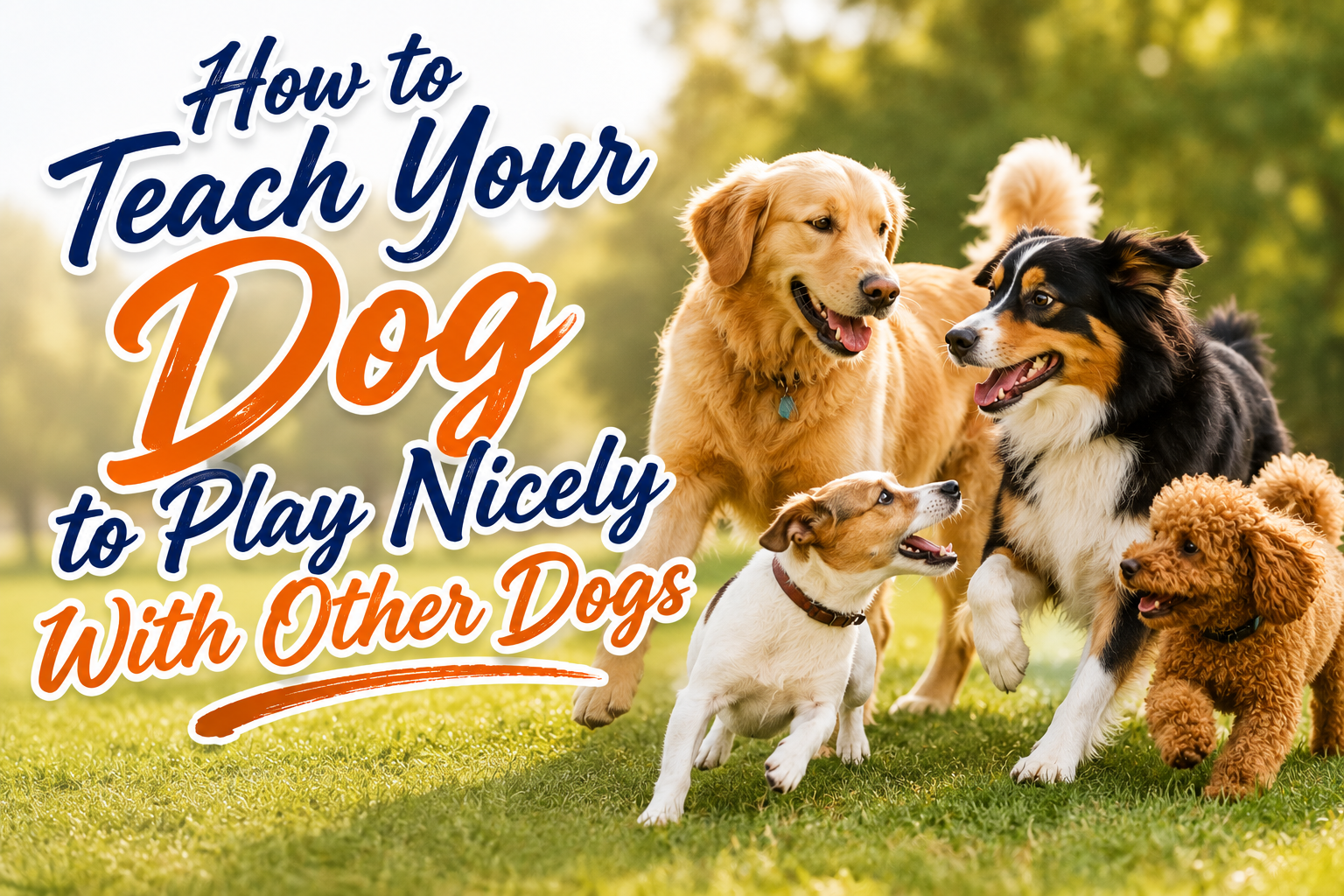
How to Teach Your Dog to Play Nicely With Other Dogs is more than just letting them come into contact with other animals. For one thing, dogs need to learn how to communicate and have self-control. While there are dogs that are good at understanding social cues, there are those who need to be taught when it is time to play, stop playing, and make way for another dog. With suitable play partners, careful introductions, and positive training, your dog can develop better manners and confidence around other dogs.
Why Teaching Your Dog Polite Play Behavior Matters
Playing is another way that dogs communicate. They can use body posture, motion, expressions, and little changes in behavior to indicate their interest, excitement, discomfort, or need for space. Good play does not only entail chasing or tussling around.
Effective play consists of both dogs engaging willingly in the activity, taking turns, adapting their behaviors to each other, and communicating through behavior. Problems usually occur because the other dog is overly excited, has trouble respecting boundaries, or is unable to control its impulses.
Many owners think socialisation means meeting as many dogs as possible, positive experience is more important than the number. Interacting calmly with an appropriate playmate will have more benefits than meeting many times with someone who causes anxiety.
How To Teach Your Dog To Play Nicely With Other Dogs
Teaching dogs to play politely takes time. Dogs do not instinctively know how to behave when meeting people with different personalities, and therefore it is necessary for the owner to give dogs an environment where they learn correct behavior.
Develop Calmer Behavior Before Playing Starts
A dog who gets too excited by the presence of another dog will have difficulty making wise decisions while playing. Excitement makes it harder for them to listen, react, and pick up on the other dog’s cues. Begin by rewarding calm behaviour around other dogs. This includes staring at another dog calmly, coming when called, sitting nicely next to another dog, and engaging with you.
Never teach your dog that every dog they see must automatically play. Dogs who are calm around other creatures will generally have better concentration and emotional stability when the interaction begins.
Choose The Right Play Partner
Selecting the correct playmate will help to make learning simpler. An easy assumption to make is that the two dogs should get along well simply because they are both friendly. However, energy levels, confidence, and even play styles become more important than sizes and breeds.
For example, an young dog might be thrilled by chasing games whereas the more relaxed dog may appreciate slow interaction with rests in between. A suitable match allows both dogs to participate comfortably without one constantly overwhelming the other. The perfect partner for play will help your dog develop proper behavior and not just be exciting.
Introduce Dogs Gradually
As the first meeting can set the tone for future interactions, try not to allow unfamiliar dogs to immediately jump right into play mode. Allowing them to take a walk alongside each other and exchange greetings will help create a less stressful environment.
When they seem relaxed and ready to interact with each other, let them play for a bit but pay attention to their interactions and any pauses they may have. Finishing the meeting when they are both relaxed is much better than ending when they are exhausted, because positive endings encourage better behaviour during future meetings.
Teach Your Dog That Breaks Are Part of Play
While some owners believe that ideal playtime should never be interrupted, brief pauses are one of the simplest methods of stopping enthusiasm from getting out of control. When you are playing with your dog, call them out of the game for a few minutes, praise their behavior, and let them relax.
These brief pauses train your dog to realize that listening is not the end of the fun game, but it will enable them to know how to move from being excited to being calm. These dogs with such control over themselves are able to relate well with other dogs and also become easy to handle.
Help Your Dog Recognize Healthy Play
Reading the body language of your dog is as vital as teaching him proper manners. A healthy interaction between two dogs is always an even interaction in which each dog takes turns and decides to continue or not. If the movement is relaxed and there are regular role switches, everything is okay.
Interrupt play if you notice:
- One dog persistently attempting to leave
- Continuous chasing with no switch of roles
- Stiff body language
- No heeding repeated signals for space
- One dog feeling threatened or scared
Early intervention is less difficult than dealing with aggressive behavior and will teach your dog that gentle play should always be the objective.
Common Mistakes While Teaching
A lot of play issues arise because excitement is reinforced rather than calmness. Here are some things not to do:
- Think that your dog can play with every other dog it meets.
- Wait till play gets too rough before you step in.
- Depend on crowded dog parks for socialization.
- Ignore cues showing one dog isn’t having fun anymore.
Short, properly managed play times with compatible dogs are generally more instructive than long, erratic ones.
Helping Your Dog Enjoy Positive Play For Life
The art of teaching your dog how to play properly with other dogs does not mean you will want them to play with all the dogs they come across. The whole idea is that of teaching your dog how to effectively communicate, maintain his calmness, and respect the space of other dogs.
Under proper training, with good playmates and always pleasant experiences, you can give your dog the opportunity to learn how to play without getting too carried away or overpowering other dogs. Each positive interaction increases social skills, which makes future walks, training classes, and interactions easier and more pleasant for the dog and the owner.
FAQ’s
Why does my dog get too excited when around other dogs?
Dogs get overexcited in the presence of other dogs because they think all dogs are playmates. This can be fixed by training them to remain calm and greet properly.
Should I let the dogs settle their play disputes on their own?
Not always. Communication among dogs is natural, but the owners need to intervene when one of them continually ignores the other’s signals or when one is afraid.
Can senior dogs learn to play well with other dogs?
Yes, with the right introduction, compatible dogs to play with, and reward-based training, most senior dogs can be trained socially.
How frequently should my dog play with other dogs?
Quality is more important than frequency. Regular and enjoyable play sessions with dogs who are compatible can be more rewarding than regular interactions with strange dogs.
Sources
American Veterinary Society of Animal Behavior (AVSAB) — Position Statements
American Kennel Club (AKC) — Dog Training Advice
RSPCA Knowledgebase — Dog Training
Disclaimer: The above article is for educational purposes only and should not be considered veterinary or behavioral advice for your dog. If you are having any behavioral problems with your dog being aggressive or fearful towards other dogs, contact your veterinarian or a qualified dog behaviorist.

- 9 Best Dog Life Vests of 2026: Reviews & Buyer’s Guide - September 15, 2026
- Silky Terrier: Complete Breed Guide, Personality, Care & Training - September 10, 2026
- Miniature Poodle: Complete Breed Guide, Personality, Care & Training - September 10, 2026