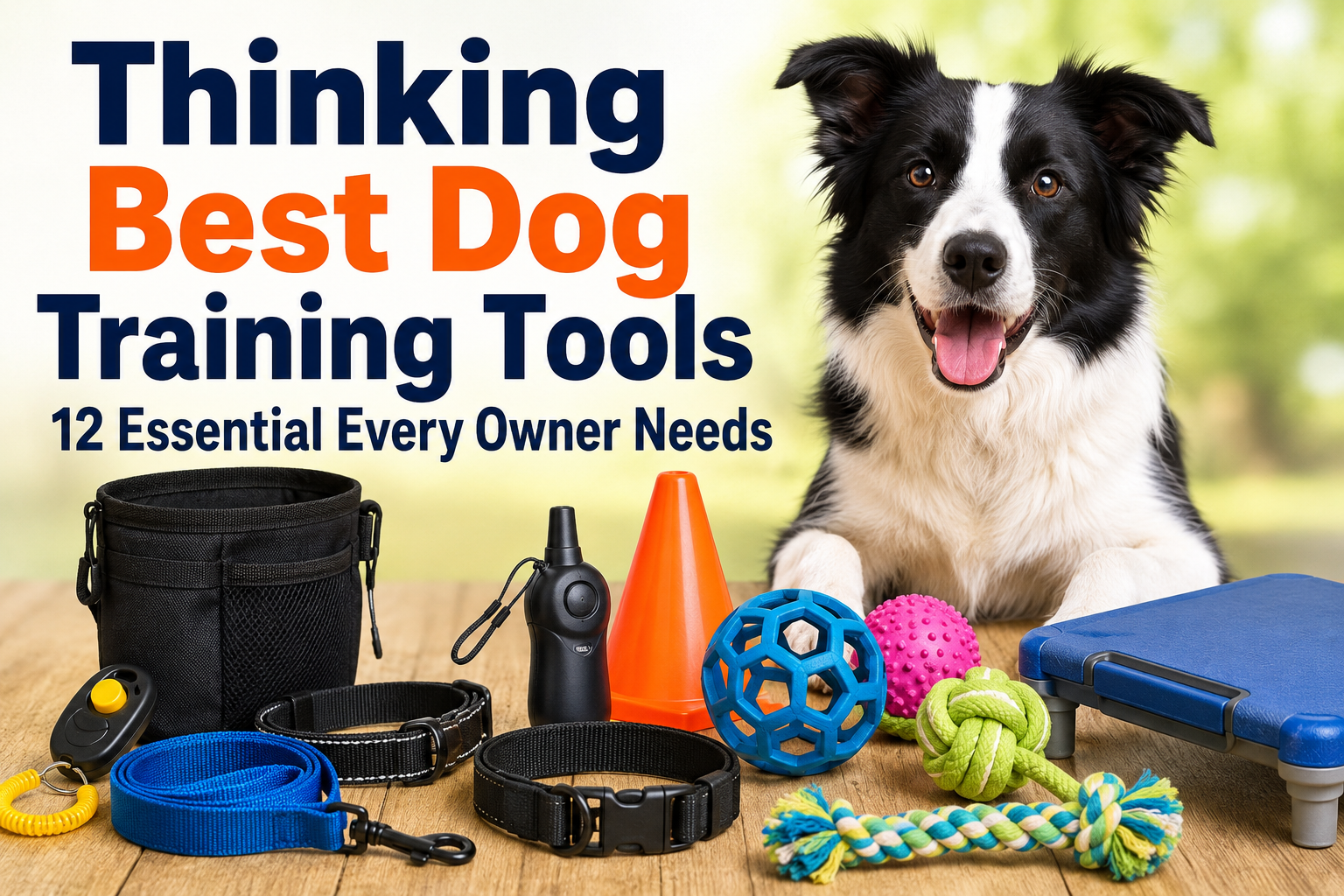
Best Dog Training Tools: Successful dog training does not require spending a lot of money on gadgets. The most successful training should be carried out with the help of safe and effective tool, which will help the dog understand your expectations and develop the bond with you. Be it raising a puppy or solving some behavior problems, the right training tool will help you train your pet effectively.
The most effective training tool for a dog is that which helps reinforce good behavior, promote communication between you and the pet, and facilitate the learning process in different situations. Professional trainers prefer treats, leashes, clickers, and enrichment tool to correction tools. This guide covers 12 essential dog training tools, how they work, and when to use them.
Importance Of Right Training Tools
Dogs train through repetition, timing, and communication. Selecting the right training tool will make it easier for you to communicate and help fill the gap between what you want your dog to do and what he or she is doing.

Using the right training tools can help you:
- Increase focus and engagement
- Facilitate quick training
- Reinforce desired behavior
- Build confidence
- Ensure the safety of both trainer and dog
Training tools does not replace proper training, but the right one makes the whole thing easier.
Build trust faster with our Training a Rescue Dog guide.
Top 12 Dog Training Tools Every New Pet Owner Needs
1. Training Treats
Every good trainer should have an effective system of rewards. One of the most efficient ways to reward a dog is through treats.
What Is a Good Training Treat?
| Feature | Why It Matters |
| Small size | Allows frequent rewards |
| Soft texture | Easy to eat quickly |
| Strong aroma | Keeps attention focused |
| Low calories | Prevents overfeeding |
Here are some popular choices:
- Frozen meat treats
- Bits of cooked chicken
- Special training treats
- Cheese cubes, but not too much
This must have sufficient value to act as an effective motivator for your dog, especially in a noisy environment.
2. Standard Training Leash
The six-foot leash is the basis of obedience training.
Unlike retractable leashes, regular leashes give you more control and communication.
Best Uses
- Walking on loose leash
- Basic obedience commands
- Group classes
- Socialization
Try finding tough nylon or leather leashes.
3. Treat Pouch
The treat pouch seems like a minor item, but it plays a big role in reward delivery.
It allows you to give rewards right away without having to look for your treats in your pockets.
Benefits
- Prompt reinforcement
- Hands-free convenience
- Training consistency
- Outdoor training easier
This is among the items most professional dog trainers use the most.
4. Clicker Training Device
Clicker training tool is a little gadget which produces a unique clicking sound. It shows that a dog performs the required behavior at a particular time.
Why Trainers Use Clickers
The click is:
- Consistent
- Accurate
- Easy for dogs to recognize
Dogs quickly learn that the click predicts a reward.
For Example
If teaching “sit”:
- Dog sits.
- Click immediately.
- Give treat.
This precise timing accelerates learning.
Compare Clicker Training vs Treats to find the best method.
5. Front-Clip Harness
For dogs that tend to pull too much, a front-clip harness is useful. If the dog tries to pull ahead, the harness will guide him to turn in the direction of the handler.
Benefits
- Does not allow pulling
- Safe for the neck
- Good leash manners
- Safest compared to choke chains
A properly fitted harness will ensure that walks become more pleasant and training is easier.
6. Long Training Line
The long line can be between 15 to 50 feet long and is essential for doing recalls. The long line enables dogs to be free but in a safe environment.
Good for:
- Recalls
- Training for hiking
- Obedience training outdoors
- Distance training
Many trainers find it important to use long lines prior to off-leash work.
7. Crate
Crate training continues to be one of the best methods of teaching household etiquette.
Crating includes:
- Safety
- Structure
- Rest
- House-training support
Benefits of Crate Training
| Benefit | Training Value |
| Housebreaking | Encourages bladder control |
| Safety | Prevents destructive behavior |
| Routine | Creates predictable schedules |
| Travel readiness | Easier transportation |
The crate must always be introduced in a positive way and never as punishment.
8. Interactive Food Puzzle Toys
Mental stimulation plays a significant role in the training process. Food puzzles make your dog think and provide him/her with an opportunity to earn rewards.
Benefits
- No boredom
- Confidence building
- No destructiveness
- Brain workout
The dog usually becomes calm when his mind is stimulated.
9. Target Stick
Target training involves training dogs to contact a certain object with the nose or paw.
Use of a target stick may be helpful in:
- Tricks
- Foundation agility
- Positioning
- Building confidence
10. Training Mat or Place Bed
Teaching a dog to settle down in a specific location is one of the most useful things you can teach your dog.
Benefits of using a training mat include teaching dogs to:
- Relax
- Control impulses
- Behave calmly with strangers
- Behave in restaurants and public places
The command “place” is especially useful for hyperactive dogs.
11. Tug Toy
Tug is not always just for playing and sometimes, it is an excellent training reward.
Some working breeds care about playing more than food does.
Training Applications
- Rewarding recalls
- Creating engagement
- Raising motivation
- Improving handler concentration
Other rules like “drop it” and “take it” help with impulse control.
Teach fun commands with these Easy Tricks to Teach Your Dog.
12. Journal/App for Training a Dog
Writing down everything that happens makes it possible to notice patterns and stay consistent.
Keeping records allows owners to monitor:
- Commands learned
- Improvement in behavior
- Consistency in training
- Problem areas
Most of the dog training applications now have reminders, progress trackers, and goal-setting features.
Training Products That Need Caution
Every training tool available for sale is not necessarily recommended. Some training tools products may cause fear, distress or confusion when used inappropriately.
Products that Require Professional Guidance
- Prong collars
- Choke chains
- Electric collars
- Slip leads for correction-based training
Behavior organizations and professional trainers encourage positive reinforcement approaches before considering aversive tools.
How to select the Best Dog Training Tools
The best choice depends on your dog’s age, temperament, and training goals.
Puppies
Focus on:
- Treats
- Crate
- Standard leash
- Harness
- Food puzzles
Adult Dogs
Add:
- Long line
- Clicker
- Training mat
- Target stick
Active Working Breeds
Consider:
- Tug rewards
- Advanced puzzle toys
- Recall tool
- Structured training programs
Remember that no tool works without consistent practice and clear communication.
Stop unwanted barking with our How to Stop Your Puppy Barking guide.
Mistakes Made by Dog Owners During Training
Many training setbacks occur because of simple errors.
Don’t Make These Mistakes
- Inconsistent use of rewards
- Training indoors only
- Looking for quick results
- Improperly chosen tool
- Reliance on tool rather than on training methods
- Hasty advance without having mastered basics
Successful training comes from patience and repetition rather than shortcuts.
Keeping Your Training Gear Safe & Clean
Dog training equipment goes through a lot of wear and tear outdoors. Owners must inspect their gear regularly to ensure their pet remains safe. Check your standard training leash and long line every few weeks for frayed edges or weak stitching. A snapped leash during a walk can lead to dangerous situations.
It is also important to wash your treat pouch frequently. Food crumbs build up at the bottom and can develop mold quickly. Always monitor the expiration dates on your dog treats. Stale treats lose their strong smell, making them less motivating for your dog, and they might cause stomach upset.
Transitioning Away From Training Tools
Many owners wonder if they have to carry a treat pouch and clicker forever. These items are meant to teach new behaviors, not manage them permanently. Once a dog fully understands a command, owners can slowly stop using the clicker and replace the sound with a happy verbal marker like the word “Yes”.
You should also start reducing the frequency of food rewards. Instead of giving a treat every single time, reward the dog on the third or fourth successful attempt. You can use everyday rewards instead of food. Petting, opening the door for a walk, or throwing a toy are highly effective ways to keep a dog obedient and motivated.
What Every Dog Owner Should Remember
It doesn’t necessarily have to be high-tech tool that will make for good dog training; sometimes it’s the simple essentials that can produce the best results. Things like food, treats, clickers, a high-quality leash and harness, as well as mental stimulation devices, all combined with positive reinforcement techniques and regular training practice, can make your dog learn fast and keep him interested. There’s no need to buy all possible gadgets on the market – just start from the basics.
FAQs on Best Dog Training Tools
Which one is the most valuable dog training tool?
High-quality food rewards may be seen as the most valuable because they assist in reinforcing good behaviors quickly and efficiently.
Are clickers essential for dog training?
No, but clickers could make things easier and help you communicate better with your dog, which will speed up the process of training.
Is it better to use a harness instead of a collar?
For pulling dogs, a well-fitted front clip harness may be more beneficial and safer compared to a regular collar.
Do puzzle toys help with dog training?
Yes. Puzzle toys give mental stimulation, decrease boredom, and help in managing the dog’s behavior.
Disclaimer: The content on this page is for informational use only. For personalized advice regarding your pet’s health, always seek guidance from a certified veterinarian.
Sources
- American Kennel Club (AKC)
- Association of Professional Dog Trainers (APDT)
- The Humane Society of the United States
- American Veterinary Medical Association (AVMA)

- 9 Best Dog Life Vests of 2026: Reviews & Buyer’s Guide - September 15, 2026
- Silky Terrier: Complete Breed Guide, Personality, Care & Training - September 10, 2026
- Miniature Poodle: Complete Breed Guide, Personality, Care & Training - September 10, 2026