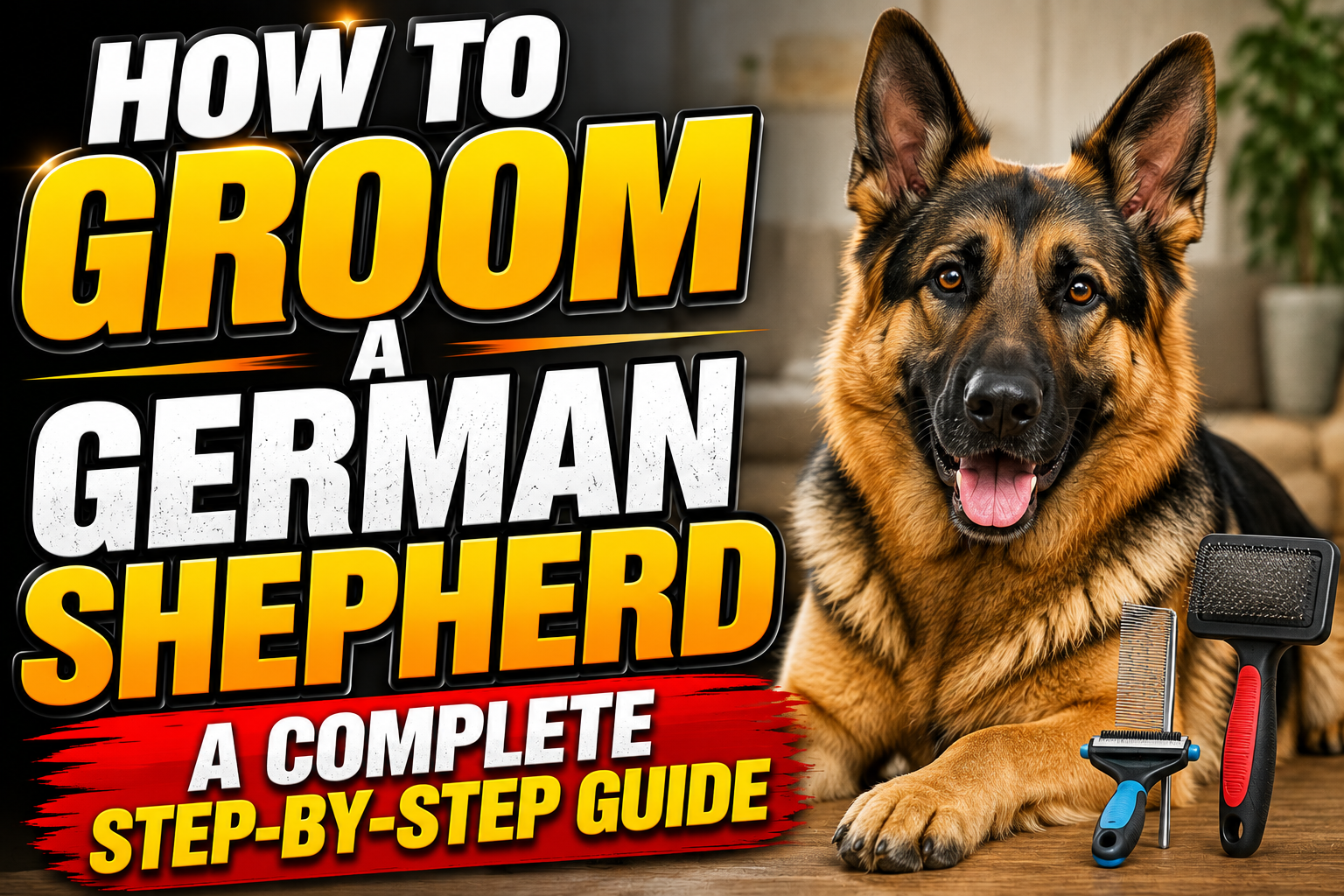
How to groom a German Shepherd begins with knowing how their double coat looks like. Their undercoat is dense while their outer coat is straight and harsh, but the hair will be longer and thicker at the neck area and also a bit longer in the hind legs.
Since their coats are made with purpose, proper grooming should preserve it and not reshape it. The German Shepherd breed is natural shedders. Brushing assists in getting rid of loose hair, while bathing and other grooming practices can be done only when necessary.
Understanding The German Shepherd Coat
The first thing to keep in mind is the fact that the hair you see on your dog is the coat, but only part of it, the top layer, with the undercoat being beneath it. This undercoat is what gets shed the most heavily during the shedding season, which means that during the most intense periods, you would notice big amounts of it coming out in one go.
For everyday care, brushing every few days is usually a good interval to follow. On the days when your dog is shedding the most, it would help to increase the frequency of brushing to get rid of the loose hair faster and easier. The best interval for your dog will depend on its particular coat and habitat.
Step-by-Step Guide to Groom a German Shepherd
Here are some simple grooming topis for your Germen Shepherd.
1. Prepare The Dog & Tools
Pick a quiet area where footing is safe and ensure that all the grooming supplies like brushes, comb, towels, etc., are ready before you start. A German Shepherd that will comfortably stand still is easier to groom compared to one that will need restraining the entire time.
If your dog is young or hesitant with the idea of grooming, begin with basic handling of the dog and brush it on the back and shoulders before moving on to more sensitive areas like the paws and tail.
2. Begin Brushing At The Neck
Proceed from the dog’s neck and shoulders to the back and sides section by section. Focus on brushing the hair rather than continually scraping the skin. The neck needs to be given extra care because the fur in this region tends to be longer and thicker. Also, you will find it easier to identify loose undercoat rather than brushing away the outer hair.
3. Work Toward Tail & Rear legs
Continue toward the hindquarters, paying particular attention to the tail and back of the legs since they are prone to collecting loose hair and bits of dirt from outside. If you come across any small knots while brushing the hair, slowly work them out.
Always avoid pulling hard on a tangled mat just because you want to finish the grooming session. A mat near the skin can be quite uncomfortable for the dog and will need professional treatment.
4. Carefully Remove Loose Undercoat
When shedding occurs, it may be necessary to use a good undercoat or deshedding tool. The process should be performed with control and stops when all the loose coat has been removed. There is no point to keep trying in the same place since new coat will grow. The improper usage of such tools can damage the coat, so technique is more important than the amount of the removed coat.
5. Inspect Skin While Brushing
While brushing allows observing what is usually not visible under the coat. Check if there is any redness, wounds, moist spots, parasites, strange hair loss or any other changes in comparison with the rest of the skin. Also observe your dog’s behavior.
If German Shepherd that used to tolerate brushing starts to react negatively to touching certain spot, do not try to brush harder. Pain or irritation can be the reason of the behavior.
6. Bath Your Dog After Brushing
It will be much easier to wash your German Shepherd if all the loose coat has been removed. Bathing is not required frequently just because of the dense coat. It should be performed only when the dog is actually dirty or has picked something unpleasant or because of the need in the veterinary bathing routine. Use a special shampoo and wash it into the coat without being rough. Make sure that you rinse it properly.
7. Thoroughly Dry Undercoat
Drying needs special consideration since the outer coat may be dry, but the undercoat will be wet. Start with towel-drying and use a dryer if the German Shepherd tolerates it. Do not expose your dog to excessively hot air flow and pay more attention to areas with thick fur like the neck and chest.
8. Groom The Ears, Nails & Paws
When you finish with the coat, take a look at the ears to see if there is any foul smell, discharge, redness or excessive scratching. Healthy ears do not require intensive cleaning all the time. Nail checking and clipping depend on the wear.
It differs from dog to dog depending on the terrain in which the animal walks. After outdoor exercises, check between the paw pads for foreign bodies, plant debris, mud, and irritation.
9. Keep Dental Care separate But Regular
Dental care cannot be included in each complete grooming procedure; however, it must be a component of the overall care of the dog. Clean the teeth regularly with dog-specific toothpaste. Separating dental care from grooming might make the process easier for both of you. Instead of making one session an overloaded list of tasks, divide them into routines.
Mistakes To Avoid With A German Shepherd’s Coat
The most common grooming mistakes are related to trying to control the coat. A German Shepherd is supposed to shed, and the natural double coat serves a particular purpose.
- Shaving the natural double coat
- Using de-shedding tools too often
- Brushing too hard
- Pulling against mats
- Bathing a clean dog
- Leaving the undercoat wet
- Forcing grooming when the dog is distressed.
Routine shaving is particularly unnecessary. The double coat protects the dog from various weather conditions, whereas shaving does not take away the shedding problem.
When Home Grooming Is Not Enough
Most dogs of the German shepherd breed are able to have their routine grooming tasks done at home. It is advisable to seek professional help if mats cannot be removed without causing harm to the dog’s skin, the animal cannot be acclimated to grooming activities, or the pet has a particularly large and troublesome coat that needs thorough washing and drying.
It is not recommended to attempt to address such situations as veterinary issues on one’s own. If a dog experiences persistent itching, skin irritation or discomfort, unexplained hair loss, recurring ear infections or a sudden change in tolerance, it may be necessary to contact a professional.
FAQ’s
How often should you groom a German Shepherd dog?
Every few days, usually more intensive during shedding season.
What brush to use for a German shepherd?
A slicker brush or an undercoat remove is suitable for this double coated dog.
Should a German Shepherd be shaved?
Not necessarily. They do not need regular haircuts, nor should they lose the benefit of their coat.
When should a German shepherd be bathed?
When the coat is genuinely dirty or a veterinarian recommends bathing.
References
Disclaimer: This guide focuses on how to care for German Shepherd dogs’ coats. All dogs differ, so grooming requirements may change depending on individual circumstances. If you find that there is an unusual problem with your dog’s coat, skin or behavior during brushing, consult a vet or professional groomer.

- Puppy Harness Guide: How to Choose the Right Dog Harness for Training - September 20, 2026
- Best Chow Chow Mix Breeds: Traits, Size & Temperament Guide - September 10, 2026
- Entlebucher Mountain Dog: Complete Breed Guide, Care & Training - September 10, 2026