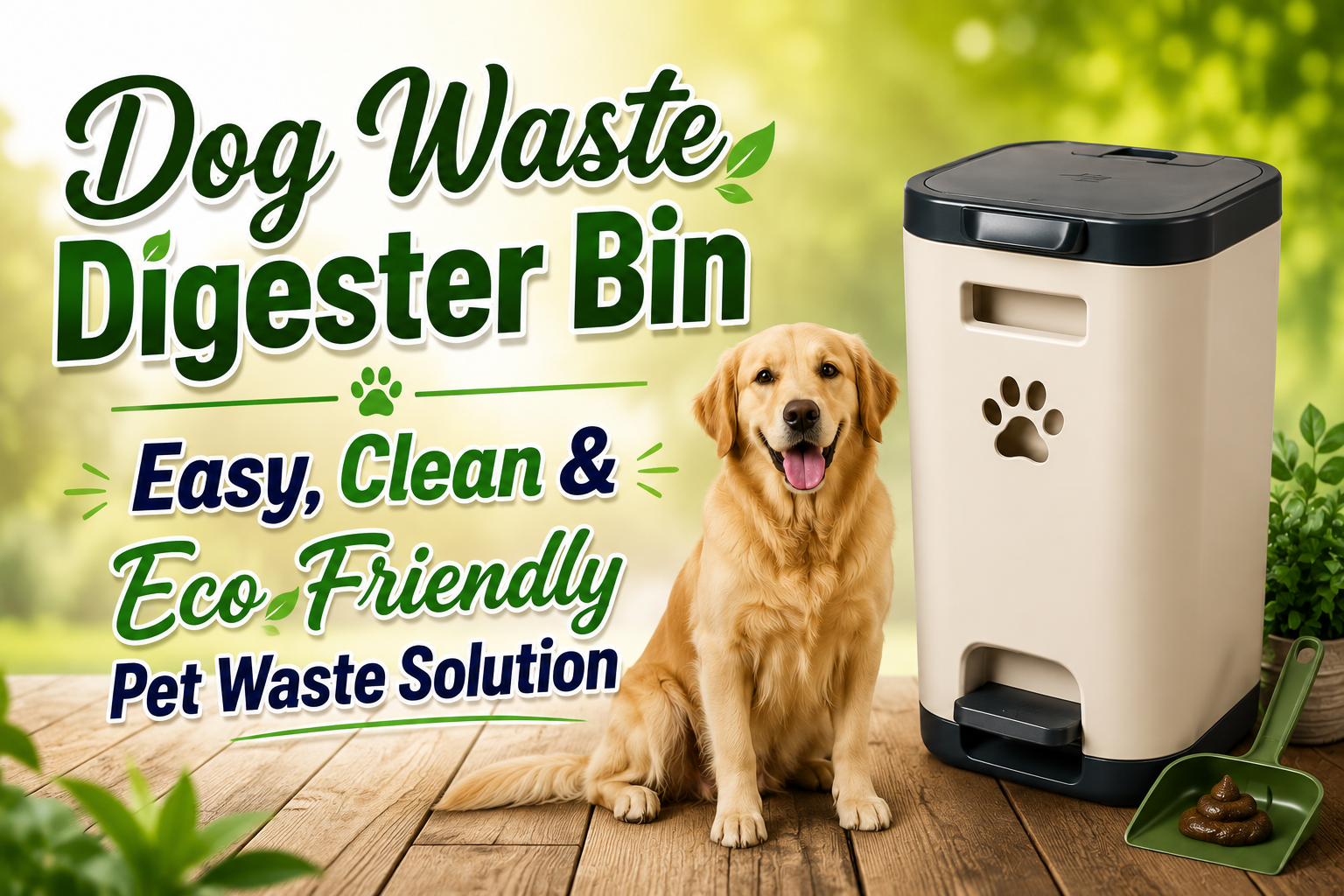
A Dog Waste Digester Bin is an effective product that will provide an environmentally friendly and convenient method of disposing of your dog’s waste for dog owners. The difference between this product and regular outdoor garbage bins lies in the fact that while in the latter bagged waste is thrown into the bin, in the former natural bacteria are used to decompose waste underground.
There are many things to take into account before deciding to buy one of those systems. First of all, soil type, weather, weight of dogs, and the site of installation should be considered. Understanding these factors can help you choose a system that works efficiently for your home.
Why Choose A Dog Waste Digester Bin?
Dealing with dog waste becomes problematic when outdoor trash cans begin smelling bad or becoming full faster than expected. This is often experienced by people who have multiple dogs or those who own dogs with large sizes which result in more dog waste.
Dog Waste Digester Bins give you a place where waste will be disposed and decomposed underground rather than being kept inside plastic bags and stored before the day of garbage collection. Using such bins makes it easier for owners to dispose of waste properly and efficiently.
Another reason why many pet owners prefer using digesters is the reduced amount of landfill waste generated from dog waste disposals. If used correctly and in accordance with local regulations, they provide a more sustainable option for everyday pet waste management..
How Does A Dog Waste Digester Bin Work?
A dog poop digester system is similar to a small septic tank system in the way it functions. The unit is put underground, giving the waste within time to react with the natural bacteria found in the soil. The bacteria feed on the waste and decompose it.
Many digester systems are advised to be used alongside enzymes or septic starters that help facilitate bacterial action. There are many things that determine the effectiveness of a digester system:
- Drainage of the soil
- Regular maintenance
- Moisture levels
- Temperature
- Capacity of the bin
Good drainage and moderate moisture provide ideal conditions for decomposition. However, poor drainage and low temperatures affect decomposition negatively.
Benefits of Using A Dog Waste Digester Bin
A good quality digester makes it easier to deal with pet waste and provides some environmental benefits too.
- Cleaner waste disposal: The digester separates the waste from other regular household waste. It ensures lesser quantity of bagged waste stored outdoors in bins and minimises the chances of any odor around the house.
- Less landfill waste: The traditional way of managing pet waste involves putting them in plastic bags which are then sent to the landfills. The digester decreases the amount of waste sent to landfills because of natural decomposition.
- Ease of daily cleaning: Instead of collecting and storing bagged waste, the owner can clean the waste on the spot immediately after cleaning the yard.
- Cost savings in the long run: Even though a digester involves initial expenses, it will last long with proper care. Moreover, the use of less disposable bags results in saving costs in the long run.
Is A Dog Waste Digester Bin Right For Your Home?
A digester can be good choice for:
- Homes with their own yard
- Families with one or more dogs
- People who want to cut down number of bags
- Those who wish to have clean waste storage outdoors
It will not be suitable for apartments, homes without yards, or poorly drained yards. Proper site selection is very important as it is directly related to decomposition process.
How To Choose The Right Dog Waste Digester Bin
The best digester depends on your needs, available space, and the environmental factors around you.
Choose The Right Capacity
The size of your dog as well as the number of pets will determine the capacity of the waste to be processed.
| Household | Recommended size |
|---|---|
| 1 small dog | Small |
| 1 to 2 medium dogs | Medium |
| 2 to 4 large dogs | Large |
| Multiple large dogs | Extra-large |
Choosing a slightly larger model can be helpful if you plan to add another pet in the future.
Use Long Lasting Material
As the system will continue to operate outside and under the ground, its longevity is essential. Durable and weatherproof materials will prevent cracking and make sure that the system works effectively for many years. UV-resistant plastic and durable polyethylene are often used as they withstand outside weather conditions.
Choose Proper Lid
A properly fitted lid not only controls odors but also makes sure that pets, insects, and wildlife cannot get to the waste. It will provide an additional safety measure for families with children who play outdoors.
Consider Your Local Climate
The weather affects the rate of decomposition. Hot weather favors rapid bacteria growth, while cold weather could affect the process. Owners living in cold climates would require a larger container or more enzyme applications during winter.
How To Install A Dog Waste Digester Bin
Proper installation increases the efficiency of the system and prevents potential maintenance issues in the future.
- Select the right location: Choose an easily accessible spot that is well drained and easy to clean. Do not install close to water sources, wells, vegetables garden, or where there will be any accumulation of water.
- Prepare the installation hole: Prepare the installation hole as per the manufacture’s instructions to make sure that the digester is placed well and that the lid can be easily accessed.
- Install the digester: Install the digester level in the hole to increase stability.
- Secure the unit: Cover the digester with soil and press down on it to make it secure.
- Start the system: Put in water and enzyme starter as required by the manufacture before first use.
- Begin regular use: Only add dog waste unless the manufacturer permits you to use other kinds of wastes. You must follow the recommended maintenance routine.
Maintenance Tips & Common Mistakes To Avoid
The maintenance of the dog waste digester is relatively simple, yet some regular maintenance practices can enhance the decomposition process and avoid frequent problems that may occur. Using it according to the manufacturer’s directions increases its effectiveness.
Add Water As Needed
Digesters usually need water to allow bacteria to function properly. In dry conditions, adding water in small amounts is necessary to ensure the decomposition process continues. Be careful not to add too much water, especially if drainage is poor, as excessive water may affect efficiency.
Apply Recommended Enzymes
Some digesters function well with the help of septic starter enzyme tablets or some other type of products that enhance natural bacteria functioning. Only use recommended pet waste digester products and no aggressive chemicals.
Check The Capacity Of The System
An adequate-sized digester must allow slow decomposition of the waste without having to continually overflow. When the waste starts accumulating rapidly, then your digester is either inadequate for your home or needs servicing.
Avoid Adding Unwanted Materials
A digester should generally contain only dog waste unless the manufacturer specifically approves other materials. Avoid adding:
- Plastic bags
- Wipes
- Cat litter
- Household waste
- Cleaning chemicals
These items do not break down properly and may interfere with the system.
Choose The Right Location & Avoid Overloading
Poor drainage and waste overload may affect the process. Proper installation of the digester in the right soil and using the right capacity for the number of dogs will be helpful to avoid such difficulties. Winter is another factor that will affect the rate of decomposition, so owners in colder climates may need to allow more time for natural breakdown.
Dog Waste Digester Bin V/S Traditional Disposal
Many pet owners usually compare an underground digester to the usual practice of bagging the waste and disposing of them in outdoor garbage bins.
| Feature | Digester bin | Traditional disposal |
|---|---|---|
| Odor | Lower with maintenance | Higher over time |
| Plastic bags | Reduced use | Frequent use |
| Convenience | Easy after installation | Requires regular disposal |
| Waste impact | Lower | Higher |
The use of a dog poop digester box may be an practical option for those who have the space to accommodate it and do not want to keep their pets’ waste in regular trash bins. Nonetheless, it may not be feasible for everyone because there are certain considerations that must be put into account before installing one.
Is A Dog Waste Digester Bin Worth Buying?
A digester could be a good purchase for most dog owners since it makes their everyday duty easier. A digester allows creating a special place for disposing of waste, decreases the use of plastic bags, and contributes to the cleanliness of outdoor places. It would be very handy for homeowners who have their own yards, several dogs, or want to make their pets’ care eco-friendly.
But a digester may not be the ideal product for use in apartments or homes that do not have any outside space and also in areas where there is a poor drainage system. Before purchasing, consider your dog’s size, the amount of waste produced, and whether your yard conditions are suitable. Choosing a properly sized and durable system can provide a convenient long-term solution for managing dog waste.
FAQ’s
Does a dog waste digester bin work for large dogs?
It would. You only have to choose a different size in order to accommodate the additional waste output.
What is the frequency of adding enzymes?
As per the instruction provided by the manufacturer. In some systems, there may be a requirement of adding enzymes occasionally.
Can I install this in any yard?
No. This system performs better when placed in a yard that is well drained and far from any water source.
Are digesters eco-friendly?
They are. If properly used, they could minimize plastic bag waste and landfill usage.
Can a dog waste digester bin be used during winter?
Yes, but decomposition slows down significantly in cold weather. Owners living in colder climates may need to add warm water or increase enzyme applications to maintain bacterial activity during freezing months.
Official Sources
Disclaimer: The above information is purely educational in nature and doesn’t replace manufacturer recommendations as well as any waste management guidelines you might have locally. There could be different regulations on disposing of pet waste in your area. Make sure you check the local regulations on dog waste digester bins installation.

- 9 Best Dog Life Vests of 2026: Reviews & Buyer’s Guide - September 15, 2026
- Silky Terrier: Complete Breed Guide, Personality, Care & Training - September 10, 2026
- Miniature Poodle: Complete Breed Guide, Personality, Care & Training - September 10, 2026