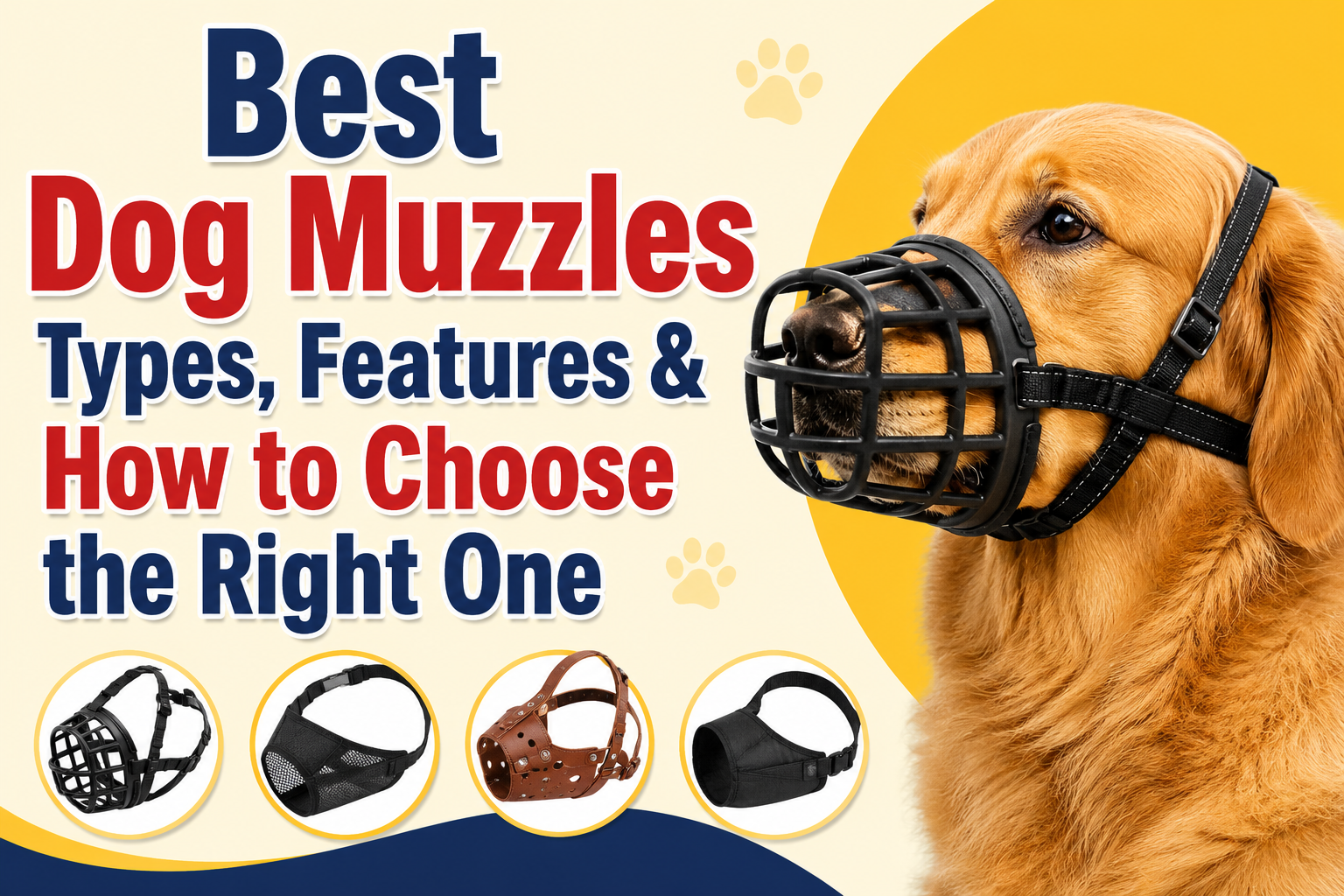
Best Dog Muzzles must be selected based on the reasons for needing a muzzle, the shape of the dog’s face, and the level of freedom needed when wearing it. Muzzle for a quick procedure is different from a muzzle that is worn during a walk; a muzzle for a dog that needs bite prevention must have more strength compared to a muzzle for picking up harmful objects outside.
Center from 2026 describes correctly fit basket muzzles as useful tools since they enable dogs to breathe, drink and take treats but not bite. Cornell’s also emphasizes that such muzzles are helpful for dogs who ingest inappropriate items outdoors.
Types of Dog Muzzles
The design determines how freely a dog can open its mouth and where the muzzle can safely be used. Basket, soft or sleeve, and custom-fit basket muzzles cover the main choices.
| Type | Suitable use | Main point |
|---|---|---|
| Basket muzzle | Walks, scavenging, bite prevention | Allows mouth movement |
| Soft or sleeve muzzle | Brief handling | Restricts mouth opening |
| Custom basket muzzle | Unusual facial shape | Individualized fit |
Basket Muzzles
A basket muzzle fits around the dog’s nose in such a way that it will not prevent him from biting while at the same time keeping his mouth open. When correctly fitted, it can enable the dog to breathe easily and drink water or accept treats from its owner. It can therefore be used for long periods of time including during walks.
Soft or Sleeve Muzzles
Soft muzzles fit closely around the snout and restrict the dog’s ability to open its mouth. Normal panting needs the mouth to be opened sufficiently, so this is a far more limited application. According to Cornell, the soft muzzles fall under temporary-use equipment since they prevent panting and drinking. For this reason, they cannot be considered the default option for walking.
Custom-fit Basket Muzzles
There is no guarantee that a particular size will always suit the facial structure of a particular dog. A muzzle can have a good enough length but be narrow, or fit properly around the nose but not provide enough room for opening the mouth. A custom basket could be useful in case the ready-made muzzle cannot offer safety and clearance. This can be especially valuable for dogs with unusual facial proportions or significant bite risk.
Features of The Best Dog Muzzles
Once muzzle type has been decided on, the next set of considerations are those relating to comfort, security and practicality.
Adequate Panting Space
Panting space is necessary if the muzzle is to be worn for any length of time. The dog needs to be able to open its mouth fully, rather than having it held shut almost closed. This is especially important during walking, exercising or when the animal is hot. A basket with enough room inside is the best option for these circumstances.
Drinking & Treat Access
If the muzzle is to be used outside, the dog should be able to drink. Treat access is also important, as treats can be used as rewards for wearing the muzzle and can help the animal to associate it with positive things. Cornell notes that a properly fitted basket muzzle can allow for both drinking and treats.
Secure Fastening
The muzzle should not be able to move around too much, but the straps should not be too tight. It should also not be possible for the animal to turn its head in such a way that it can remove the muzzle. Cornell recommends that there should be the space for one or two fingers between the strap and the dog’s head.
Nose & Eye Clearance
The muzzle should not press on the dog’s nose or restrict its breathing in any way. It should also not press on the eyes when the animal moves its head. Two muzzles with similar advertised measurements can therefore fit very differently because their internal shapes may not be the same.
Appropriate Strength
The materials used should be appropriate for the intended use. A dog which is only being prevented from eating things on walks will not need the same level of protection as one which is being kept from biting. Strength should be balanced with the fit and security of the muzzle, as well as the conditions it will be used in.
How to Choose A Right Muzzle
Choosing the right muzzle is much seamless if you consider the decisions in an organized manner rather than basing it on a preferred brand or design.
1. Determine A Specific Purpose
It is critical to define the reason why your dog needs a muzzle. Bite prevention requires one type of restraint, and a muzzle for scavenging purposes should have openings that do not allow the dog to grab items. A soft muzzle can be suitable for a short procedure but should not be used for an extended period
2. Know The Size of Your Own Dog
Never assume that your pet has a defined size category based on its breed, weight, or another parameter. All dogs have different features, even within the same breed. It is better to use the instructions provided by the manufacturer to determine the right size based on the snout length, circumference, width, and the head or neck size, depending on the muzzle design.
3. Check the Internal Space
If you are using a basket-style muzzle for an extended period, double-check that it allows the dog to pant and open its mouth. The opening at the front of the basket should not press the dog’s nose, and the basket itself should not restrict the nostrils. If possible, give your dog a drink and some treats while wearing the muzzle to see if it allows them to do so comfortably.
4. Check Its Stability
Watch how the dog moves in the muzzle, ensuring that it does not twist in such a way that creates pressure points on the eyes or causes the dog to try and shake off the item. Pay close attention to the force needed to prevent the muzzle from slipping. Straps often need adjusting, but if they have been pulled too tightly, it may be necessary to choose a different product.
5. Facial Structure is Also Important
Dogs with long, narrow skulls, big heads, or short noses need extra attention when choosing a muzzle. The short-faced breeds may require veterinary assistance to ensure that the item can be worn comfortably and does not interfere with the animal’s ability to breathe.
Choosing A Muzzle For Regular Walks
Basket muzzles are normally the best choice for walks where the dog really requires a muzzle. The muzzle will serve as a barrier but also allows panting, drinking, and giving the dog treats in proper fitting. The other thing is that the dog needs to get used to wearing the muzzle before a critical trip out. According to Cornell University, it needs to be introduced gradually while being rewarded when the dog allows itself to be placed into the muzzle.
Choosing A Muzzle For Scavenging
A basket muzzle is a suitable physical barrier for dogs that tend to pick up stones, food, and other foreign objects harmful to the body. In this case, it is critical to ensure the correct size of the basket to avoid choking on the objects being ingested. However, the animal must always have free access to air and be able to drink.
Choosing A Muzzle For Bite Prevention
When the goal is to prevent biting, the emphasis for both the dog and the owner should be on security and strength. In this regard, a well- fitting basket muzzle is preferable to a restrictive sleeve, as it allows freedom of movement while preventing the teeth from making contact
A muzzle does not address the underlying causes of aggressive or fear- induced behavior. According to the American Kennel Club, a muzzle should be used as a safety precaution and not as a substitute for behavior modification.
Best Dog Muzzle Choice For Your Dog
The best dog muzzle is the one that suits the particular dog’s needs, accommodates his facial structure and offers the needed protection. For most general-purpose applications, a well-fitting basket muzzle is a good choice. For short-term use only, a soft style may be used.
A custom basket may be the only option in some cases, for dogs that have trouble wearing standard basket muzzles. The choice of the best dog muzzle depends on a balance between protection, fit and comfort.
FAQ’s
What is the best type of dog muzzle?
A properly fitted basket muzzle is generally the most versatile option, as it allows the dog to pant, drink and accept treats while still preventing bites
Can dogs pant with a basket muzzle on?
Yes. A well-fitted basket muzzle would give the dog enough space to open their mouth to pant.
How should a muzzle be put on a dog?
The muzzle should fit securely without putting too much pressure on the dog’s face, allowing for an open mouth, and not rub the nose, nostrils, or eyes.
Can a muzzle prevent a dog from biting?
A properly fitted muzzle can prevent biting by keeping the teeth from making contact, but it does nothing to prevent the act of biting itself or address the cause of the behavior.
References
Disclaimer: A muzzle is a safety aid, not a substitute for training, supervision or professional assessment. The information here is general in nature and should not be applied to working dogs, dogs with breathing problems, short muzzles or serious bite problems. If in doubt, seek the advice of your veterinarian or a qualified canine behavior consultant.

- 9 Best Dog Life Vests of 2026: Reviews & Buyer’s Guide - September 15, 2026
- Silky Terrier: Complete Breed Guide, Personality, Care & Training - September 10, 2026
- Miniature Poodle: Complete Breed Guide, Personality, Care & Training - September 10, 2026