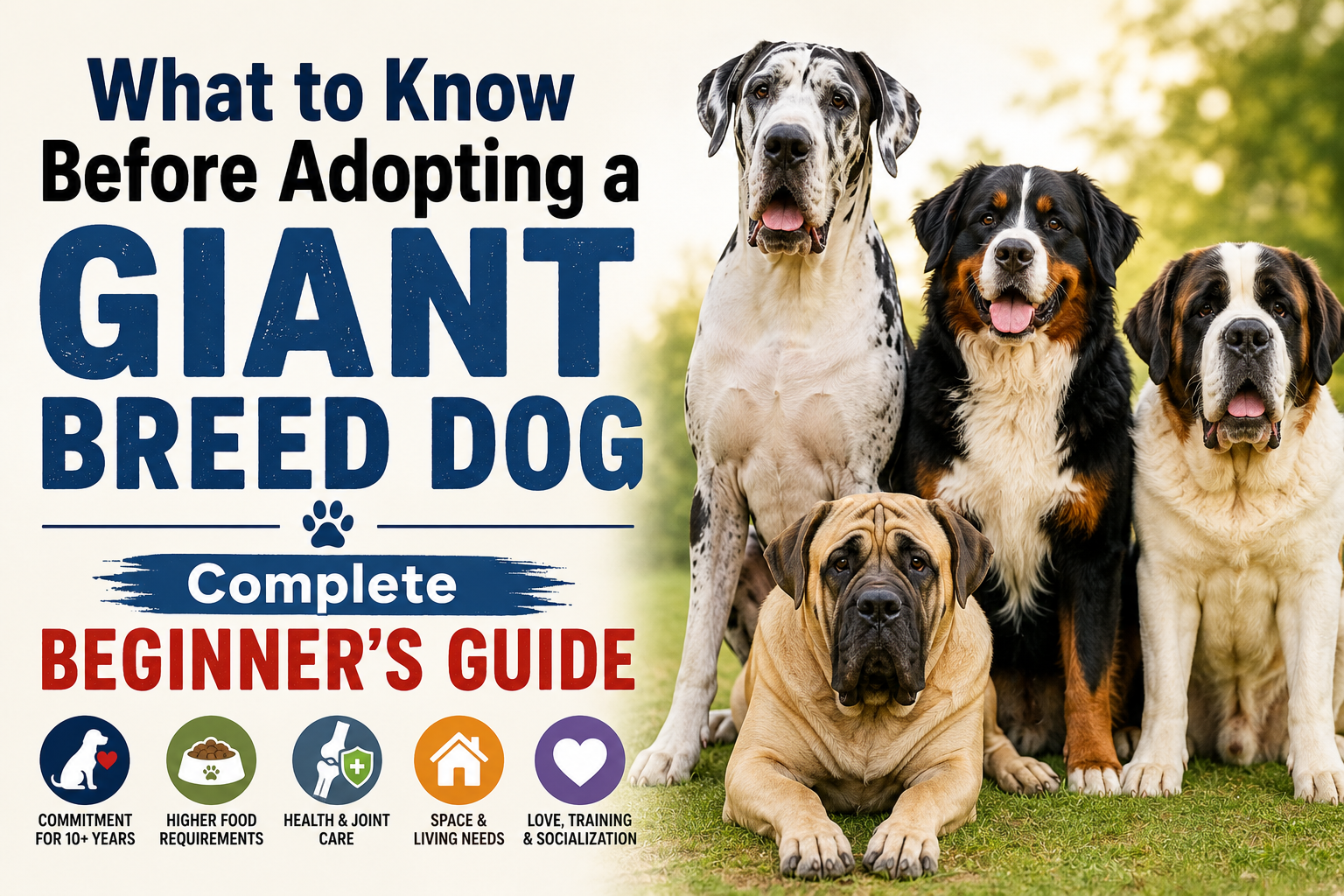
What to Know Before Adopting a Giant Breed Dog is essential information for all future owners before taking on such a big responsibility. Giant breeds are popular for being loving and devoted animals, but there is also a set of obligations that new owners tend to overlook. The size of these dogs influences almost all aspects of life from financial expenditures to house interior design.
Dogs of breeds such as Great Danes, Newfoundlands, St. Bernards, English Mastiffs, and Irish Wolfhounds can be great family pets provided they have all the necessary things. Getting prepared in advance before adoption helps you avoid costly mistakes and gives your dog the best chance to live a healthy, comfortable life.
What Makes Giant Breed Dogs Different
Being a giant breed owner is not just like being a large dog owner. The fact that they grow slower and put more pressure on joints makes them different. They usually grow up to 18-24 months of age and that means the puppies period is extended for these dogs.

Moreover, their size makes everyday tasks harder. Going through small places, traveling, buying products and going to the veterinarian becomes more complicated with giant breed dogs. Being aware of that in advance will help you a lot later.
Adopting A Giant Breed Dogs At A Glance
| Feature | Details |
|---|---|
| Size | 100+ lbs |
| Growth | 18–24 months |
| Food | More |
| Space | Larger |
| Budget | Higher |
| Lifespan | 7–10 years |
Are You Prepared For A Giant Dog?
Imagine your future giant dog at its full-grown size rather than a small puppy when adopting one. At full size, a giant dog will be able to span an entire room easily, and there should be enough room to move around without always having to squish yourself between furniture or narrow spaces.
While most pet parents think about getting a bigger bed for their dogs, they do not consider other aspects, such as doorway sizes, cars, or spaces around feeding areas. All these things can cause problems in the future.
A backyard is always an advantage, but that is not everything that matters. Many giant breeds are fine in smaller homes if they get their physical and mental exercise every day.
A large backyard is beneficial, but it’s just one thing among many. Many giant breeds do well in smaller houses as long as they get plenty of physical activity, mental challenges, and space indoors to stretch out.
Before bringing your pet in your home, ensure that you have:
- Big bed
- Sturdy leash and harness
- Large food and water dishes
- Large crate
- Travel area
- Food storage space
Adapting Your Home for a Massive Pet
Living with an incredibly large dog requires you to look at your house from a completely new angle. A Great Dane or an Irish Wolfhound can effortlessly rest their chin on your kitchen counters, making unattended food a highly tempting target. You will need to build a strict habit of putting groceries away immediately, pushing meals to the back of the counter, and securing your kitchen trash cans with heavy lids.
You must also rethink the layout of your living room. Giant dogs have powerful, heavy tails that act like baseball bats, easily sweeping drinks, remotes, and fragile decorations off low coffee tables in a single happy wag. Clearing low surfaces and creating wide, unobstructed pathways will save your belongings and keep your dog comfortable. Furthermore, invest in heavy duty, non-slip rugs for your tile or hardwood floors. Giant breeds lack traction on smooth surfaces, and slipping can cause severe damage to their sensitive, growing joints.
Be Aware Of The True Cost Of Owning One
Adoption fees only scratch the surface when it comes to costs. Giant dog breeds have higher costs of living in their entire life since almost everything they need is bigger and made with their size in mind. Their food, beds, carriers, toys, collars, and grooming supplies will all cost more.
Veterinary care is yet another overlooked expense for many people. Since many procedures, medications, and anesthesia depend on the size and weight of your pet, they usually cost more than they do for other breeds. Planning your annual expenses for your dog in advance can make your life easier.
Feed For Healthy, Steady Growth
One of the most common mistakes first-time owners commit is feeding their pets too much food to ensure quick growth. Even though a quickly developing dog looks healthy, the excess weight during the period of its development puts extra strain on the growing joints.
Make sure you feed your pet food that is developed for large or giant breed puppies and which ensures balanced growth. These types of food give all necessary nutrients without causing additional weight gain. Supplements should be avoided unless prescribed by the vet, as they can ruin the nutritional balance. Keeping a healthy weight all through the dog’s life is probably the easiest way to ensure good mobility in the future.
What to Know Before Adopting a Giant Breed Dog
Before you make the final decision, think about your lifestyle objectively rather than concentrate only on the look of the dog. A good living environment for giant dogs implies enough time for proper training, exercising, company, and visits to the vet.
Ask yourself a few practical questions before adopting.
- Can I provide all necessary financial resources regularly?
- Do I have enough space in the house?
- Am I ready to train and exercise a dog daily?
- Does my car fit a giant dog?
- Can I take care of this dog for the next 6-8 years?
In case the answer is “yes” to all these questions, then you are already ready to become a caring owner. Being prepared prior to adoption will ensure that both of you will be happy in the future.
Develop Good Habits From Early Training
Training should start from the very first day your puppy comes to your house. The puppy jumping up on people seems cute and innocent, but the same behavior in a big dog weighing over 120 pounds can be challenging. Learning proper manners early will save you the trouble of dealing with bad habits later.
Train for short sessions, keeping them positive and consistent. Instead of using punishment, reward good behaviors with treats, praising or playing with your puppy. Giants like positive reinforcement and enjoy the process of training.
These commands are crucial to start with:
- Sit
- Stay
- Come
- Leave it
- Down
- Leashing walk
It is just as vital to introduce your puppy to various people, other dogs, sounds and situations. The experience your puppy gets during the first year is critical for becoming a confident grown-up dog.
Managing Public Perception and Socialization
Taking a giant breed dog out into the world is an entirely different experience than walking a moderately sized pet. While your English Mastiff might be a gentle sweetheart at home, their sheer physical size can easily intimidate strangers and terrify smaller animals. When you adopt a giant breed, you automatically take on the responsibility of being an active advocate and protector for your dog in public spaces.
This means you must maintain absolute physical and verbal control of your pet at all times. A simple playful lunge from a dog weighing over 150 pounds can pull you off your feet or cause a panic on a crowded sidewalk. You must focus heavily on loose leash walking and teaching your dog a rock solid “leave it” command to keep them calm around unpredictable distractions. It is highly beneficial to instruct strangers on how to approach your dog safely, ensuring every public outing remains a positive experience for both your pet and your community.
Exercise But Avoid Over-Exercising
Usually, giant breeds should be exercised regularly but without too much intensity. Walking, playing, and exercising will help maintain an ideal body weight and ensure that they don’t become bored. Puppies require extra attention since their bones are still growing. Jumping, long distances, and high impact exercises should be avoided before maturity.
Suitable Activities
| Walks | Recommended |
| Play | Recommended |
| Swimming | Good |
| Long runs | Avoid |
| High jumps | Avoid |
Watch For Common Health Problems
A large-sized body has the risk of having some health-related problems. Joint diseases like hip dysplasia and arthritis may be a concern, but some giant dogs may also be prone to having heart diseases as well. Gastric dilatation-volvulus (bloat) is one of the most serious emergencies in giant dogs. Regular check-ups from veterinarians, maintaining ideal body weight, and healthy diet may aid in achieving good health.
Symptoms Of Bloat
- Abdominal distention
- Attempt to vomit repeatedly
- Restless behavior
- Heavy salivation
- Collapse
In case you see any of these symptoms, make sure to go to the vet right away.
Grooming & Daily Care
It depends on the breed if the dog needs grooming. Short-haired giant breeds might not require regular brushing; long-haired breeds, however, need additional grooming to avoid tangles and shedding. Dogs of any type need regular nail clipping, teeth brushing and ear examination. Establishing the routine at an early age will make future grooming easier.
Plan Ahead For Travel
Traveling with a giant breed demands additional preparations. You need to be sure that your car has enough space to allow the dog to sit and lie down easily during the trip. You need to bring plenty of fresh water and plan for stops on longer trips. Good planning makes travelling less stressful for both you and your pet.
Is A Giant Breed Dog Right For You?
A giant dog breed can turn out to be an incredible companion for the suitable owner. Such breeds are known to be friendly and loving, but it takes a lot of effort from your side in order to take care of them properly. If your lifestyle suits these dogs’ requirements and if you can provide proper nutrition, training, healthcare, and companionship, a giant breed can become a wonderful lifelong family member.
Frequently Asked Questions
Does a giant breed dog require a big yard?
Not necessarily. Many giant breeds will be able to cope in smaller spaces when they get adequate exercise and stimulation.
How long do giant breed dogs usually live?
It depends on the breed, but many giant breeds typically live around 7–10 years with proper care.
What is the most crucial thing before adopting a giant breed?
Preparation is crucial. One needs to know everything about a dog’s size, costs involved, health considerations, etc., before adopting one.
Official Sources

- 9 Best Dog Life Vests of 2026: Reviews & Buyer’s Guide - September 15, 2026
- Silky Terrier: Complete Breed Guide, Personality, Care & Training - September 10, 2026
- Miniature Poodle: Complete Breed Guide, Personality, Care & Training - September 10, 2026