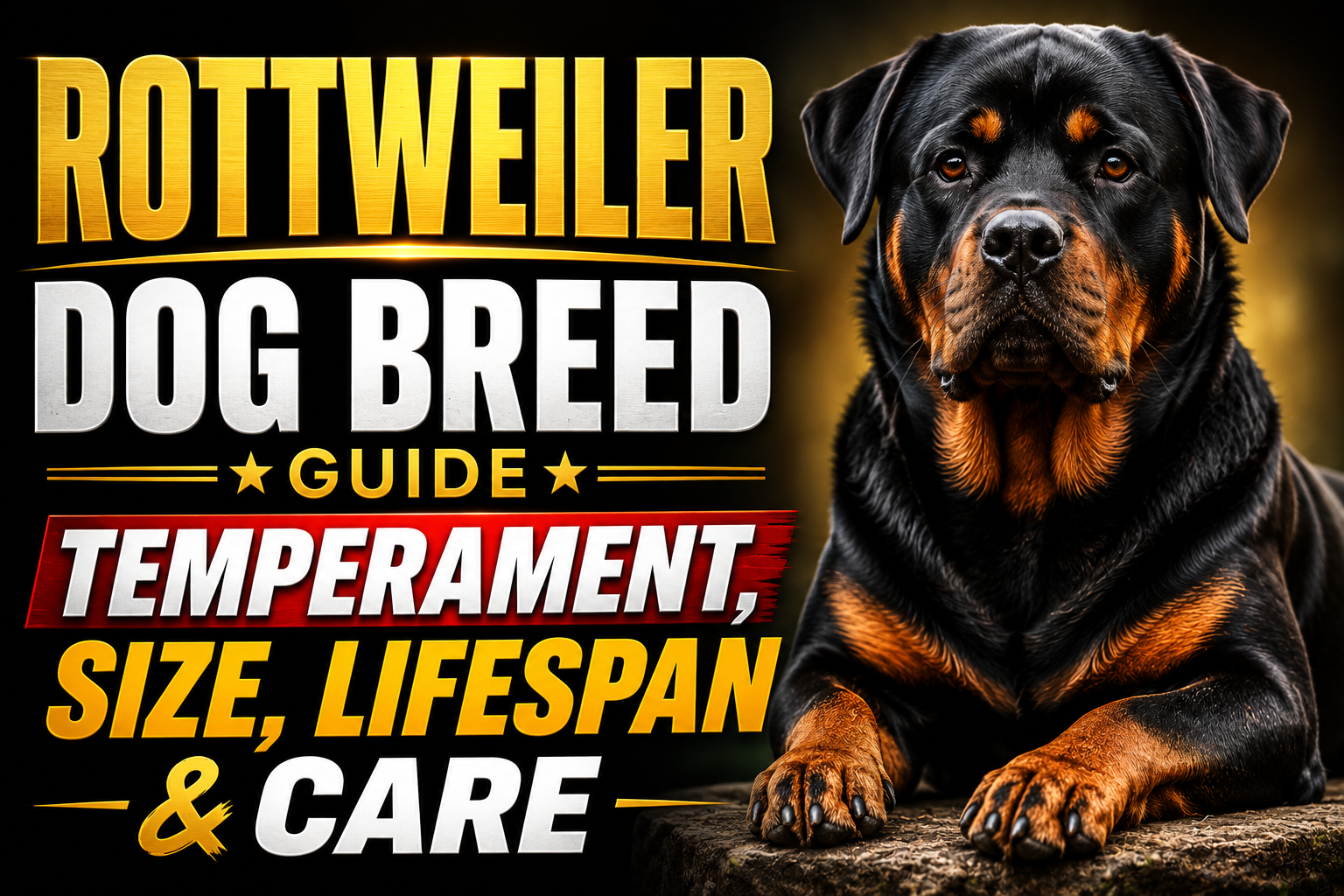
Rottweiler Dog Breed is regarded among the most respected working dog breeds in the world. The breed is known for its high intelligence level and confidence, in addition to its famous loyalty. Even though many people associate Rottweiler dog breed with being aggressive dogs, a Rottweiler that has been properly bred and trained is usually calm, friendly, and loves pleasing its master.
When it comes to choosing a Rottweiler pup or doing your research before adopting one, knowing everything about the breed’s temperament, physical appearance, and care needs will aid in your decision-making process.
What Makes Rottweiler Dog Breed Unique?
While most big dogs that have been developed for their abilities to guard have no other skills to offer, the Rottweiler is a breed of dogs that has a long history of being a working dog. The breed is strong enough as well as extremely intelligent, and thus can be used for obedience, search and rescue, herding, service, and even just as a companion.

The breed flourishes when given a task. Training exercises, puzzles, and being outdoors are just some things that will help fulfill their need to be productive beside people. It is this trait combined with their loyalty that makes the Rottweiler a loyal companion to professionals and dog handlers alike..
Rottweiler Dog Breed- A Short Glance
| Feature | Details |
|---|---|
| Origin | Germany |
| Breed group | Working |
| Height | 22–27 inches |
| Weight | 80–135 pounds |
| Average lifespan | 9–10 years |
| Coat type | Short, double coat |
| Energy level | High |
| Trainability | Excellent |
| Grooming needs | Low to moderate |
History & Origin
The origin of the Rottweiler goes way back in time to the Roman Empire, where these strong drover dogs were used by the Roman soldiers to herd cattle for very long distances. These dogs made their way to the place that now comprises southern Germany, where they were known to be closely connected with the town of Rottweil. The butchers of Rottweil used these dogs to drive the livestock and protect the money earned from the sale of cattle.
The changes in means of transportation brought about a change in duties as well. Currently, the dogs can be found performing in various fields such as police work, the armed forces, search and rescue, obedience competitions, and therapy programs. Their versatility reflects centuries of selective breeding for strength, intelligence, and reliability.
Appearance & Size
Rottweilers are athletic dogs with large frames, broad chests, well-developed shoulders, and a robust physique, although they are built for stamina rather than speed. Even though this breed has a heavy frame, it should appear balanced and be agile when moving around.
This dog has a short black coat with clearly marked rust/mahogany color around the eyes, muzzle, chest, legs, and underneath the tail. This double coat provides insulation in cold environments but remains manageable at all times during the year.
Temperament & Personality
The Rottweiler Dog Breed is best known for its steady temperament and deep loyalty to its family. A well-socialized Rottweiler dog is usually characterized by confidence without excessive reactivity. Instead of being constantly barking at everything, a Rottweiler is used to carefully observe what is happening around before taking any actions.
These dogs create extremely close relationships with the owners who love them very much and prefer spending time together in all daily routines instead of being left alone. Intelligence is one more feature that is worth mentioning as it makes training easy and gives a chance for additional brain activities.
Aggression is not natural to any dog and should never be accepted as part of the breed. Good breeding practices, proper training, and good socialization from puppyhood are the building blocks for a well-adjusted adult dog.
Would Rottweiler Dog Breed Suit Your Family?
In most cases, the answer is yes. If the breed’s physical and psychological needs are fulfilled, the Rottweiler can serve as a good, affectionate member of your family. These dogs usually like spending time with their families, and they form strong bonds with kids who know how to relate to canines properly.
However, because of its size and strength, the breed should always be monitored when interacting with children. Moreover, the Rottweiler requires a certain leadership from its owner and sufficient physical activity throughout the day.
The Rottweiler will be unsuitable for a person who is seeking a lazy dog to own and one that can spend all day alone without requiring attention. This breed thrives on companionship, structure, and meaningful daily activity.
Exercise & Training Needs
Rottweilers are a highly active dog breed that needs proper physical exercise and mental stimulation to stay physically healthy and mentally balanced. Most adult dogs will need around one to two hours per day for exercise that consists of walking, training sessions, and playing.
Positive training methods are extremely effective in Rottweilers since the breed likes training and is prone to reacting positively to reward and praise. Physical punishment is not needed and can even have negative effects on the relationship between owner and dog. Starting socialization and obedience training during puppyhood helps build confidence while teaching appropriate behavior in different environments.
Signs Your Rottweiler Is Getting Enough Exercise
A healthy and fit Rottweiler should:
- Have a healthy weight.
- Be calm and relaxed inside the house.
- Display excitement towards training sessions.
- Sleep well after activities done each day.
- Show few signs of boredom like destroying things or constant barking.
Feeding & Grooming
A proper diet is one way in which the Rottweiler Dog Breed can be kept healthy all through its life. Select a proper dog food which meets established standards and is suited to the age, size, and activity of your dog. Puppy dogs which belong to large breeds need to be fed on dog foods which promote controlled growth. Adult dogs thrive when they feed on dog foods which help them to maintain lean muscles and body weight.
Given that the breed gains weight easily, make sure you don’t overfeed and keep the consumption of high-calorie snacks low. This will be beneficial for decreasing the stress on your dog’s hip joints, elbow joints, and heart.
Although the breed has a short coat, regular grooming is necessary. Your dog should be brushed one to two times a week to remove any dead hair from its coat. When shedding season comes, it is recommended to brush your dog more often.
A basic weekly grooming program will include the following:
- Brushing of coat once or twice.
- Brushing teeth several times during the week.
- Trimming of nails when necessary.
- Cleaning ears when necessary.
- Bathing only when the coat gets dirty
Health Concerns & Lifespan
Like other large working breeds, Rottweilers may have a tendency to develop some genetic and age-related health issues. Obtaining a puppy from a reliable breeder who conducts health screenings and organizing veterinary exams will be crucial steps in ensuring the health of your dog.
These are some common health problems seen in the breed:
- Hip dysplasia
- Elbow dysplasia
- Subaortic stenosis (heart disease)
- Cranial cruciate ligament injuries
- Osteosarcoma (bone cancer)
- Obesity
The typical lifespan of a Rottweiler dog breed is 9 to 10 years; however, there are some that may exceed this age due to preventative care, healthy diet, exercise, and good breeding practices. The need for yearly checkups becomes increasingly critical as the dog gets older since early detection means successful treatment.
Puppy V/S Adult Care
From an early age, Rottweilers require structure. Socializing Rottweiler puppies with various people, other dogs, settings, and sounds will assist in building confidence at critical development periods. The puppies should also be taught basic commands through short training classes which do not cause too much pressure on their joints.
Adult Rottweilers need regular exercises, obedience, and mental stimulation. Most dog owners give up on training programs when the dog becomes an adult, but training should continue to instill good manners in the dog and build a strong bond with the dog owner.
Common Mistakes That Pet Owners Make
Most behavioral issues, as well as health-related issues, could have been prevented by not making some common mistakes.
- Not socializing the puppy at an early age.
- Allowing the dog to gain extra pounds.
- Failing to provide adequate physical exercise.
- Neglecting mental exercise.
- Using punishment rather than reward training methods.
- Not having regular check-ups at the vet.
- Leaving the dog alone all day.
Building healthy habits early usually leads to a calmer, more confident companion.
Is this Right Breed For You?
Before bringing home a Rottweiler, take an honest look at whether your lifestyle meets the needs of the breed.
| A Rottweiler can be a good fit if | It may not be the best choice if |
| You enjoy training dogs | You want a low-energy breed |
| You have time for daily exercise | You are away from home most of the day |
| You want a loyal family companion | You lack commitment to socializing the puppy |
| You are prepared for long-term care | You prefer a dog requiring very little guidance |
Responsible ownership is one of the biggest factors influencing a Rottweiler’s behavior and overall quality of life.
Climate & Living Requirements
Rottweilers are able to adapt to various weather conditions, yet during the hot season, they require more attention. The dark color of the coat absorbs heat easily, so it makes these dogs sensitive to high temperatures during summer. Try to plan walks at cooler times of the day, provide your Rottweiler with an opportunity to stay in the shade and get some fresh water outside and do not allow any exercises during the hottest period of the day.
This breed can live in homes, whether or not they have big yards, as long as they get enough physical and mental exercise. An enclosed space with a fence is the best place for them to play around in safely, but walking and training them is still necessary.
Breed-Specific Legislation and Housing Restrictions
Before bringing a Rottweiler into your life, you must look beyond their care needs and consider local legalities. Around the world, Rottweilers are frequently subjected to Breed-Specific Legislation (BSL). Depending on your country, state, or local municipality, owning this breed could be heavily restricted, require special permits, or be entirely banned.
Even in areas where the law is on your side, private housing rules often create roadblocks. Landlords, property management companies, and Homeowner Associations (HOAs) frequently include Rottweilers on their lists of prohibited breeds. Additionally, finding homeowner’s or renter’s insurance can become a major hurdle. Many global insurance providers will either refuse liability coverage or significantly increase your premiums simply for having a Rottweiler on the property.
Always verify your local laws, secure written approval from your landlord or housing board, and confirm your insurance coverage before adopting. Overlooking this critical step often leads to the devastating reality of having to surrender a beloved dog.
What To Remember
The Rottweiler Dog Breed is an intelligent, loyal, and working breed that will make a great companion if handled responsibly by the owner. Proper socialization, proper training, good nutrition, exercise, and vet care are among factors that will help to raise a well-balanced and healthy dog. Although the Rottweiler needs much effort from the owner, those who dedicate enough time usually receive a devoted companion for years to come.
Frequently Asked Questions
Are Rottweilers ideal dogs for first-time owners?
Yes, but only for people who have the dedication to learn about training, socialization, and proper management of their pets. First-time owners may find it helpful to enroll in professional dog training courses.
How much daily exercise does a Rottweiler require?
The average adult requires one to two hours of exercise and mental activities every day
Are Rottweilers aggressive
No. A properly bred, socialized, and trained Rottweiler is usually calm, confident, and protective rather than aggressive.
Do Rottweilers shed a lot?
Yes, they are moderate shedders that shed all year round and more heavily in periods of coat changes.
Official Sources
Disclaimer: The content on this page is for informational use only. For personalized advice regarding your pet’s health, always seek guidance from a certified veterinarian.

- Puppy Harness Guide: How to Choose the Right Dog Harness for Training - September 20, 2026
- Best Chow Chow Mix Breeds: Traits, Size & Temperament Guide - September 10, 2026
- Entlebucher Mountain Dog: Complete Breed Guide, Care & Training - September 10, 2026