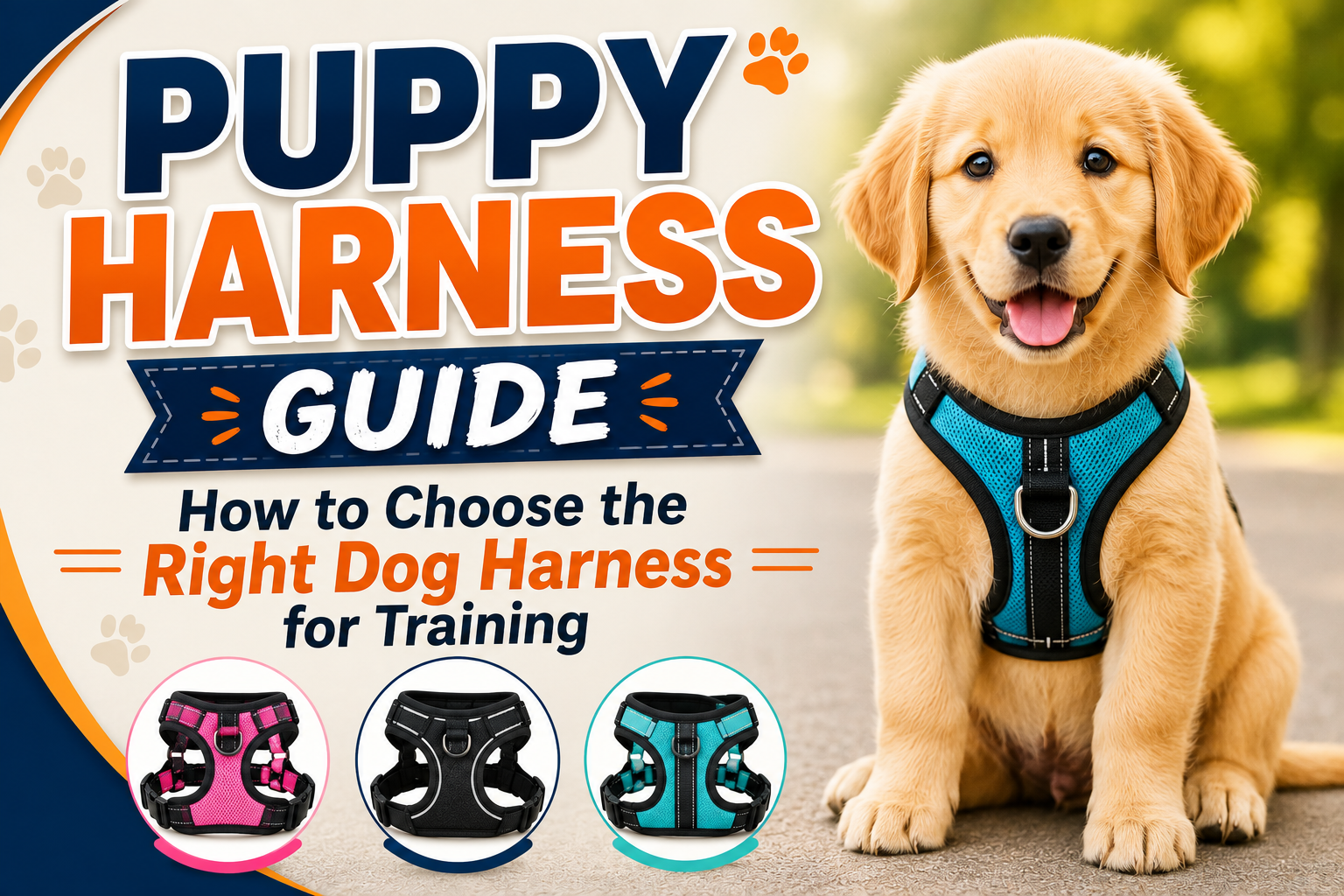
Selecting the proper equipment is one of the most crucial things in developing good behavior in your dog, and with this Puppy Harness Guide, you will be able to make the best selection right from the start. Using a harness will give you better control of your puppy on a walk and will put less unnecessary pressure on his/her neck. It will also assist you in having positive outdoor experiences for both yourself and your dog.
Unfortunately, many owners select their puppy’s first harness based on its looks or price, not considering that later on it may rub the skin, fall off or limit your puppy’s movements. The perfect harness should have a snug fit, give room for natural movements, and match the puppy’s size and temperament. Spending a little time choosing the right one can make everyday walks far more enjoyable.
Why Is A Harness Preferred Over A Collar For Training?
While collars serve as good means for attaching an ID tag, they do not necessarily provide the best method of training a dog to behave during leash walking. Puppies tend to pull, jump, and change directions without warning, thus putting their necks under sudden tension.

Learn what it really means in our Puppy Attacking Me guide.
The pressure exerted in such situations will be spread throughout the body, from the chest to the shoulders. That is why many experts advise the use of harnesses at the earliest stages of training. It encourages a more comfortable learning experience and allows puppies to build confidence as they explore new environments. The major benefits are:
- Increased control when out walking
- Reduced strain on neck
- Increased comfort
- Improved safety
- Faster training process
- Facilitates positive reinforcement training
It is important to remember that the harness is only a training aid, and is not an excuse to skip training sessions. Positive reinforcement training is still the best way to train your dog.
Puppy Harness Guide: Know The Different Types
Different harness designs serve different purposes and understanding the main styles will help you choose one that matches your puppy’s behavior and training goals.
| Harness | Best For |
|---|---|
| Back-clip | Beginners |
| Front-clip | Pullers |
| Dual-clip | Training |
| Step-in | Nervous |
Back Clip Harness
In back clip harnesses, the location where the leash is attached is situated between the puppy’s shoulders. This type of harness is ideal for puppies that are new to basic walking commands or those who do not pull much when walking. It facilitates natural movements and is good for daily walks in the neighbourhood.
Front Clip Harness
In a front clip harness, the leash is attached to the puppy’s chest. In cases where the puppy tries to move ahead, it will turn the puppy towards you instead of moving forward. Thus, it works well during loose leash training.
Dual Clip Harness
In the dual clip harness, there is an option to attach the leash from either the front or the back side. This will allow switching between the options as per your preference and hence works great for the long run.
Step-In Harness
There are some puppies who do not like the feeling of anything being put on their head. In such cases, you can opt for the step-in harness where the puppy can enter the harness itself by stepping into it. This design is often easier for shy or nervous puppies to accept.
How To Choose Right Harness
Every puppy has different needs, and choosing the right harness requires more than just thinking about the puppy’s breed. When buying a harness, you should consider the puppy’s age, physique, energy level, coat, and behavior when walking.
For example, A well-behaved Cavalier King Charles Spaniel puppy will be completely happy in a light back clip harness, while a lively Labrador Retriever puppy, which usually pulls, will require a dual clip harness that allows better control when training.
Rather than buying a bigger harness in order for the puppy to “grow into it”, buy the right one now. A loose harness is one of the main causes of puppy escape when walking.
Measuring Your Puppy Correctly
Precise measurement is always better than estimation on the basis of the breed or the age of the puppy. As puppies tend to grow very fast, it would be good to measure their body size at least every few weeks in the first year of their life.
| Measure | Area |
|---|---|
| Chest | Rib cage |
| Neck | Base |
| Weight | Scale |
The first step in measuring the size of the dog should be taken by using the measuring tape around the chest area of the puppy, which is located just behind the front legs. The next step should be measuring the neck circumference of your puppy at the base of the neck. Finally, compare these measurements with the manufacturer’s size chart instead of relying only on general sizing labels such as Small or Medium.
Build trust faster with our Training a Rescue Dog guide.
How To Check The Fit
Even a proper size becomes uncomfortable when the straps are not adjusted properly. Once the harness is put on your puppy, give puppy a few minutes to move around inside before going outside.
A good fit will be one that:
- Allows two fingers under each strap
- Remains centrally positioned on the body
- Does not twist but remains flat
- Enables free shoulder movement
- Stays on without sliding off
If you observe rubbing behind the forelegs, too much movement, or red spots after a walk, adjust the straps or try a different size.
Watch the Shoulders: Don’t Block Their Stride
Most people check if a harness is snug, but they forget to look at how it affects movement. Puppies have soft bones that are still forming. If a harness has a straight band running horizontally right across the chest, it cuts right into their shoulder joints. Every step forward forces them to bump against the strap, which can mess up how they walk as they grow.
- Look for a clear “Y” shape on the chest so the front legs have total freedom to swing.
- Check the space behind the front legs. You want at least two fingers of breathing room so it doesn’t rub raw under their arms.
- Let your pup trot around the living room. If they walk stiff or awkward, the cut is wrong for their build.
Your puppy’s harness should keep them secure, never pin their shoulders down.
Features To Consider
While all harness features may not have equal importance, it is better to look for those which make the harness comfortable, safe, and durable.
High quality puppy harnesses usually have features such as:
- Adjustable straps
- Soft padding
- Breathable material
- Metal D-ring
- Reliable buckles
- Reflective striping
- Sturdy stitches
These features help the harness to stay comfortable for walking every day even as your puppy grows.
Common Harness Mistakes New Owners Make
However, even the best harness won’t be able to help a dog become well-trained if it’s improperly applied. Here are some mistakes that can be easily avoided by following certain rules.
Buying A Too Large Harness Is Right or Wrong
Some people purchase larger sizes expecting the puppy to grow into it. But while it might seem to be more economical, such an approach can make it easier for the puppy to get loose on a walk. One should always choose the right size based on current puppy measurements.
Failing To Test The Fit
Puppies tend to develop quite fast in their first year. What seems to be a perfect fit one day will be too small after several weeks. You should keep checking the fit and adjust the straps when necessary.
Depend Only On The Harness
A harness is there to help the owner gain better control over the dog, but it cannot train the puppy by itself. It is through reward-based training that puppies learn to behave well on a walk.
Harness or Collar: Which One Should You Get?
Owners have many questions about which one to use between a collar and a harness. However, what most owners need to realize is that a combination of both items usually works best for puppies.
| Item | Purpose |
|---|---|
| Harness | Walking |
| Collar | ID tag |
The dog collar is effective in carrying the dog’s registration details, and the dog harness is ideal during walks and training classes. Use of the both according to their intended purpose ensures safety and convenience.
Selecting A Harness Based On Breed Size
Shape of the body is one factor that is considered while choosing a harness. A harness that would suit a particular breed will not suit another breed.
| Puppy Size | Good Choice |
|---|---|
| Small | Lightweight |
| Medium | Adjustable |
| Large | Dual-clip |
Harnesses for small dogs must be comfortable and light so that the dog can move freely. Harnesses for medium-size dogs should be easily adjustable since they are growing. Harnesses for big dogs must have strong buckles and stitching.
Training Your Puppy To Wear A Harness
Getting Your Puppy Used to a Harness
While some puppies quickly adapt to wearing a harness, others require some more effort. Gradual introduction will help form positive connections.
Begin by allowing your puppy to sniff the harness before you place it on. Positive reinforcement should be used in case of quiet behavior. Once the harness is put on, let your puppy wear it at home for a couple of minutes prior to placing the leash on.
If your puppy stops still and does not want to walk anywhere, be patient with her. Do not pull the leash and do not force your puppy to move. With proper positive reinforcement, your puppy will get used to wearing the harness very soon.
Discover what actually works in our How to Stop Your Puppy Barking guide.
Walk Safely: Tips For Each Trip
Take a few minutes before leaving your home to do an inspection on the harness. This safety measure will help you avoid problems such as malfunction of the equipment and the risk of the puppy getting away.
Follow these easy guidelines:
- Buckle check
- Stitch check
- Strap adjustment check
- Attach your leash
- Straighten your straps
- Replace worn-out harnesses
This takes just one minute but makes every walk more safe.
When Is It Time To Get A New Puppy Harness?
Due to rapid growth in puppies, changing a harness within one year is typical. Delaying it can result in discomfort during the walk, or loss of control.
The harness should be replaced if:
- Straps are too tight
- Harness is loose
- Material is worn out
- Buckles are damaged
- Seams are broken
- Movement is restricted
An ideal harness must always provide ease of movement for your puppy without rubbing or slipping.
Choosing The Right Harness With Confidence
Choosing the right harness may be one of the easiest ways to ensure the safety and enjoyment of your puppy’s training. The best harness should fit well, suits your puppy’s size and behavior, and allows free, comfortable movement.. When paired with consistency, positive reinforcement, and practice, the ideal harness will help your dog gain confidence as well as learn essential walking skills.
FAQ’s
When can a puppy wear a harness?
In most cases, you can put on a light harness on your puppy as soon as you start leash training him as long as the harness fits well and does not hinder any movement.
How tight should a puppy harness fit?
The right fit of a puppy harness should allow you to fit two fingers under each strap comfortably.
Can I leave my puppy’s harness on throughout the day?
No. Harnesses are only meant to be used during walks or training periods. The harness needs to be taken off after the exercise period.
What type of harness is best for a pulling puppy?
Many trainers suggest that a front clip or dual-clip harness is the best type of harness for a pulling puppy.
Sources
Disclaimer: This article serves only for educational purposes and does not substitute veterinary advice or dog training advice. In case your puppy has any discomfort, pain, or mobility problems when wearing a harness, seek advice from your vet or dog trainer.

- Puppy Harness Guide: How to Choose the Right Dog Harness for Training - September 20, 2026
- Best Chow Chow Mix Breeds: Traits, Size & Temperament Guide - September 10, 2026
- Entlebucher Mountain Dog: Complete Breed Guide, Care & Training - September 10, 2026