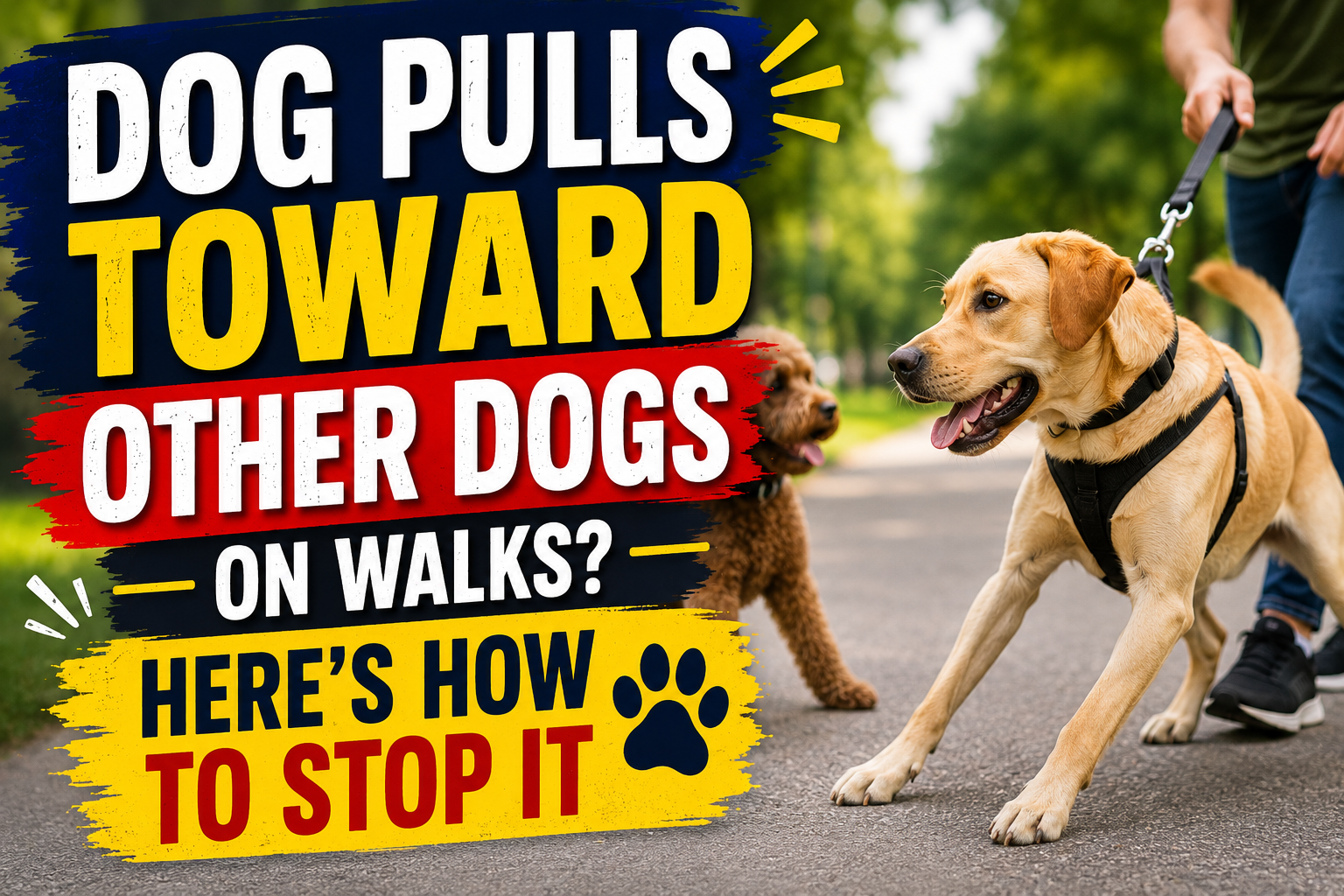
Dog pulls toward other dogs on walks because another dog has become the focus of their interest before the leash tightens. Pulling is the inevitable result of this focus. That is why corrections of the leash rarely change the behavior. Understanding what happens before pulling begins is key to changing this scenario.
Each dog is different. Some dogs want to say hello to every dog they see. Others are unsure and try to control the distance. Still, others have learned that pulling gets them what they want. Dogs may perform similar behaviors for different reasons and can all be effective ways for dogs to communicate with people. Understanding these differences could be the difference between success and frustration.
Your Dog Decides Before The Leash Tightens
While most people are concerned about the leash, trainers look at the dog. Prior to the pull, the dog is carefully analyzing its surroundings to see if the other dog deserves any attention from it. These few moments are the best time to train your dog since they are still thinking rather than reacting.
Look out for these warning signs:
- The head tilts towards another dog.
- The ears move forward.
- They walk faster.
- The eyes stop looking at you.
- The body is stiffened or tense.
| Early sign | Meaning | Response |
|---|---|---|
| Head lifts | Dog noticed another dog | Gain attention |
| Ears forward | Interest growing | Reward focus |
| Pace quickens | Excitement rising | Slow down |
| Leash tightens | Reaction starting | Redirect calmly |
Most owners watch the leash when the other dog arrives. Experienced trainers watch the dog’s eyes.
What Your Dog Is Trying To Achieve
Pulling is rarely the issue. It is usually just the fastest way for your dog to achieve something. Something like getting to know another dog better, satisfying his curiousity, putting distance between himself and something, or repeating a behavior that worked moments ago. In these cases it’s important to understand what your dog might be going for so you can address the root of the issue
If your dog is pulling towards other dogs on walks consider that if given enough rope, he will achieve just what he wants. Your dog has probably discovered this and now pulls to get to know another dog better. The dogs’ instinct tells them to repeat those behaviors that result in what they want on occasion.
The Habits That Quietly Reward Pulling
Pulling behaviors often emerge without the owners realizing it because they have become a part of the daily walks. Some examples of this include:
- Pulling on the leash after greeting another dog.
- Leashing up prematurely.
- Doesn’t react to the excitement until it is clear.
- Having separate rules for each walk.
These small actions done repeatedly turn into expectations, thus increasing the difficulty of changing the behavior.
Build Attention Before Another Dog Appears
Knowing how to train your dog not to pull towards other dogs during your walks begins even before another dog becomes visible to your dog. It is in the quiet parts of your walks that your dog’s new habits will be formed. Behaviors that can be rewarded include:
- Eye contact without coaxing.
- Walking on a loose leash.
- A calm check-in.
- Footing off gentle directional shifts.
Such basic behaviors become significantly easier for your dog to perform when distractions occur. Success is not about never looking at another dog again. It is about the brief instances when your dog spots the distraction, stops, and decides to make eye contact with you instead.
How To Respond When Your Dog Pulls Toward Other Dogs On Walks
Once you can recognise these signs, the next step is to think about how you respond. Many dog owners find themselves trying to jerk their dogs back or use a command to get their attention, but these actions often have the opposite effect. Your dog may actually start to focus on the other dog even more intently.
Rather, take things slowly, give your dog an opportunity to check back with you, or provide more distance prior to the excitement occurring. Walking across the street or taking a different route is not the same as avoiding the issue. It’s giving your dog enough space to stay calm and make a better decision.
The “Find It” Game: A 2026 Trainer Favorite
Sometimes another dog turns the corner right in front of you. You have zero time to cross the street or make space. In these surprise moments, trying to force a rigid “sit” command usually fails. Today in 2026, positive trainers lean heavily on scent games to instantly break that intense stare.
Sniffing naturally lowers a dog’s heart rate and shifts their brain out of reaction mode. Here is how to handle a sudden encounter:
- The quick toss: Drop a handful of smelly treats like chicken into the grass the exact second you spot the other dog.
- The happy cue: Say “Find it!” in a cheerful voice so your dog immediately looks at the ground.
- Keep it loose: Step closer to your dog while they eat if you need to. A tight leash completely ruins the calming effect.
What If Your Dog Still Pulls Toward Other Dogs?
Even with the regular practice, not all walks will go perfectly. A busy pedestrian pathway, a surprise off-leash dog, or just an interesting day might cause your dog to respond differently than he does in other instances. A single failure doesn’t undo the work that you have done thus far.
If your dog begins pulling, try not to turn it into a game of who is stronger. Increase the distance, give your dog some time to be able to concentrate, and then keep going. You don’t need to have flawless walks every time. The idea is to prevent a problematic behavior from becoming habitual.
Should Dogs Greet On Every Walk?
Dogs don’t need to greet every dog they meet. In fact, setting up the expectation that every walk needs to include a meeting can actually be more frustrating, for both dog and owner.
Pick and choose which dogs you allow your dog to greet, based on how the other dog is acting and if your dog’s leash is loose or tight. If your dog walks past another dog by pulling, continue walking. That’s a lesson that only polite behavior gets them what they want.
Mistakes That Slow Improvement
Things usually get delayed because of our routines than due to any one big mistake.
Avoid:
- Repeating the same cues all the time.
- Holding constant tension on the leash.
- Perfect walks.
- Inconsistency with the rules.
Consistency makes dogs learn much faster than any perfect training session.
When Professional Help Is Needed
If your dog is lunging, barking excessively at other dogs, is generally hard to handle, or seems scared or aggressive towards other dogs, the best thing to do is consult a proper positive reinforcement based dog trainer or veterinary behaviourist
Working with a professional in these cases is not a failure, but rather a smart idea, since most often, it is they that will notice the details in your handling which you might not have noticed yourself
You should look for someone with experience not only with regular obedience training, but also with more serious issues such as fear-aggression, resource guarding and so on.
Calm Walks Are Built One Decision At A Time
Dogs don’t learn good manners on the leash overnight. They learn it over hundreds of walks when being calm and polite to you is more rewarding than trying to pull you down the street. The most rewarding moments are often the subtlest ones, like when your dog makes that one little glance back at you, or the leash isn’t tight like it usually is.
So if you have a dog who pulls towards other dogs on walks, don’t measure your progress by how close you can get to another dog on a walk. Measure it by how often your dog wants to be with you. Because your dog won’t remember the perfect walks. It will remember the hundreds of walks after.
FAQ’s
Why does my dog only pull towards particular dogs?
Dogs react according to size, movement, body language, past encounters, and the degree of excitement, therefore, it makes sense that dogs will react differently to different dogs.
Do I have to allow my dog to greet other dogs while on walks?
If two dogs are able to interact safely without any pulling, the dogs can have their greetings, but it is not always necessary.
Can a harness prevent a dog from pulling?
A harness might be comfortable and convenient, but without proper training, the dog’s undesirable behavior will persist.
How long does it take to stop a dog from pulling?
Most dogs will show improvement with continued practice, while long-time habits require more time
Can dogs learn to stop pulling toward other dogs?
Yes, this could be achieved via persistent training of dogs that is accompanied by rewards and practice.
Sources
Disclaimer: This article is for informational purposes only and should not be used as a substitute for professional veterinary or behavioural advice. If your dog’s pulling problem is related to aggression, extreme fear, or any other safety concern, please consult with a qualified veterinarian or dog behaviour specialist.

- Puppy Harness Guide: How to Choose the Right Dog Harness for Training - September 20, 2026
- Best Chow Chow Mix Breeds: Traits, Size & Temperament Guide - September 10, 2026
- Entlebucher Mountain Dog: Complete Breed Guide, Care & Training - September 10, 2026