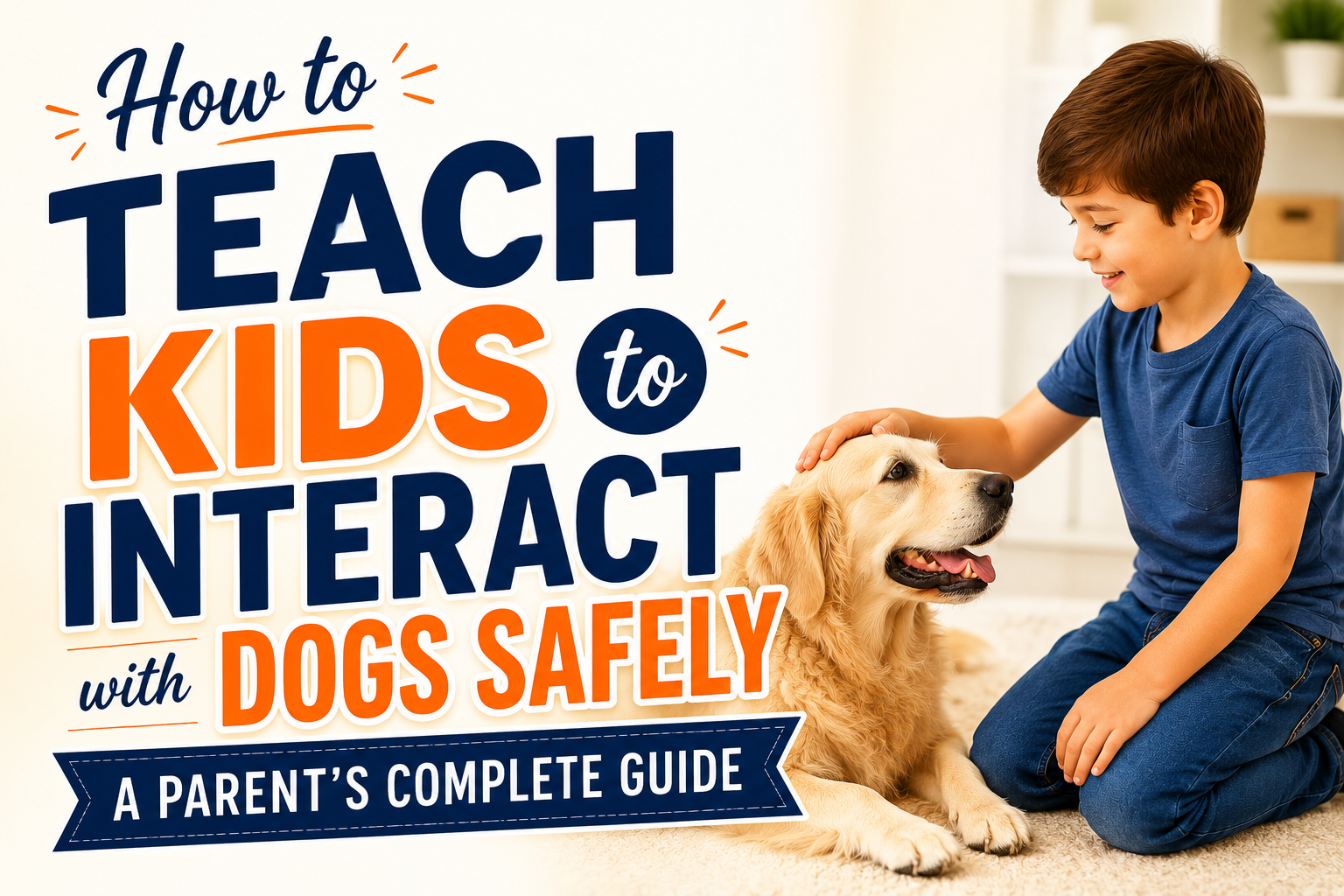
How to Teach Kids to Interact with Dogs Safely starts with a single rule: respect all dogs. Children may view dogs as cuddly pets, but they have their own way of communicating. Just because a dog’s tail is wagging does not mean it wants to be approached, and even the sweetest dog could retaliate if it becomes fearful, shocked, or uncomfortable.
However, there is some good news – many situations that may result in bites can be prevented. By showing kids how to interact with dogs safely, parents can teach their children not only how to avoid getting bit by dogs, but also how to behave responsibly around pets. This knowledge can be useful regardless of whether a dog is part of your family or you encounter them rarely at parks, schools, or friend’s houses.
Why Teaching Dog Safety Should Start Early
When children see a dog, curiosity comes natural to them. If not taught anything better, they are liable to rush over, hug the dog, and even snatch away its toys. Though in most cases it is not done with any ill intention, it is true that such behaviors could unsettle some dogs.
Find the perfect fit with our Puppy Harness Guide.
Teaching children some basic rules early on will ensure that they know dogs have feelings, boundaries, and personal space too. Once they get used to these lessons, they will be able to make safer decisions automatically.
Benefits of Teaching Children Dog Safety
| Benefit | Outcome |
|---|---|
| Fewer accidents | Safer interactions |
| Better confidence | Children know how to behave |
| Respect for dogs | Understands boundaries |
| Reads body language | Spots warning signs early |
| Stronger bond | Builds trust with dogs |
8 Major Tips Every Child Should Learn
1. Understand Dog Body Language
Dogs use body language. Teach children on how to read signs such as tucking the tail, stiffness, turning away, growling, and attempts to leave. This usually indicates the need for space.
2. Respect A Dog’s Quiet Time
Children must never disturb dogs when they are sleeping, eating, resting, or playing with toys. Giving dogs time to be themselves prevents stress and bad reactions.
Stop biting fast with our Puppy Attacking Me guide.
3. Stay Calm Around Dogs
Jumping around, shouting, and running after dogs can scare or excite them. Children should learn to move calmly and speak in low voices when spending time with dogs.
4. Ask Before Touching
The child needs to ask the owner before petting the dog. Once given permission, the child should move slowly towards the animal without touching its head or face.
5. Let Dogs Choose Greetings
The dogs need to be allowed to come forward first, and only when the dogs seem comfortable, the kids can gently pet them on their shoulders and chests.
6. Leave Food And Toys Alone
Children should be taught not to take a dog’s food, treats, or toys from the dog. This is because dogs tend to be protective of these items.
7. Use Gentle Affection
Hugging, climbing on the dog, pulling its ears and tail should never be done. It is better to show affection gently.
8. Stay Still Around Unfamiliar Dogs
When an unfamiliar dog comes near a child, they should remain still, keep hands close, not stare at the dog, and wait until the dog leaves.
Teaching Dog Safety By Age
Each child has a unique way of learning and coping with responsibilities, and parents need to tailor their safety training lessons depending on the age of the child and its level of development.
| Age group | Main focus |
|---|---|
| 2 to 4 years | Gentle touch & supervision |
| 5 to 7 years | Calm greetings & boundaries |
| 8 to 12 years | Body language & interaction |
| Teens | Proper handling |
All children should be under constant adult supervision when in the company of a dog, including a family pet.
How To Make Dog Safety Lessons Memorable For Children
Learning happens more effectively through repetition than through extended explanations. Some of the ways in which parents can ensure safety in children include:
- Calm greetings for a dog within the family.
- Training kids to seek permission to touch the dog.
- Showing behaviors from dogs which are comfortable and those that are uncomfortable.
- Positive reinforcement when kids interact calmly with the dog.
Regular practice ensures that kids remember that being respectful of the dog’s space is responsible dog ownership.
Common Mistakes That Parents Need To Avoid
There are several common mistakes that parents can avoid to help prevent various issues:
| Mistake | Better approach |
|---|---|
| Leaving children alone with dogs | Always supervise |
| Allowing rough play | Teach gentle contact |
| Ignoring warning signs | Avoid disturbing the dogs |
| Forcing interactions | Let dogs choose |
| Disturbing dogs while eating | Don’t disturb |
Stop unwanted barking with our How to Stop Your Puppy Barking guide.
How to Introduce a New Dog to Your Child
Bringing a new puppy or an older rescue dog home is super exciting, but that very first meeting really sets the tone for their future bond. When you are ready to introduce the new furry family member to your daughter, make sure the environment is as calm as possible.
Before they even meet inside, take the dog for a quick walk. This helps burn off any nervous energy. Instead of letting your child run to the front door squealing with joy, have her sit quietly on the sofa. Dogs explore the world with their noses, so let the dog walk up to her and investigate at its own pace.
Remind her to keep her hands relaxed and use a soft voice. You can tell her, “Beta, let the dog sniff your shoes first.” Do not let her overwhelm the dog with tight hugs or sudden movements. If the dog looks completely relaxed with soft eyes and a gently wagging tail, guide her hand to slowly scratch the dog’s chest for a few seconds.
Keep this first meeting very short, ideally under ten minutes. Once they are done saying hello, give the dog a quiet, separate space to rest and settle in. Taking things slow builds a solid foundation of trust.
Making Your Dog Comfortable Around Children
A safe relationship involves both children and dogs. Parents can ensure good interactions with:
- Offering a quiet place for rest.
- Encouraging children to respect the dog’s personal space.
- Rewarding good behavior.
- Overseeing play and greetings.
- Ensuring physical and mental stimulation.
What Kids Should Do if a Dog Approaches Aggressively
- The absolute most important rule is to never run. I know a child’s natural reflex is to sprint away crying, but running triggers the dog’s instinct to chase.
- Practice the “Be a Tree” game with your child at home. Tell them, “If a scary dog comes near you, just become a tree.” They should stand completely still, fold their arms tightly across their chest, and stare down at their shoes.
- Remind them never to look the dog in the eyes because dogs can see that as a challenge. Staring at their shoes helps the dog get bored and wander off.
- If they ever get knocked down, teach them to instantly become a “Rock”. They need to curl up into a tight ball on the ground, keep their face down, and wrap both hands over the back of their neck to protect it.
- They must stay perfectly still like a heavy rock until the dog loses interest or an adult rushes over to help.
- Once the dog finally turns its head or walks a few steps away, they should slowly back away. Make sure they know to make no sudden movements, no shouting, and no eye contact at all until they are completely safe.
Building a Lifelong Bond
Teaching children to interact with dogs safely is a continuous process and calls for patience and proper supervision. It is not about scaring the child away from dogs; instead, it aims at making them learn how to relate and communicate with dogs.
Parents who teach their kids to interpret the dog’s body language, move in calmly towards the dog, and respect its personal space can ensure safer and happier interactions between the dog and the child. These lessons help children build empathy and responsibility while allowing dogs to become trusted companions in the family.
Keep your pup active with Easy Games to Play With a Puppy Indoors and Outdoors.
Frequently Asked Questions
What should be the first lesson taught to kids about dogs?
Kids must know that dogs require their own space and that they must never try approaching a dog without their permission.
What are the signs that a dog requires space?
Some of the signs include turning their heads away, backing away, a stiff body posture, tucking tails, licking lips, or growling.
Should children hug their family dogs?
Not always, because many dogs enjoy petting than being hugged because it can restrict them.
Are children allowed to play with dogs unsupervised?
They should not be allowed because children below a certain age require adult supervision when playing with dogs.
How can parents teach their kids to respect dogs?
Parents can teach their children by setting good examples to them and practice on a regular basis.
Official Sources
Disclaimer: This article is an informative source about general dog safety tips for parents and caregivers. Each individual dog has its own temperament and personality. If you have serious behavioral problems to deal with, you should consult a professional dog trainer or veterinary behaviorist.

- Puppy Harness Guide: How to Choose the Right Dog Harness for Training - September 20, 2026
- Best Chow Chow Mix Breeds: Traits, Size & Temperament Guide - September 10, 2026
- Entlebucher Mountain Dog: Complete Breed Guide, Care & Training - September 10, 2026