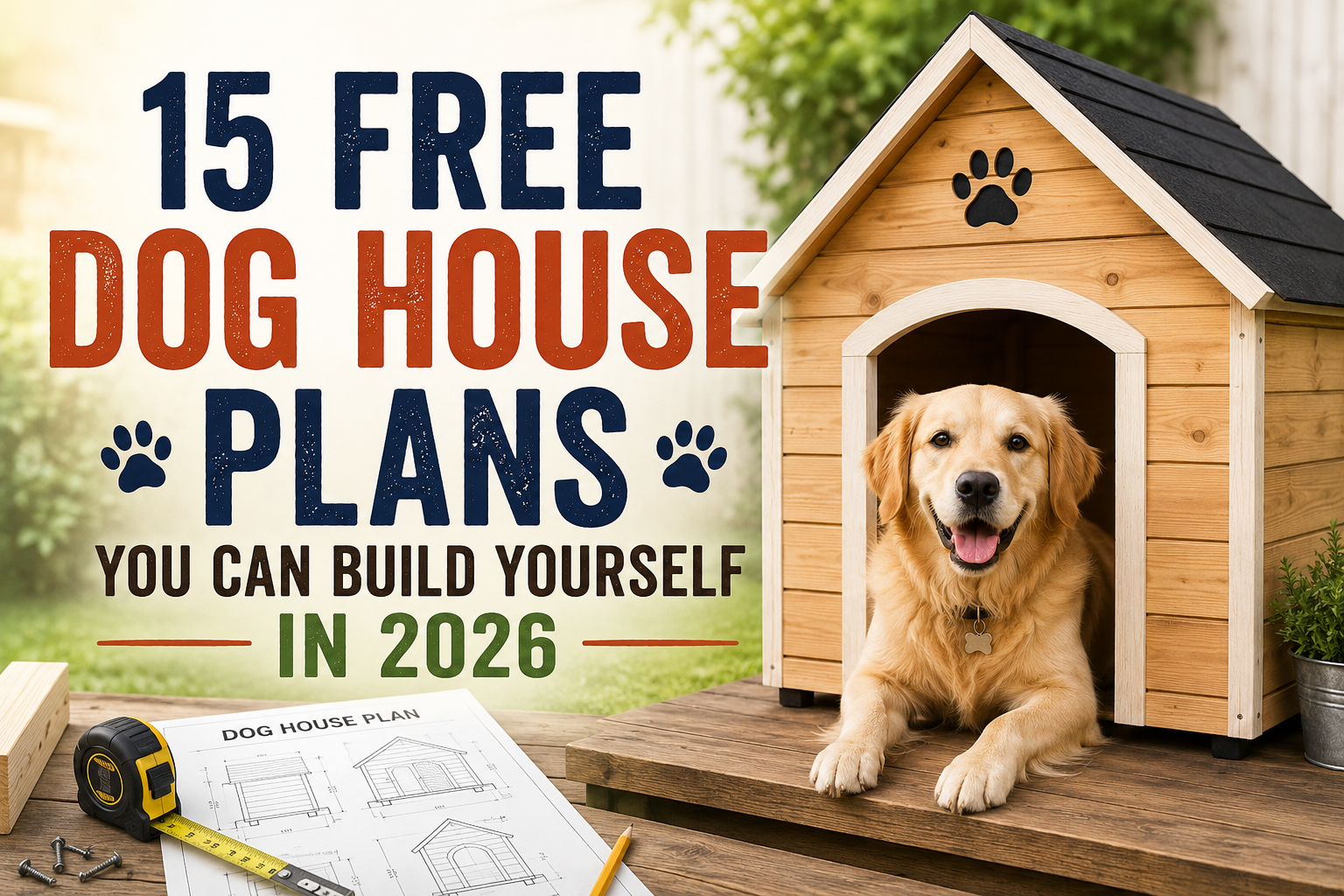
A well-built dog house is not just a place for the pet to rest. It protects it from precipitation, strong wind, the sun rays, and fluctuations in the temperature levels and gives the pet the feeling of comfort. It is easy to notice that after studying many DIY dog houses’ plans offered by the home owners and carpenters alike, the most successful designs are those which take into consideration the size of the pet, the climatic conditions and the requirements of proper maintenance.
In case you are planning to build a dog house yourself, this article will provide you with information about 15 free dog house plans, advantages and disadvantages of each style, cost estimations and useful construction tips.
Before You Build: Choosing the Right Size
Another mistake people make while working on DIY projects is constructing dog houses that are too big. Although you might think more room would be better, bigger dog houses can actually pose problems when the temperatures drop in winter.

A dog house must allow your dog to do the following:
- Be able to stand
- Move around comfortably
- Be able to lie down
- Go inside and out without problem
General Dog House Sizing Guide
| Dog Size | Typical Breeds | Recommended Floor Space |
| Small | Chihuahua, Pug, Dachshund | 18–24 inches |
| Medium | Border Collie, Beagle | 24–36 inches |
| Large | Labrador Retriever, Golden Retriever | 36–48 inches |
| Giant | Great Dane, Mastiff | 48+ inches |
Quick Comparison of Dog House Plans
| Plan Style | Skill Level | Build Time | Estimated Cost |
| A-Frame | Beginner | 5–7 Hours | $50–$100 |
| Raised House | Beginner | 1 Day | $75–$120 |
| Pallet House | Beginner | 1 Day | $20–$75 |
| Insulated House | Intermediate | 1 to Days | $150–$250 |
| Porch House | Intermediate | Weekend | $100–$225 |
| Cottage Style | Advanced | Weekend+ | $250–$550+ |
15 Free Dog House Plans You Can Build Yourself in 2026
1. Classic A-Frame Dog House
A-frame dog houses remain among the most commonly used designs due to the simplicity, affordability, and durability of such structures. In addition, the steep roof allows natural water drainage and hence is suitable for almost all weather conditions.
Best for: Small to large dogs
Why builders choose it:
- Simple cuts
- Minimal waste
- Strong weather protection
- Easy to customize
2. Raised Dog House
A raised floor can prevent water damage as well as ensure air circulation. Many construction professionals advise that the floor be built 3-6 inches off the ground to avoid constant exposure to mud.
Best for: Rainy or humid regions
3. Insulated Winter Dog House
Insulation can be beneficial in cold environments by decreasing heat loss.
These houses usually have the following:
- Two-layer design
- Insulated foam panels
- Weather-proof doors
- Elevated floors
It is important to remember that insulation needs ventilation to work effectively.
4. Pallet Wood Dog House
Pallets can save money considerably in terms of material. It is recommended that you check the pallets thoroughly before use for any kind of damage or even exposure to chemicals or any other problem.
Suitable For: DIY budget friendly projects
5. Dog House with Porch
It combines shelter with an outdoor relaxing space. A lot of dogs love staying on the porch in good weather but tend to stay inside when the weather gets bad.
6. Modern Style Dog House with Flat Roof
The modern style emphasizes the need for simplicity and contemporary look. If you decide on a dog house with flat roof, make sure that there is some slope in it to allow drainage of water.
7. Hinged Roof Dog House
Cleaning is usually not considered in the planning process of building. The advantage of a hinged roof is easy accessibility to the inside. This gives the following benefits:
- Quick cleaning
- Easy inspection
- Easy bedding changing
8. Small Dog House Plan
Smaller dogs generally prefer small houses which offer safety and security. Good breeds for this dog house include:
- Chihuahua
- Pomeranian
- Yorkshire Terrier
- Miniature Pinscher
9. Large Dog House Plan
For large breeds, more robust flooring and entrance width are needed. Robust framing prevents the sagging of floors.
Good for:
- Labrador Retriever
- German Shepherd
- Golden Retriever
- Rottweiler
10. Barn-Style Dog House
A barn-style roof allows for more height without enlarging the base much. This type is very common among DIY builders looking for functionality and aesthetics.
11. Lean-To Dog House
A lean to dog house design works well along fences, garages, and outer walls. It is especially helpful on small lots where space is limited.
12. Cedar Dog House
Cedar wood is considered one of the best woods by experienced builders for pet shelters.
Why it Is Popular
| Benefit | Advantage |
| Natural Decay Resistance | Longer lifespan |
| Insect Resistance | Less maintenance |
| Moisture Resistance | Better outdoor durability |
| Attractive Appearance | Natural finish |
13. Ventilated Dog House With Windows
Ventilation will help reducing the creation of heat and improve air circulation. The windows will be located in a manner that promotes circulation of air without drafts. Mesh coverings can help keep away insects and other pests.
14. Double Dog House
In case you have two dogs, then a double dog house is what you need. Each dog will be able to have its own space but still be close to its buddy.
15. Cottage-Style Dog House
DIY enthusiasts that have experience in the field prefer building their dog houses using cottage style plans.
Common features include::
- Trim
- Covered porch
- Shingles on the roof
- Window shutters
While these projects require more time, they often become standout backyard features.
Recommended Materials For Long-Term Durability
Almost all good-quality dog houses are made with:
- Exterior-grade plywood
- Cedar planks
- Pressure-treated framing wood (if needed)
- Exterior screws
- Roof shingles
- Weatherproof sealants
Do not consider materials that could potentially have harmful coatings that pets might chew.
Common DIY Mistakes You Should Avoid
Many first-time builders make avoidable mistakes that shorten the lifespan of the structure.
There are several errors made by novice builders that reduce the life span of the structure.
Mistake 1: Construction on the Ground Level
Contact with the ground makes the structure prone to moisture, thus, speeding up decay.
Mistake 2: Neglecting to Install Proper Ventilation
Lack of ventilation causes heat accumulation in warm weather.
Mistake 3: Having Too Big Entrance Areas
Big entrance areas facilitate entry of wind, water, and cold air.
Mistake 4: Selecting Indoor Building Material
Indoor plywood and other untreated materials decay fast outside.
Estimated Building Costs in 2026
| Type | Typical DIY Cost |
| Basic A-Frame | $50–$100 |
| Raised Dog House | $75–$120 |
| Pallet Dog House | $20–$75 |
| Insulated House | $150–$250 |
| Porch Style | $100–$225 |
| Cottage Style | $250–$550+ |
Costs vary by location, material selection, and whether tools are already available.
In the Last
Constructing a dog house is one of the most fulfilling DIY projects for any dog owner. Depending on whether you want to build an A-frame dog house, an insulated one for winter, or one made in a cottage style, good planning will work more effectively than the financial resources you use.
Proper size, protection from harsh weather conditions, ventilation, and choice of appropriate materials are some of the aspects you need to consider. This way, you will not only ensure your dog is comfortable but also improve your woodworking skills.
FAQs
Which is the easiest dog house design to construct?
The A-framed dog house design is usually deemed the simplest to make.
Which type of wood is the most durable outdoors?
Cedar is usually one of the most durable wood types due to its natural resistance to water, pests, and decay.
Does a dog house always require insulation?
No. Dog houses will benefit most from insulation when placed in cold regions where it can get very cold during winters.
What height should the doghouse floor be from the ground?
It is advisable to raise the floor height by at least 3-6 inches.
Official Sources
Disclaimer
This article is for informational purposes only Every dog requires different care due to various factors like breed, age, health conditions, and climate. You should always consult your veterinarian for advice regarding the right shelter for your pet.

- How To Muzzle Train A Dog: A Step-by-Step Guide For Beginners - August 15, 2026
- 6 Best Dog Harnesses To Stop Pulling (Tested Picks for 2026) - August 14, 2026
- Puppy Harness Guide: How to Choose the Right Dog Harness for Training - August 14, 2026