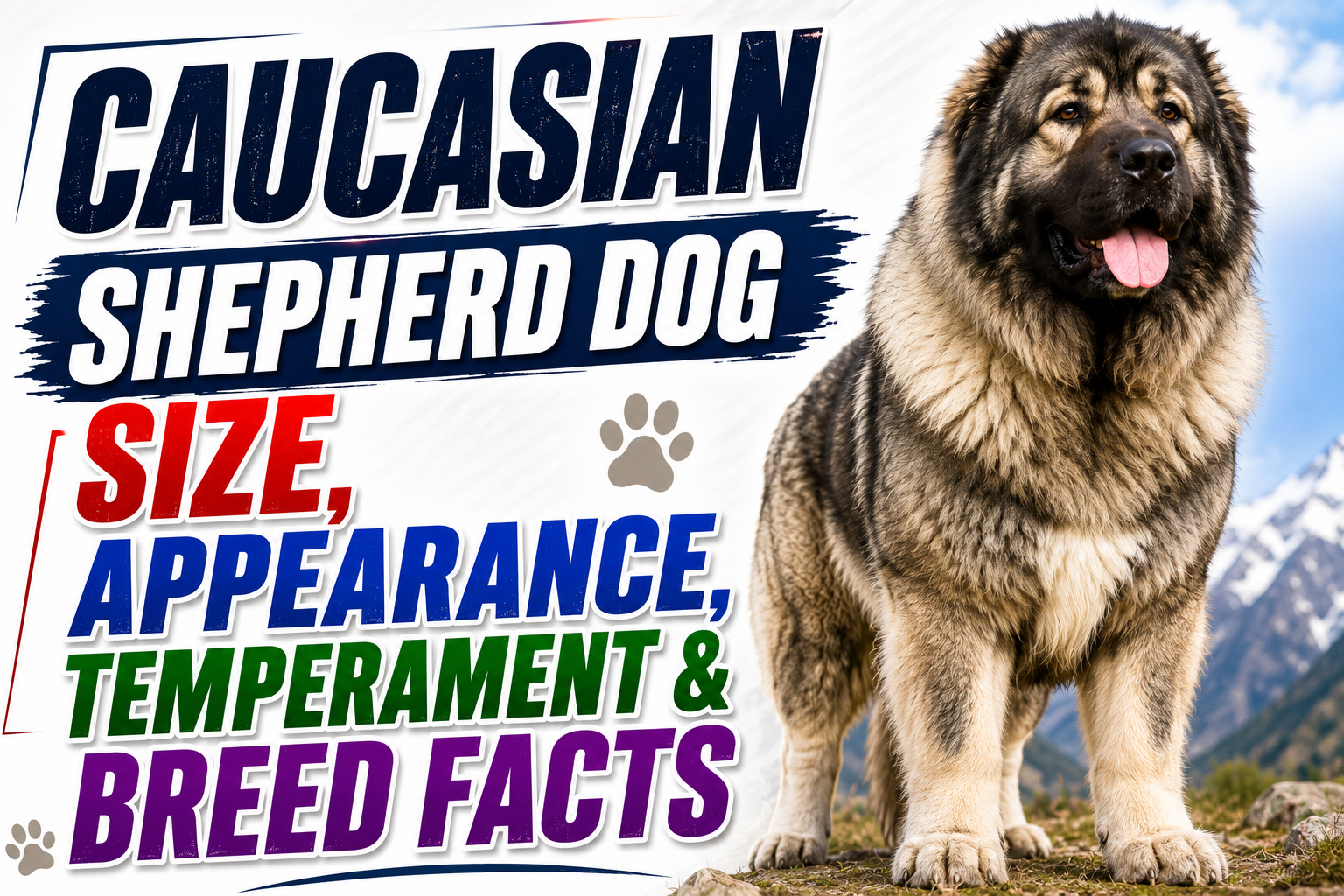
The Caucasian Shepherd Dog is a robust watchdog breed whose temperament cannot be determined on the basis of its physical stature. These dogs were developed over centuries in the Caucasus region and neighboring steppe areas, where they worked as protectors of livestock, homes and properties. They required stamina, alertness and strength, as well as the ability to think on their own in order to make proper judgments without being told by humans.
That background is still quite clear in the current breed. A Caucasian Shepherd is able to be calm within its family setting, yet very vigilant whenever a stranger comes near their territory. This dog is more than a big friendly pet that was taught some protection qualities; the dog is an independent thinker. FCI states that this breed is steady, self-confident, fearless, and independent.
A Breed Shaped By The Caucasus
The Caucasian Shepherd did not originate from a single local population. Different canine types were once widespread throughout the Caucasus, with taller and stockier types generally being associated with mountainous regions while their more slender and usually short-haired counterparts could be found in the steppes. Typical examples of working dogs were once numerous in the area of Georgia, Armenia, Azerbaijan and the Dagestan region.
Trying to choose between two popular doodle breeds? Compare Labradoodles vs. Goldendoodles to see which may suit your lifestyle better.
The Soviet Union saw the creation and organization of breeding programs which saw the Caucasian dogs used to guard state factories and government buildings, as well as their traditional role of guarding livestock. It is also the reason why a single type of the Caucasian Shepherd came to dominate the breeding areas. The FCI classification lists the Russian Federation as the country of origin for the Caucasian Shepherd, placing the breed within the Group 2, which includes Molossian and Mountain type dogs.
The information on the early history of the Caucasian Shepherd breed is crucial to understanding modern-day examples of the breed, due to the lack of a single appearance and character that would be indicative of the breed as a whole.
Caucasian Shepherd Dog: Size, Appearance & Coat
The Caucasian Shepherd is a giant dog, but according to the standard, big dogs of this breed should have proportionate bodies. The UKC determines that the minimum mature height of a male is 25 inches, while for females it is 24 inches.
Individuals of the same sex should be at least 27 and 25 inches tall, respectively, if their bodies are of good proportions. According to the AKC, Caucasian Shepherds can vary in height between 23 and 30 inches, and in weight from 99 to 170 pounds.
Thinking about bringing home a giant breed? Learn what to consider before adopting a giant breed dog.
| Feature | Current breed reference |
|---|---|
| Male minimum | 25 inches |
| Female minimum | 24 inches |
| Preferred male | Over 27 inches |
| Preferred female | Over 25 inches |
| General AKC weight | 99–170 pounds |
| Coat varieties | Long, intermediate, short |
The body is heavily boned and muscular, with a large head, powerful muzzle, deep chest, and strong legs. The FCI standard gives the body a slightly longer profile than height, rather than the square outline sometimes suggested by photographs.
A coat makes one of the most visible differences among these dogs. Long-coated dogs may have a well-developed mane, long feathering, and abundant tail furnishings. Intermediate dogs have less abundant furnishing, whereas short-coated dogs provide a much more streamlined appearance. Coat types include all of them and all of them represent a double coat.
This is important in comparing dogs on the internet. A well-furred Caucasian Shepherd can look much bigger than another dog with the same body size but having short hair. It is wrong to equate an extravagant fur or huge head to good breeding.
Temperament: Where This Breed Becomes Demanding
The Caucasian Shepherd’s strongest personality trait is its ability to distinguish between what is familiar and what is not. The UKC describes the breed as gentle and demonstrative with family members but suspicious of unfamiliar people and dogs because of its territorial instincts.
Want to know more about this energetic Swiss breed? Explore our complete Entlebucher Mountain Dog guide for key breed information.
That can make the dog seem almost different depending on who is approaching. Someone it knows may receive calm affection, while a stranger entering the property may be watched closely before the dog decides whether further action is necessary.
For this reason, socialization should not be measured by how enthusiastically the dog greets strangers. A well-adjusted guardian can remain reserved without becoming uncontrollable. The useful goal is a dog that understands ordinary situations and can remain responsive to its owner when something unfamiliar happens.
The breed’s senses also influence household life. The UKC notes that changes in the surroundings can produce warning barks and growls, particularly at night. A quiet country property and a busy suburban neighborhood may therefore create very different experiences for the same dog.
Training Starts Before Dog Becomes Enormous
Caucasian Shepherds are smart dogs, but their obedience does not come naturally as easily as in the case of breeds chosen for working closely with a handler. According to the AKC, they are very independent and smart, and it can be hard to train them. Also, according to the UKC, they develop slowly and have a stubborn nature.
Training is helpful only if it focuses on real-life situations. Waiting by the gates, walking in control, greeting guests, settling down after being alerted and cooperation in handling are much more important than learning an endless list of tricks.
The puppyhood is the special period of time that needs special attention. While a young dog’s tendency to jump on people, push doors or not let his paws being handled can be acceptable initially, the same traits become a problem when the dog grows up physically.
Socialization is very important, as puppies are more receptive to new impressions in their early years. The dog should get exposure to various environments in a controlled manner. This will help it develop the caution and discrimination it needs to be a smart guardian without making it overly friendly and outgoing, as people sometimes want a puppy to be.
Curious about powerful and intimidating-looking breeds? Discover our guide to the scariest dog breeds and what makes them stand out.
Exercise, Grooming & Feeding
The breed can handle long walks and outdoor activities, but it is not an extremely energetic breed requiring constant exercise. The AKC says that it is relatively inactive breed and suggests daily walks and large enclosed yard for it. It is said that it may possess good endurance for walking and hiking.
The availability of an enclosed yard is highly valuable since it can explore the territory without being able to walk around freely. Young dogs require more attention to be paid to them than the adult ones; excessive running, jumping and other high impact activities are not good for the developing giant dog.
There is a difference in the requirements for grooming depending on the coat variety. Long coated dogs need to be groomed more often, especially the mane, tail and leg furnishings. Short coated dogs are easier to maintain, but still they shed due to the undercoat. The AKC suggests grooming along with the nail, teeth and ears care.
Feeding should encourage controlled development, not maximal development. The best thing to do would be to consult with a veterinarian as well as a reputable breeder concerning the dog’s diet and physical condition. Being an overweight puppy does not necessarily mean that it is superior.
Choosing A Puppy & Managing Family Life
The owners can give more details about a future owner than a photograph of a puppy can. One should pay attention to the parents’ behavior, physical condition, reactions towards strangers, and ease with which they calm down. Information about their health history and the breeder’s stance on conformation needs to be gained.
In particular, the UKC mentions the need to avoid physical exaggerations, which could affect the dog’s health, well-being, soundness, and the dog’s ability to do his job. This fact becomes relevant in a breed, where the extreme size may turn into a commercial feature.
Considering a strong and loyal companion? Learn more about the Rottweiler dog breed, including its traits, temperament, and care needs.
Everyday life needs to be planned accordingly. Good fencing is needed, as well as visitors who won’t have to figure out the dog’s limits by themselves. The same needs to be said about other dogs that may not be familiar to the dog. Just because your dog coexists peacefully with another dog from the household doesn’t mean he will react similarly when a strange dog approaches.
This breed is able to create a strong relationship with its family; however, because of its size and temperament, it needs to be watched near kids. The AKC now suggests that the breed be not good for young kids and is rated low for compatibility with other dogs.
What Should Matter Most When Buying A Puppy?
Look beyond the breed standard. The parents’ temperament, activity, body condition, health and the breeder’s priorities are often better guides to the kind of dog you’ll get than the big paws, massive head or the promise of extreme weights and sizes. The Caucasian shepherd is much more interesting as a working dog that has retained many of the qualities that made it a needed addition to shepherds’ centuries-old way of life.
Its independence, aloofness with strangers and its watchfulness are all valuable traits in a livestock guardian and are much desired in this breed today.
For an owner that has the patience, experience and the space to match this kind of dog with his or her needs, these traits create an extraordinary bond. The real appeal of such a large dog is the pride and security that comes with a confident watchdog that only looks after his own people and land.
FAQ’s
Is a Caucasian Shepherd good for beginners?
Usually not, its size, independent nature, and guarding instincts make it a more experienced owner-friendly dog.
Is this breed suitable for living in a suburban house?
Yes, but special attention must be paid to fencing, visitors’ visits, and barking.
What is the easiest coat to care for?
The short coat requires less grooming compared to the intermediate and long coat.
What should you look for in a puppy?
The buyer should look for calm and healthy parents, correct movements, and good breeding, not the puppies’ sizes.
Sources
Fédération Cynologique Internationale: Caucasian Shepherd Dog Standard
United Kennel Club: Caucasian Ovcharka Breed Standard
American Kennel Club: Caucasian Shepherd Dog Breed Information
Fédération Cynologique Internationale: Caucasian Shepherd Dog Breed Nomenclature

- Puppy Harness Guide: How to Choose the Right Dog Harness for Training - September 20, 2026
- Best Chow Chow Mix Breeds: Traits, Size & Temperament Guide - September 10, 2026
- Entlebucher Mountain Dog: Complete Breed Guide, Care & Training - September 10, 2026