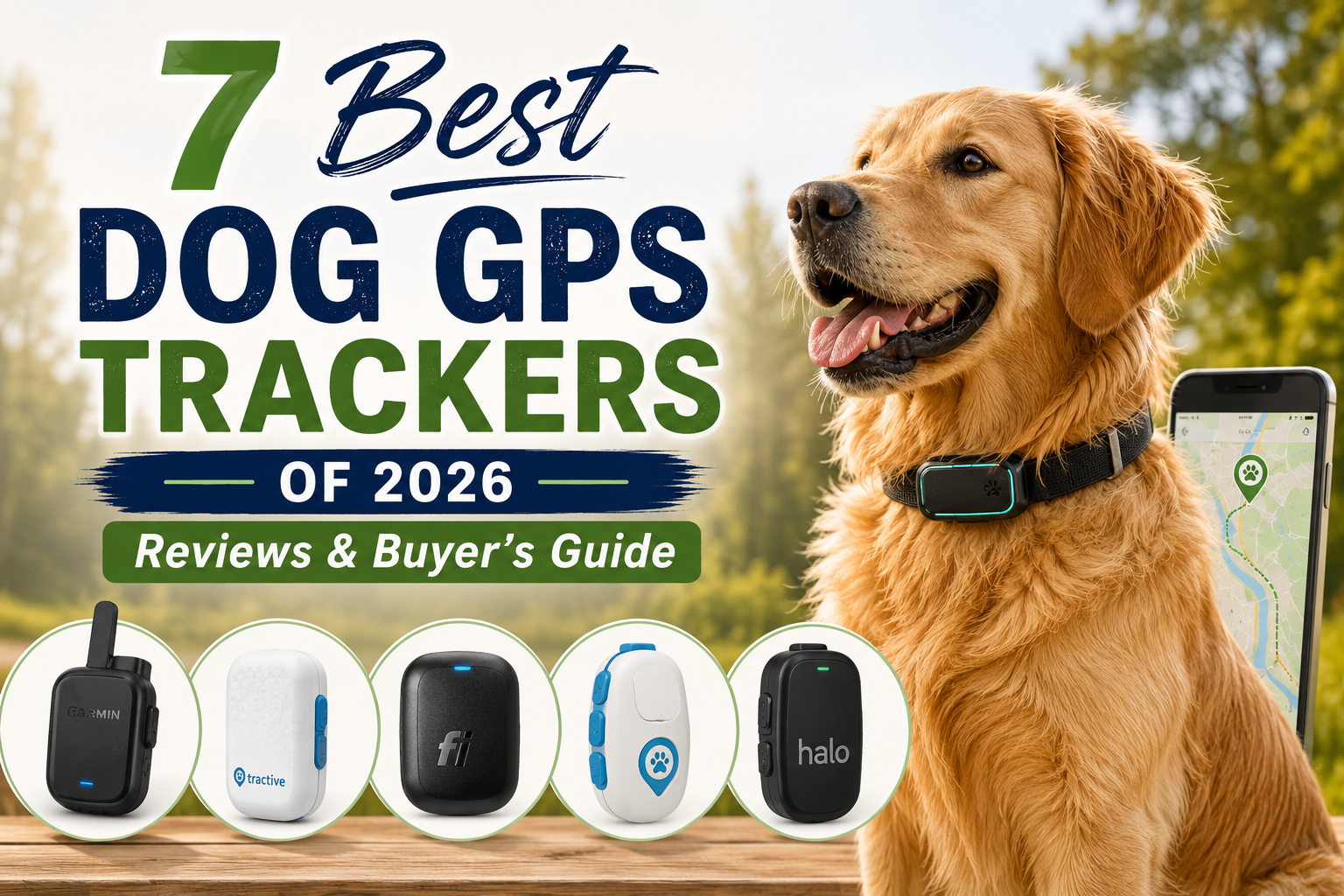
Best Dog GPS Trackers of 2026 may vary depending on the needs of your pets, their surroundings, and their lifestyle preferences. A gadget that is perfect for a Labrador who enjoys hiking through woods may be completely unnecessary for a French bulldog that does not leave the street. The right technology should be determined by the pet’s habits and the owner’s expectations.
Location trackers are now useful beyond just the essential set of features since modern systems provide more powerful hardware, better battery management, and more efficient applications for smartphones. That is why this guide will help you sort out the best technology in 2026 that has proven itself as an everyday companion rather than a list of overcomplicated specifications.
A Single Choice Influences All Other Decisions
Before you compare various tracking devices, take into account which environments your dog likes spending his time in. Those dogs who mostly move around in urban and suburban environments including city streets and public parks will find cellular GPS trackers more efficient since these systems use cellular networks to locate your pet in real-time mode.
Give your dog a comfy place to rest outdoors with the best outdoor dog beds.
Meanwhile, radio tracking systems are a better choice if your excursions lead to woods, mountains, farms and other distant, uninhabited places. They have the advantage of working outside the reach of cellular networks.
7 Best Dog GPS Trackers of 2026: Reviews
Each of the tracking devices listed below has been designed for specific purposes. Instead of listing the features, the reviews highlight the places in which the models excel and what people would stand to gain by using them.
Keep your pup safe on every water adventure with the best dog life vests.
Tractive DOG XL: Reliable For Everyday Adventures
Tractive prioritizes features that pet owners actually need. Tracking in real-time is simple with the app, setting up virtual fences takes no effort at all, and the history of the pet’s location is always easy to navigate.
The XL1 model is perfect for the medium and large dog breeds that enjoy adventures outside. Its battery is substantial enough to ensure the GPS tracker’s continuous use during long walks, hikes on the weekends, and road trips without having to worry about the battery being dead in the middle of the journey. It is one of the best GPS dog trackers in 2026 for people who live in cellular coverage areas.
Fi Series 3: Longer Battery, Less Maintenance
Battery life is where Fi distinguishes itself from the competition. It switches off GPS, Wi-Fi, and cellular when not in use to conserve power while still providing live tracking when necessary. The tracker is built inside the collar and not dangling under it like in many other devices. It allows for a sleeker design and more comfortable use, which is perfect for those dogs that do not wander too far away from their owners’ homes.
Garmin Alpha 300i with TT25: Made For Remote Terrain
Unlike many GPS trackers, which rely on cellular networks to maintain a connection to the user’s phone, the Alpha 300i utilizes radio frequencies to communicate with the TT25 collar. This lets the user keep track of their pet even in the wilderness, far away from civilization, where cell phone reception is unavailable.
Start your journey with confidence using the best dog accessories for first-time owners.
Long-lasting performance and superior map features ensure its popularity among hunters, dog owners, and professional trainers. Although it provides more features than ordinary household animals require, it is one of the most durable units for outdoor purposes.
Halo Collar 4: Portable Safety Beyond Backyard
The Halo dog tracking collar is a valuable tool that combines GPS technology and portable virtual fences. This feature allows the owner to establish a safe perimeter for their pet almost everywhere. Such a function is especially useful for those who like to travel with their pets or have a permanent residence outside the home.
Therefore, the collar may be an excellent choice for those who prefer to take their dogs on vacations or hikes. Meanwhile, the ability to set a safe perimeter means the owner must spend more time recharging the device. However, for nomadic pet owners, the possibility of creating a GPS zone without barriers is undoubtedly highly appealing.
SpotOn GPS Fence: For Large Open Properties
The SpotOn GPS tracker was created with the home owner in mind. Its main advantage is the ability to create GPS-based containment areas without having to install any wires or fencing, making it ideal for large scale operations such as farms or ranches. SpotOn’s ability to change containment areas is much more flexible than a physical fence, especially if the area your dog needs to stay in changes often.
Petfon 2: Tracking Without Monthly Fees
Petfon 2 is the right choice for people who want to avoid the subscription fees. It uses an alternative way of communication that does not require cellular connection. The Petfon 2 creates a contact between the collar and the handheld receiver which is perfect for the parks, campsites, and other outdoor places where the owner walks their dog.
Due to its shorter range of operations, it is not the ideal choice for dogs that stray away from their owners, but for local explorations, it provides a good compromise between functionality and overall expenses.
Help your pup sleep peacefully with our picks for the best calming dog beds.
Fi Mini: Made For Smaller Dogs
Finding a GPS collar that fits a toy or small sized breed can sometimes be an issue. The Fi Mini takes the guesswork out of this by being more compact and lightweight, while maintaining the reliable tracking, activity monitoring, and battery life the original Fi collar was loved for. For pet parents who want the everyday GPS safety of a Fi collar, without the extra bulk on their small dog’s neck, this is one of the best options available.
Before You Make The Final Choice
| If your dog generally | Then consider |
|---|---|
| Walks in towns | Cellular GPS |
| Explores remote areas | Radio-based tracking |
| Visits open spaces | Virtual boundaries |
| Lives on large land | GPS containment |
| Wears a small collar | Compact tracker |
| Stays close to you | Subscription-free option |
The selection of the proper technology plays a more significant role than the selection of the most costly tracking device. After determining where the dog will spend most of its time, selecting the appropriate model becomes easy.
The Real Value of A GPS Tracker
The best GPS tracker isn’t the one with the longest battery life or or the most advanced app. The ideal one will be the one that blends into your dog’s routine until it becomes necessary to use. Whether you’re hiking trails near your neighborhood or deep in the woods, a good GPS tracker can turn an agonizing search into a mere few minutes. Technology can’t stop every dog from getting lost, but the right system is often the easiest way to be prepared when time is of the essence.
FAQ’s
How long does the battery of a dog GPS tracker last?
Battery time varies depending on the device and the tracking mode. Typically, such devices last anywhere between one day and several weeks, although live tracking reduces the battery life.
Will a GPS tracker work if my dog goes out of cellular range?
It depends on the type of tracker you have. While some GPS trackers require cellular coverage in order to transfer live coordinates, others operate using radio frequencies.
Can I use a GPS tracker on various collars?
It depends on the kind of GPS tracker. Many GPS trackers are clip-on devices that can be attached to any collar, while some GPS collars are designed to be used as one single unit.
Does a GPS tracker take the place of a microchip?
No, a GPS tracker and a microchip serve two different purposes. The GPS tracker is used to keep track of your pet in real time, while a microchip has personal information about the pet and is useful if someone else finds your pet.
Keep your pup dry with the best dog raincoats for wet weather.
Sources
Disclaimer: The content on this page is for informational use only. For personalized advice regarding your pet’s health, always seek guidance from a certified veterinarian.

- Puppy Harness Guide: How to Choose the Right Dog Harness for Training - September 20, 2026
- Best Chow Chow Mix Breeds: Traits, Size & Temperament Guide - September 10, 2026
- Entlebucher Mountain Dog: Complete Breed Guide, Care & Training - September 10, 2026