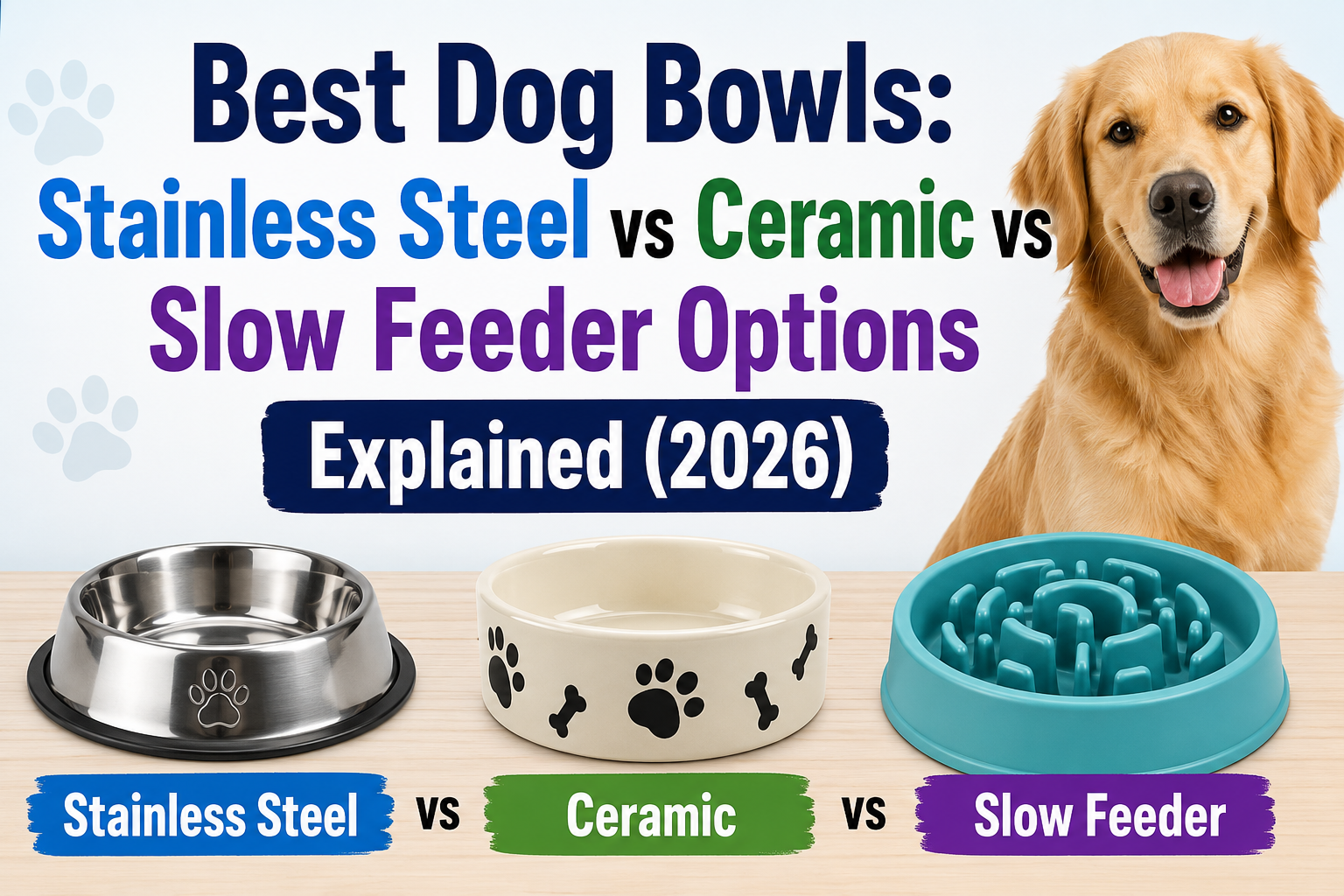
The Best Dog Bowls are not necessarily the expensive or trendiest ones on the market. A good choice depends on your dog’s size, how they eat, and their daily routine, helping to make mealtime simpler and cleaner. Picking the wrong bowl can result in spills, awkward eating postures, or even a bowl your dog avoids altogether.
While many people select bowls based on looks, more important considerations include the material, how stable the bowl is, ease of cleaning, and how it affects eating speed. A dog that eats slowly, a fast-eating Labrador, and a young puppy might each need a very different type of bowl. This guide explains the differences between stainless steel, ceramic, and slow feeder bowls to help you find the best fit for your dog’s specific needs.
Why Choosing the Right Dog Bowl Matters
A dog bowl is one of the most commonly used items in your pet’s daily routine. Because dogs rely on it for meals and water every day, even minor design variations can make a meaningful difference over time.
A good dog bowl should:
- Be made from safe, long-lasting materials
- Remain steady during use
- Allow for simple and thorough cleaning
- Match your dog’s eating habits
- Offer easy, comfortable access to food and water
For example, a heavier ceramic bowl might suit a relaxed dog that eats indoors, whereas a more energetic pet who tends to move or tip things may do better with a wider stainless steel bowl featuring a non-slip bottom.
Keep your car clean with these Best Dog Car Seat Covers.
Best Dog Bowls- A Quick Comparison
Every kind of dog bowl is unique because of what each type of bowl does well. Stainless bowls are for longevity and cleanliness, ceramics for stability and aesthetics, and slow feeders for behavioral change.
| Bowl Type | Best For | Main Benefit | Main Concern |
|---|---|---|---|
| Stainless steel | Everyday use | Durable and hygienic | May slide |
| Ceramic | Indoor feeding | Heavy and stylish | Can crack |
| Slow feeder | Fast eaters | Slows meals | Needs right design |
Hence, the presented comparison highlights the differences between the types of dog bowls, which allows pet owners to distinguish the most popular products and ensure the selection of the best option instead of trying to return the acquired product
Stainless Steel Dog Bowls: Durable & Easy to Maintain
Stainless steel bowls are one of the most versatile options for a pet owner in most dog cases. They are reliable, hygienic, and multifunctional. Moreover, they are suitable for everyday use, including feeding and water dishes, due to their ability to resist frequent and rough cleaning.
Besides, their smooth surface ensures there are no dirty spots where bacteria can accumulate to make your pet sick and give off an unpleasant odor. This is especially important if your dog is fed with wet food, as it often sticks to the bowl’s surface and can rot there. When choosing a stainless steel bowl, you should pay attention to some specifications:
- Food-grade steel
- Non-slip bottom
- Rounded edges
- An adequate size
One of the mistakes pet owners make when selecting a stainless steel bowl is to take a light one, thinking it is more convenient. A big dog will most likely push aside a small and light bowl, making a mess in the process.
Travel comfortably with these Best Dog Backpack Carriers.
Ceramic Dog Bowls: Stable & Stylish but Need Care
The ceramic dog bowl is a great investment for those pet owners who want a heavier option for their pets that won’t tip easily. It has an elegant appearance and fits perfectly in any home interior.
However, it requires special care as it is a delicate material that is subject to cracking and chipping. The broken surface of the ceramic bowl will retain food debris, making it almost impossible to remove all of it during cleaning. In such a case, a pet owner should not attempt to use the ceramic feeding bowl anymore.
It is essential to understand what to look for when buying a ceramic dog bowl:
- Pet-safe glaze
- Smooth surface
- Strong edges
- Resistance to chips and cracks
As a material, ceramic is best suited for indoor dogs because it is heavy, making it hard to knock over, but it can also break when dropped on a hard surface. Therefore, it is not advisable to choose this type of dog bowl for puppies or pets that like to chew their bowls and refuse to leave their accessories alone.
Slow Feeder Dog Bowls: A Smart Choice for Fast Eaters
Some dogs can eat an entire meal in a matter of seconds, barely chewing at all. Slow feeder bowls are designed to encourage slower, more deliberate eating habits by featuring raised sections that prompt the dog to use their nose to push food out to eat. Slow feeder bowls can help promote healthy and happy eating habits in dogs, but it is important to choose the right one.
The best slow feeder bowls should encourage good eating habits that promote:
- the dog’s size,
- facial structure,
- eating speed
- and patience
Flat-faced dogs may struggle to eat from a bowl with very raised sections, and large dogs may need a more durable bowl to prevent tipping. A slow feeder bowl is all about promoting positive eating behavior in dogs, and should never be stressful
Enjoy safer rides with these Best Dog Bike Baskets.
How To Pick a Best Dog Bowl for Your Dog
When choosing a dog bowl, consider your dog’s eating habits, size, and lifestyle to ensure comfort and convenience. Here are some tips to help you pick the best option:
- Size matters: Go for shallow bowls for small dogs and larger ones for bigger breeds.
- Think about their eating habits: If your dog eats too quickly, a slow feeder bowl may be the solution.
- Decide on the material: Stainless steel is ideal for everyday use, while ceramic is perfect for indoor dogs. Specialised feeders help address specific issues.
- Avoid movement: Get bowls with non-slip surfaces to prevent dogs from pushing or flipping them off the table.
- Consider their breed: Flat-faced dogs need shallow bowls, while long-eared breeds may require narrower ones.
- Prioritize easy cleaning: Smooth surfaces and simple designs make cleaning easier, especially for daily use.
- Consider your routine: If you lead an active life, invest in durable bowls that can withstand the outdoors. For those who travel often, opt for lightweight options.
- Observe their behaviour: Dogs that make a mess while eating may benefit from wider bowls, while anxious eaters might need a more straightforward feeding setup.
Common Dog Bowl Mistakes You Must Avoid
- Wrong Size: A bowl that is too small may lead to spills, while an oversized bowl may be uncomfortable for the pet. It is essential to choose a suitable size depending on the animal’s breed, meal portion, and their eating habits.
- Prioritizing Looks Over Durability: Going for style is fine, but it is crucial to prioritize stability, comfort, and ease of cleaning when choosing a bowl for your pet.
- Unstable Bowl: Unstable bowls may lead to messes and discomfort while eating. It is vital to choose a bowl with a stable base or prefer heavier options.
- Poor Slow Feeder Choice: Some slow feeder bowls may be complicated for pets, so it is essential to choose the right option based on the animal’s size and eating habits.
- Ignoring Cleaning: When choosing a bowl, it is essential to remember that pets tend to eat messy, so it is better to choose products that can be cleaned without difficulty.
- Damaged Bowl: Ceramic bowls are fragile, so they must be handled with care. If the bowl is broken, it is necessary to replace it because cracks and breaks are challenging to reach and clean.
Compare these Best Crates for Pitbulls.
How To Keep Dog Bowls Clean & Safe
Regular cleaning helps keep the feeding environment healthy. Saliva, moisture, and food can collect in food bowls on a daily basis
Good cleaning habits include:
- Washing food bowls thoroughly on a regular basis
- Changing water often
- Clearing the bowl of any food left behind
- Checking bowls for cracks and other damage
Stainless steel bowls are generally easier to care for, while ceramic bowls often need to be inspected more closely.
Which Dog Bowl Should I Choose in 2026?
For most dogs, stainless steel bowls are the most practical choice. Ceramics are great for those who want something heavier than standard plastic indoors, while slow feeders are the best option for fast eaters. Many dog owners often mix different bowl types.
This could be something like stainless steel water bowl and a slow feeder bowl for dog food. Most importantly, the right choice of a dog bowl depends on the animal’s size, behavior, and other characteristics. Thus, the proper accessory will help ensure healthy and comfortable feeding and care for the pet.
Choose the right outfit with this Dog Clothing Guide.
FAQ’s
What type of dog bowl is best for most dogs?
Stainless steel bowls are a good option because they are durable, hygienic, and easy to clean for everyday use.
Do slow feeder bowls make dogs eat slowly?
Yes, since slow feeder bowls force dogs to eat slowly due to small hurdles that they create during feeding.
What size bowl should I get for my dog?
Consider the size of the dog, portion size of their meals, and feeding behavior while choosing a dog bowl.
How should dog bowls be cleaned?
Wash food bowls daily or after meals, especially when serving wet food. Clean water bowls regularly to remove residue, bacteria, and buildup, helping maintain a healthier feeding routine for your dog.
Official Sources
- American Kennel Club (AKC) – Nutrition & Feeding Guidance
- U.S. Food and Drug Administration (FDA) – Animal & Veterinary
- Centers for Disease Control and Prevention (CDC) – Healthy Pets
Disclaimer: This article is for information and cannot substitute for professional veterinary advice. Please consider your dog’s requirements, health status, and eating habits when choosing any dog product. Characteristics and availability of the product can change with time.

- Puppy Harness Guide: How to Choose the Right Dog Harness for Training - September 20, 2026
- Best Chow Chow Mix Breeds: Traits, Size & Temperament Guide - September 10, 2026
- Entlebucher Mountain Dog: Complete Breed Guide, Care & Training - September 10, 2026